
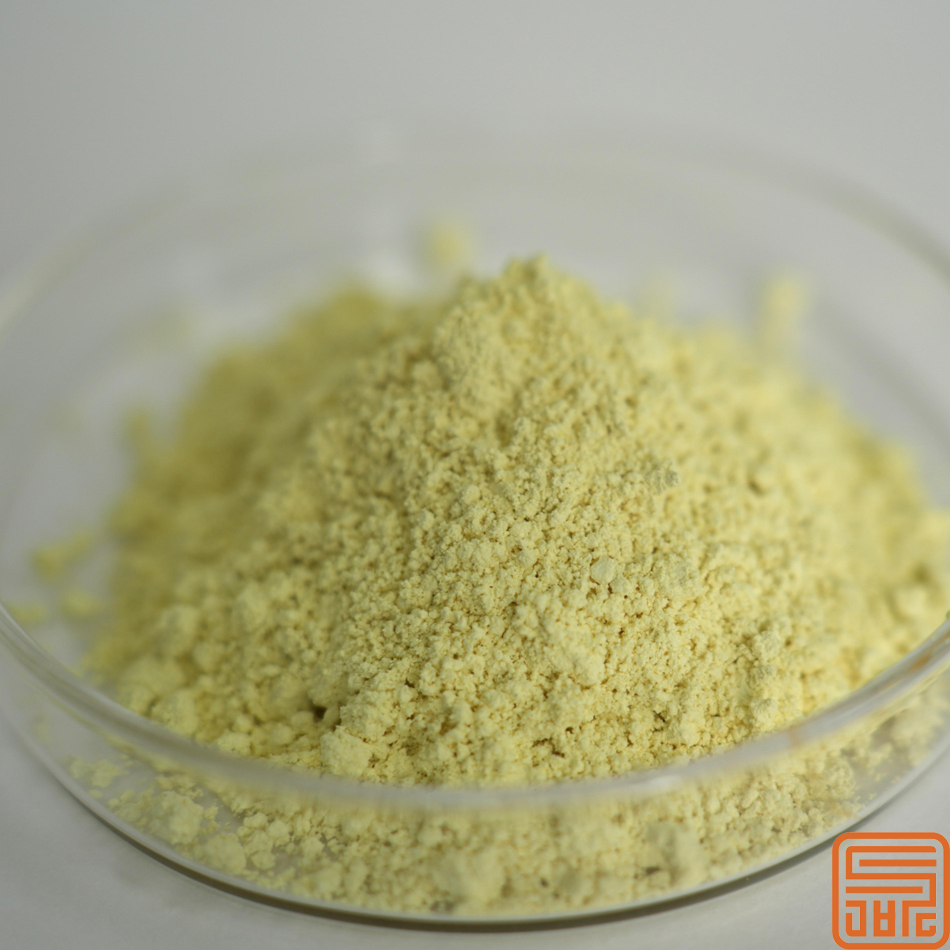
Bottom line first: capsule machine jams, inconsistent fill weights, tablet weight variation out of spec — 90% of buyers blame the formula or the equipment, but the real culprit is usually in the supplier's spec sheet: a powder that lists "40%" and nothing about bulk density or angle of repose. Passing assay does not mean usable. Particle size, bulk density, and flowability are what actually determine whether your powder runs on your line. And 99% of supplier spec sheets list only the assay.
| Physical parameter | Capsule filling requirement | Tablet compression requirement | Beverage/powder requirement |
|---|---|---|---|
| Bulk density (g/mL) | 0.35–0.55; too low causes fill weight instability | 0.45–0.65; too low causes tablet weight variation | 0.30–0.50; affects dissolution and dispersion speed |
| Particle size (D50) | 60–80 mesh; too fine causes bridging | 40–80 mesh; too fine causes poor flow | 80–100 mesh; too coarse settles, too fine agglomerates |
| Flowability (angle of repose) | ≤35°, otherwise capsule fill weight fluctuates | ≤30°; direct compression has the strictest flow requirement | Not critical, but water dispersibility must meet spec |
The table makes one thing clear: capsule filling and direct compression demand conflicting physical properties. Tableting needs better flow (a smaller angle of repose), which means rounder, coarser particles. Capsule filling can tolerate slightly worse flow, but the bulk density window is different. The "40% sample" your supplier sends you most likely matches only one of these dosage forms.
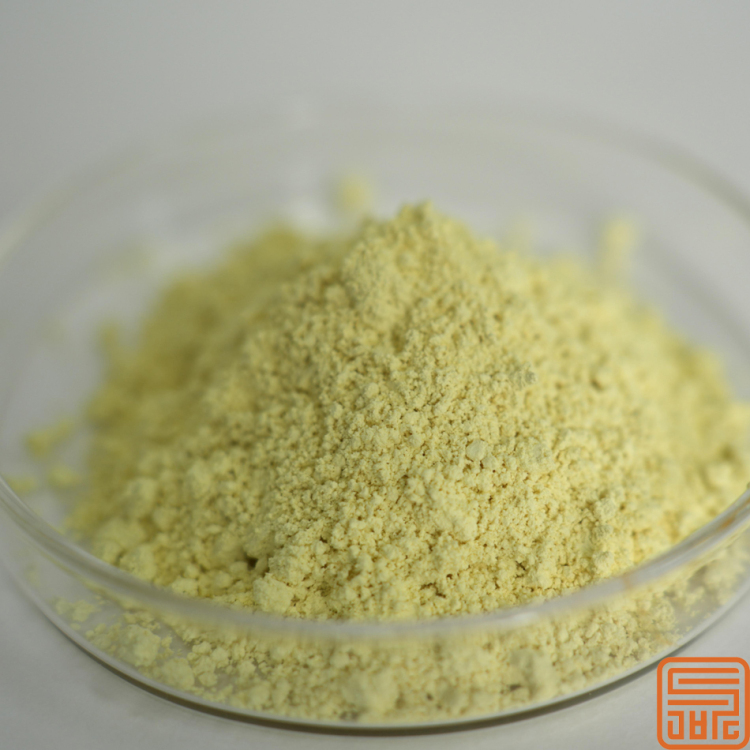
1.Why does the same-spec soy isoflavone powder refuse to run on your capsule machine?
Because "40%" tells you the active content, not how the powder flows. The physical properties of a botanical extract powder depend on the drying method and milling process after extraction — and those two steps vary wildly from supplier to supplier.
Spray-dried powder has near-spherical particles and good flow, but low bulk density. Milled and screened powder has a wide particle size distribution and a lot of fines, which bridge in the hopper during capsule filling — like wet sand clogging a funnel. Your "40%" passes assay, but the powder won't move down the hopper, and the capsule machine stops for manual clearing.
A study on co-processed botanical extracts quantified this directly: untreated extract powder flows poorly and cannot be used for direct compression; only after co-processing improved the flow parameters (including angle of repose and compressibility index) could it be adapted to direct compression. The same applies to soy isoflavone powder. If a supplier standardizes only assay and not physical specs, your production line is gambling on batch luck.
One supplier's technical documentation states plainly: capsule filling should use powder with "optimized bulk density and good flowability" to prevent bridging and inconsistent fill on high-speed capsule machines. Tableting requires the extract to "withstand compression without degrading active glycosides," and recommends granulation or specific binders. Both statements come from the same supplier document — but they point to two different product specs. Did you ask which one you were ordering?
Section takeaway: a soy isoflavone purchase spec that doesn't state bulk density and angle of repose transfers the dosage-form fit risk onto your own production line.
2.Which three physical parameters should go into your purchase spec so the powder matches your dosage form?
Add these three: bulk density, particle size distribution (D10/D50/D90), and angle of repose. Miss one, and your spec is incomplete.
Why must it be D10/D50/D90 rather than "80 mesh pass rate"? Because "≥95% through 80 mesh" only tells you there are many fines — it doesn't tell you how much sits at the coarse end versus the fine end. A D10 that's too small means excess fines, which bridge in capsule filling; a D90 that's too large means excess coarse particles, which cause tablet weight variation. You need the distribution, not the pass rate. For tableting specifically, watch soy isoflavone particle size distribution D50 for tablet compression — a lot with D50 in the 40–80 mesh range and D90 under the upper limit is what satisfies both flow and compaction.
Bulk density has a more direct purchasing implication: the metering disc volume on a capsule machine is fixed. A powder at 0.35 g/mL versus 0.55 g/mL, through the same metering disc volume, yields a 57% difference in fill weight. If your capsule spec is 500 mg and the supplier's bulk density fluctuates ±15% lot to lot, your fill weight variation is already outside pharmacopoeial limits. That's why soy isoflavone powder bulk density specification for capsule filling must be a standalone parameter in your spec annex — not waved away with "standard 80 mesh."
Angle of repose is the most overlooked and most lethal. A powder at ≤30° flows by gravity and suits the forced feeding system of a high-speed tablet press; a powder above 40° behaves like a "semi-fluid blockage" in the hopper. Suppliers won't volunteer the angle of repose, because they may never have measured it.
In practice, add this line to your inquiry: "Please provide bulk density (tapped and untapped), particle size distribution by laser diffraction (D10/D50/D90), and angle of repose for the specific lot you are quoting." If the reply is "ours is standard 80 mesh powder, everyone uses it this way," that's a clear signal: this supplier has no lot-to-lot control over physical specs.
Section takeaway: putting bulk density, D10/D50/D90, and angle of repose into the spec sheet is the only way to keep "40% assay but won't run on the line" lots out the door.
FAQ
Q: I'm buying soy isoflavone for beverages. Are the physical spec requirements the same as for capsules?
A: No — and they're stricter. Native soy isoflavones are poorly water-soluble, which is the core obstacle in beverage formats. Research shows that enzyme-treated water-soluble soy isoflavones achieved roughly 220× the solubility of the native form, which is what made them usable in functional soy beverage production. So the critical parameter for beverages isn't angle of repose — it's water dispersibility/solubility. If the supplier hands you regular powder and says "just stir it in," your beverage will stratify and settle over shelf life. What you need is a clearly specified water soluble soy isoflavone powder for beverage formulation grade — solubility, dispersion stability, and carrier type, all three. The capsule bulk density parameters don't apply here.
Q: In my tablet formula, soy isoflavone is only 20% and the other 80% is excipients. Do physical specs still matter?
A: More than ever. Because poor flow in a small active fraction gets "diluted" into a big problem by the excipients. At 20%, each tablet contains only about 100 mg of soy isoflavone powder (on a 500 mg tablet weight), but it's precisely that 100 mg of fines or coarse particles that causes segregation during blending and compression — fines sink, coarse particles rise, and blend uniformity collapses. Tableting's angle of repose requirement (≤30°) is stricter than capsule filling's for exactly this reason. It's also why soy isoflavone particle size distribution D50 for tablet compression must be held even tighter in low-dose formulas — a D50 skewed fine multiplies segregation risk. Don't let "small fraction" fool you.
Q: My supplier says their powder "works for all dosage forms." Is that credible?
A: No. The comparison table above already shows it: the bulk density and angle of repose windows for capsules and tablets are partially conflicting. A powder at 0.45 g/mL and 32° may perform well on a capsule machine but exceed weight variation limits on a high-speed tablet press. "Universal" means optimized for nothing. If you hear that line, follow up with: "Then please provide the recommended bulk density and angle of repose ranges for capsule filling and direct compression separately, and tell me which of your lots meet which range." And ask one more: do you have a grade validated as water soluble soy isoflavone powder for beverage formulation? If the supplier can't give differentiated answers across all three dosage forms, you know it's time to change suppliers.
Published: October 2026 | By Justen Biotechnology Technical Team