
Why Edge-Bound Terry Cloth Insoles Reduce Replacement Rates for Buyers
For footwear retailers and uniform suppliers, the cost of a cheap insole is not in the unit price — it is in the return rate. A basic cut-foam insole that frays at the edges after two weeks of daily wear generates customer complaints, exchange costs and negative reviews. This guide explains why edge-bound terry cloth latex insoles are a lower-total-cost choice for daily footwear programs.
What the Edge Binding Actually Does
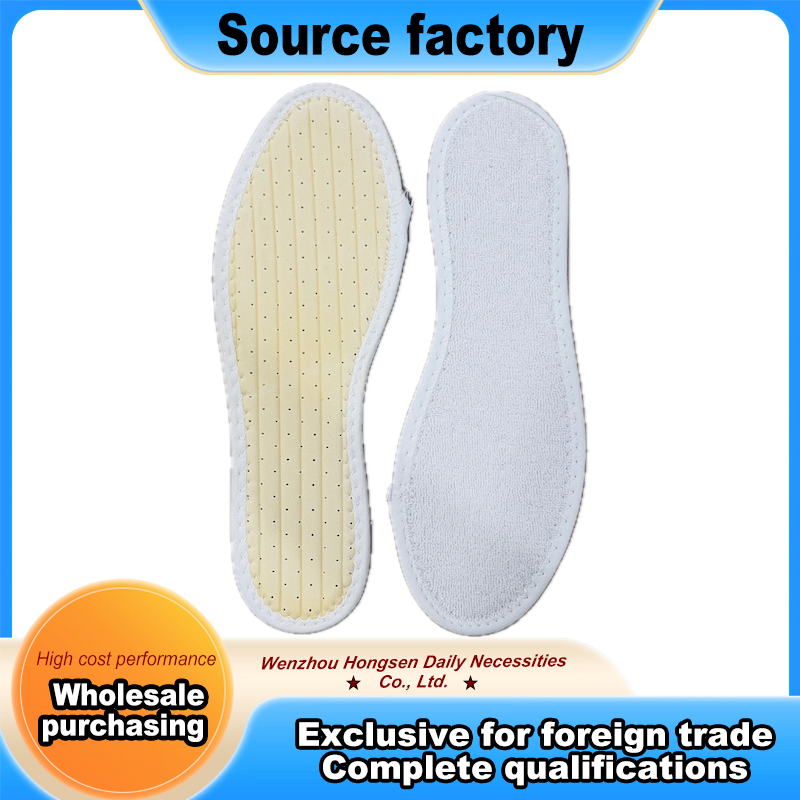
The key difference on this model is the stitched binding around the entire perimeter. On unbound insoles, the cotton or cloth layer separates from the foam base at the edges after repeated insert-and-remove cycles. The bound edge holds the two layers together, which extends usable life and keeps the insole looking clean on the retail shelf. For B2B buyers, this means fewer "edges peeling" returns and fewer customer complaints about a product that looks worn after the first week.
The terry cloth surface itself is designed for moisture management. The looped towel-like texture pulls sweat away from the foot during full-shift wear, and the Breathable fabric does not feel sticky even when the foot is warm. This matters for buyers supplying Work Boots and retail counter footwear where staff stand for hours.
Sizing and Inventory: Fixed Sizes vs. Trim-to-Fit
This insole uses fixed sizes from EU 36 to 45 rather than a universal trim-to-fit format. For buyers, this is a trade-off worth understanding:
- Fixed sizes provide a consistent fit inside each shoe size, which matters when the end customer expects the insole to fill the shoe properly rather than be cut by hand.
- Trim-to-fit covers more sizes with fewer SKUs but relies on the end user doing the cutting.
For buyers selling into Casual Shoes, slippers and home footwear where customers prefer a ready-fit product, fixed sizes reduce "I cut it wrong" complaints. The size range covers most adult women's and men's footwear from EU 36 through 45.
Matching the Right Insole to the Buyers' Segment
Not every program needs the same insole. Here is how buyers typically segment:
- Retail and daily footwear: Terry cloth + Latex Foam with edge binding. Balances moisture control, durability and clean appearance.
- Heavier or standing-intensive use: Buyers may want to step up to a model with additional Heel Cushioning or Arch Support for longer shifts. Our foot care range addresses these higher-support requirements separately.
- Seasonal programs: For winter accounts, pair daily insoles with a warming felt option rather than expecting a year-round insole to cover cold-climate needs.
Cost Efficiency and Quality Control
Because the edge binding is stitched in-house during production, buyers avoid the quality variability that comes from outsourced edge finishing. The latex base is produced in the same facility as the top fabric, so layer adhesion is controlled end-to-end. This closed production loop reduces the defect rate compared to buyers who source top fabric and foam from separate suppliers.
For buyers running private label programs, the white insole color provides a clean base for custom packaging, and the fixed-size format simplifies size labeling and carton packing.
Quick Selection Checklist
- Identify whether your customers prefer a ready-fit fixed size or a universal trim-to-fit format.
- Match the moisture technology to the wear scenario (terry cloth for daily sweat control, memory foam for deeper cushioning).
- Check edge construction — bound edges last longer than unbound cut edges.
- Request samples to confirm insole thickness fits your target shoe last.
If you are building a daily insole program for retail footwear, work boots or a private label line, our team can provide specification sheets and sample options tailored to your market segment.