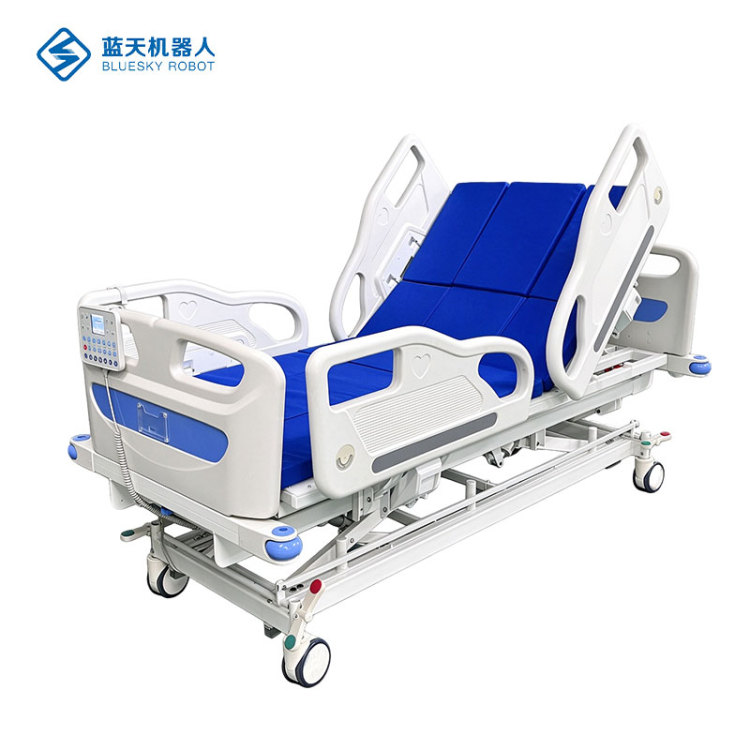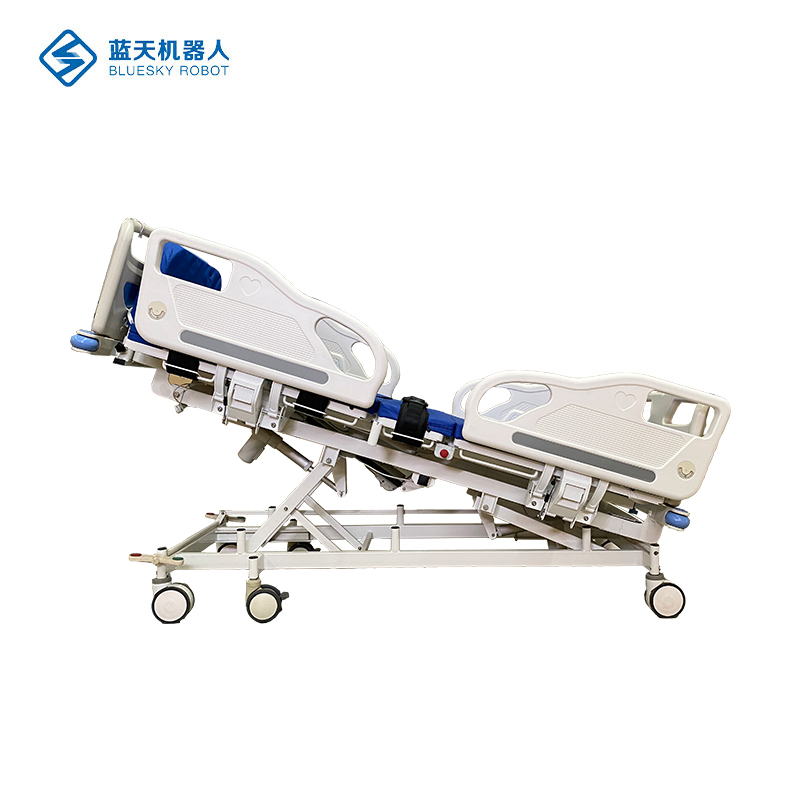
This is the specification conversation that goes wrong most often in tenders: a high-spec alternating-air surface is ordered onto a frame whose backrest rises without a knee break, so the patient slides down every time they sit up and the shear damage continues exactly as before.
1. Why does the bed's function matter as much as the mattress?
Because shear, not pressure, is what breaks skin down when the backrest is raised — and shear is set by the frame, not the surface.
|
Force |
What the mattress does |
What the bed does |
What the caregiver does |
|
Pressure |
Spreads load: foam density, gel, alternating air cells |
30° lateral tilt for repositioning; hi-lo for handling height |
Reposition on the prescribed schedule, typically every 2–4 hours |
|
Shear |
Low-friction cover reduces drag on the skin |
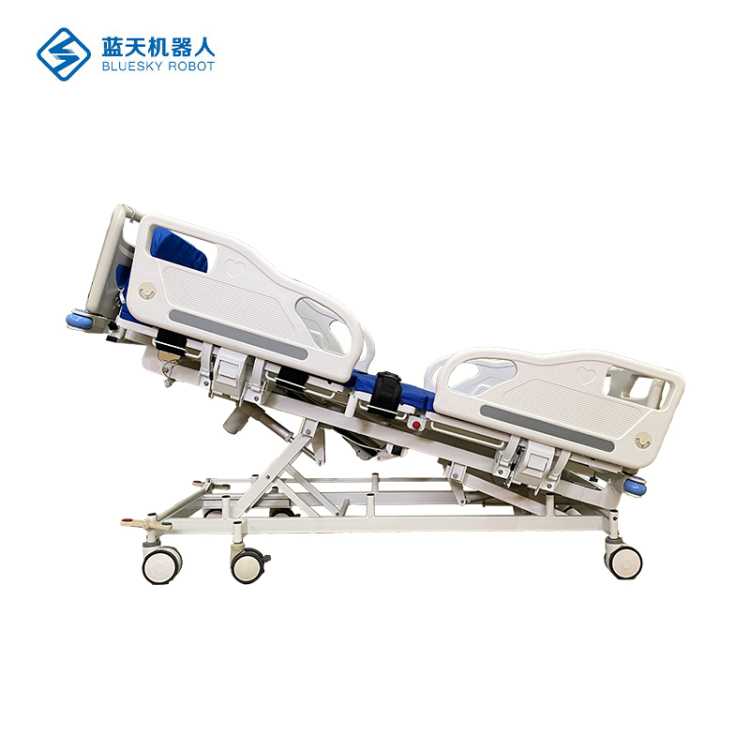
Back-knee synchronisation keeps the pelvis from sliding as the backrest rises; head-of-bed kept at or below 30° where clinically possible |
Uses a slide sheet, never drags |
|
Friction |
Two-way stretch cover |
— |
Lifts rather than pulls during transfers |
|
Moisture |
Breathable or low-air-loss surface, vapour-permeable cover |
Airflow under the deck on ventilated platforms |
Checks and changes, barrier protection per protocol |
Three specification points follow from that table, and all three are decided at the quotation stage:
- Back-knee synchronisation is the cheapest anti-shear device available. It adds 40–70 at FOB. Without it, every meal sitting becomes a slow slide toward the foot of the bed, and the sacrum takes the load at the same contact point every time.
- Mattress thickness changes the rail gap. A hospital bed rail setup that is compliant with a 10 cm mattress is not compliant with a 15 cm one. If the surface is upgraded without re-measuring, the entrapment risk rises while the pressure risk falls — a bad trade.
- Alternating-air systems need power and tube routing. On a hospital bed at home that means a second outlet near the head of the bed, a pump that will run all night, and tubing that does not become a trip hazard beside a patient with poor balance.
✅ Bottom line: Shear control lives in the frame and pressure control lives in the mattress, so neither purchase works without the other.
2. How do you specify the pair without overspending?
Match the surface class to the assessed risk, then close the two gaps that cause most field failures: mattress-to-rail and mattress-to-deck.
No electric medical bed quotation should leave the surface as a line item to be decided later — the deck, the rails and the surface are one specification.
|
Surface |
Indication |
Frame requirement |
Practical notes |
|
High-density foam, 10 cm |
Low risk, mobile patient |
Standard deck, rails re-checked |
Cheapest; replace when the cover cracks or the foam compresses flat |
|
Foam with gel heel section |
Medium risk, heel breakdown |
Standard deck |
Heel is the second most common site; a gel section is cheaper than a dressing regime |
|
Alternating pressure air |
High risk, immobile, existing damage |
Ventilated deck preferred, power at the bed head |
Pump noise matters at home; check the cycle time and the fallback if power fails |
|
Low air loss |
High risk plus moisture, incontinence, fever |
Ventilated deck, power at the bed head |
Addresses microclimate, which foam cannot |
The economics are lopsided enough to end the argument. A treated pressure injury is commonly costed at 20,900–151,700 per case in US analyses; a foam mattress is 65–300 and an alternating-air system a few hundred more. One avoided stage-3 injury funds the surface upgrade across an entire ward — which is the number to put in the business case, not the unit price.
Four checks that decide whether the system survives contact with real care:
- Do not stack an overlay on an existing hospital bed mattress and assume the rail gap holds. Measure it. Every time.
- A pressure-relief surface does not replace turning. It buys time between repositioning, and only if the schedule is followed and logged.
- Skip ring and donut devices. Current guidance advises against them; they concentrate pressure at the rim.
- Buy the mattress from the frame supplier where possible. A 36 × 80 in mattress from a second source rarely sits the same way on the deck, and the gap changes at the head and foot ends, which is where entrapment happens.
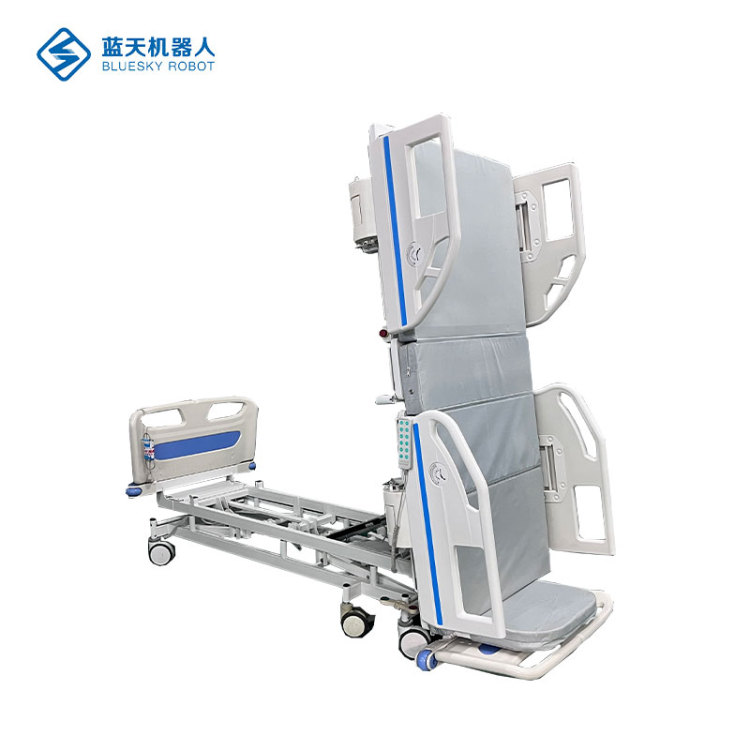
BLUESKY supplies the frame and the surface from one factory, which is what makes the gap check a specification step rather than a post-delivery discovery: foam, airflow, low-air-loss and alternating-pressure mattresses sized to the LT-series decks, and a 230 kg safe working load on the 3-function platform — headroom that matters once a heavier patient, a thicker surface and side rails are added together. The range is manufactured by Hunan Bluesky Robot Technology Co., Ltd. in Changsha under CE and ISO 13485 certification, and the same mattress pairings are configured for care homes, hospital wards and the home-care channel, with custom OEM/ODM sizing for care-home groups and distributors from 50 units.
✅ Bottom line: Specify the surface to the risk score and the frame to the shear problem, then re-measure the rail gap as part of delivery sign-off.
FAQ
Q: Does an alternating-air mattress mean the patient no longer needs turning? A: No. It redistributes interface pressure between repositioning, but the turning schedule still applies — follow the clinical team's protocol and log it. A surface that is used as a substitute for repositioning performs worse than a good foam mattress used properly.
Q: Can a thicker mattress be fitted to an existing electric nursing bed? A: Often yes, but the rail gap must be re-measured and the rails may need a different height setting. If the electric nursing bed frame was designed around a 10 cm surface, a 15 cm replacement can open an entrapment gap at the rail ends.
Q: How often should a foam medical bed mattress be replaced? A: Replace when the cover is cracked, stained through, or no longer wipeable, and when the foam stays compressed after a hand press. In ward use that is typically every two to five years; on a hospital bed at home, inspect quarterly and replace at the first cover failure.
CTA: Get the Bed and the Mattress as One Specification
Send BLUESKY the risk profile of your patient group, the deck size and the number of beds, and the team will return a matched frame-and-surface specification with the rail gap for each combination stated in millimetres — so the entrapment check is done on paper, not after delivery. Hunan Bluesky Robot Technology Co., Ltd. manufactures electric medical bed platforms and the full mattress range at one 20,000 m² site, supports OEM/ODM sizing from 50 units, and ships complete bed sets with a spare-part kit per 100 beds.