
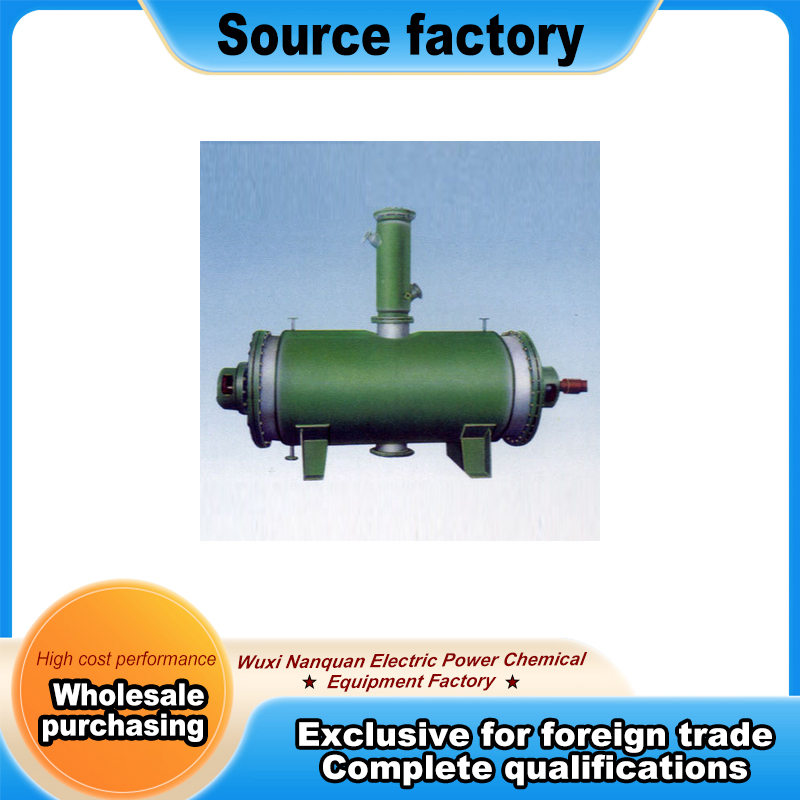
Almost every "the dryer is too slow" complaint turns out to be a granulation problem one vessel upstream, and almost every "the filter blocks every shift" complaint is a housing sized by cartridge count instead of by pressure drop. The three units form one chain — wet mass in, granule out, clear liquid through — and each one hands the next a number it cannot fix later: granule size distribution sets drying uniformity, residual moisture sets shelf life, and solids carry-over sets how often the Cartridge Filter Housing comes apart. This is how to set those handover numbers before you buy, using the SZG series and filtration packages built by NANQUAN at Wuxi Nanquan Electric Power and Chemical Equipment Factory.
1. Why Does a Wet Granulation Batch Dry Unevenly Even When the Dryer Is Big Enough?
Because the granulator hands the dryer a batch with a 3:1 spread in granule size and a 40% overfill, and no amount of vacuum fixes either. A tumble dryer dries by contact: the wall transfers heat, the bed tumbles, and the material that touches the wall dries first. Uniformity therefore depends on how often every particle reaches the wall, which is a function of fill level and rotation, not of pump capacity.
The handover numbers worth writing into the batch record:
|
Parameter |
Target |
Why it matters downstream |
|
Impeller tip speed |
6–12 m/s |
Below 6 m/s you get lumps, not granules; above 12 m/s you densify and lose porosity |
|
Chopper speed |
1,500–3,000 rpm |
Sets the top of the size distribution |
|
Binder addition |
15–25% w/w of dry blend |
Under 15% the bed stays powdery; over 25% it turns to paste in the dryer |
|
End point |
motor power draw up 20–30% from wet-mix baseline |
The only reliable in-process signal; time-based end points drift with every lot |
|
Granule D50 |
0.2–1.2 mm |
Narrow distribution dries evenly and flows on the tablet press |
|
Dryer fill |
40–50% of total volume |
Above 50% the cone end stops tumbling and holds a wet dead zone |
|
Final LOD |
1–3% |
Above 3% sticks in the press; below 1% you pay for drying time you do not need |
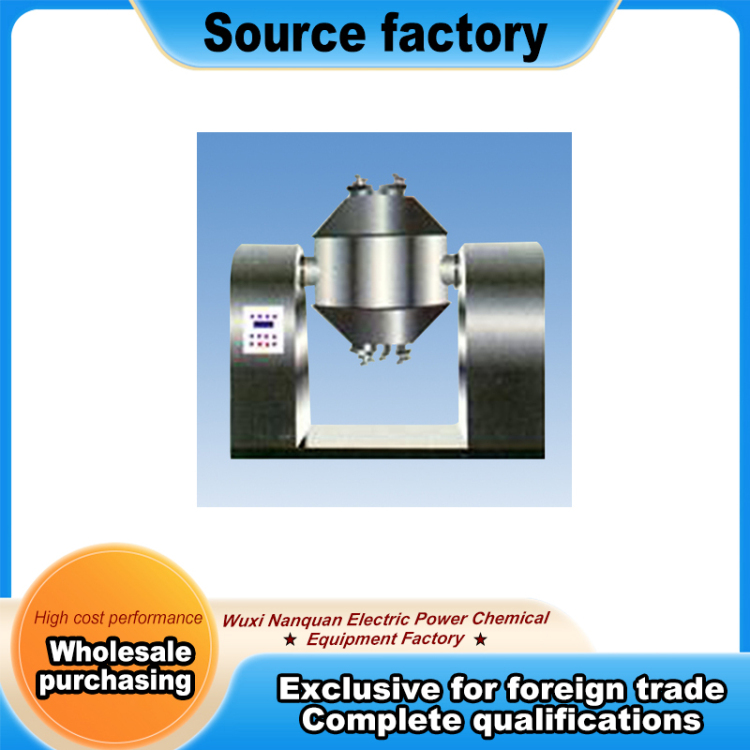
In the SZG double cone vacuum dryer the working window is 3–13 rpm with the jacket at 30–160 °C and a within-batch spread of about ±2 °C. Those numbers look generous until you run the heat balance. Take a 300 kg dry blend with 55 kg of water to remove down to 1.5% LOD: you need to evaporate roughly 50 kg. Through 4 m² of jacket at K ≈ 300 W/m²·K and a 50 K mean difference you get about 60 kW, and 50 kg of water at 2,400 kJ/kg needs 120 MJ — about 33 minutes of theory. Real cycles run 2–3 hours. That factor of four is heat-up, vapour travel through the bed, and the fact that the wall is only in contact with part of the load at any moment.
So when a batch takes eight hours, the fix is usually one of three things: cut the load to 40% of nominal, add the internal baffle plate that breaks up the bed, or accept that the jacket area — not the vacuum pump — is the limit. A Vacuum Tumble Dryer with the right jacket area beats a bigger one with a bigger pump every time, and the solvent-recovery condenser is what makes an ethanol-wet batch economic to dry at all.
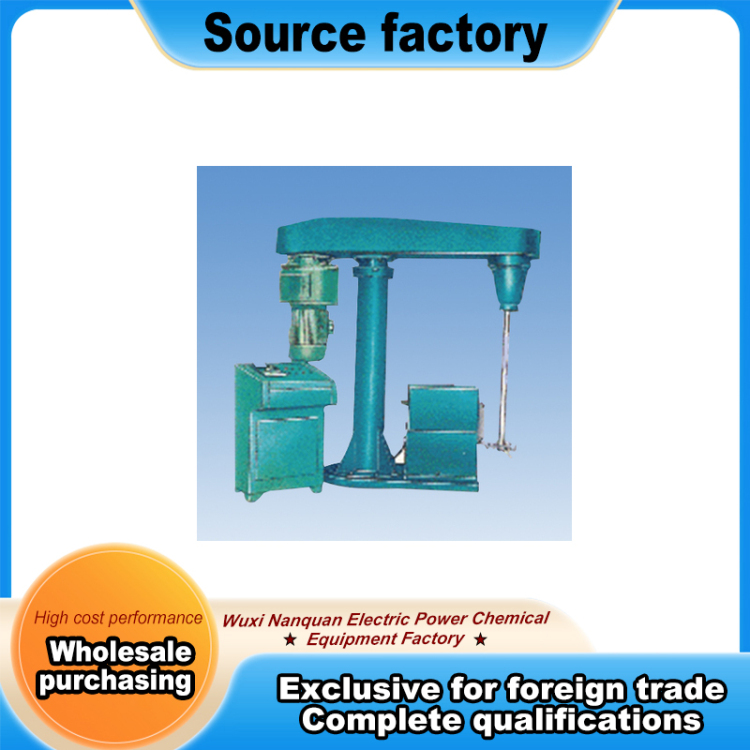
On the granulator side, the same logic runs in reverse. A High Shear Mixer Granulator that is oversized for the batch runs with the impeller buried, and the power-draw curve flattens so you cannot see the end point. Size the bowl at 60–70% of the batch volume, then control on power draw rather than on the clock.
✅ Bottom line: Fix granule size distribution and fill level before blaming the dryer; 40–50% fill and a power-draw end point solve most uneven-drying complaints.
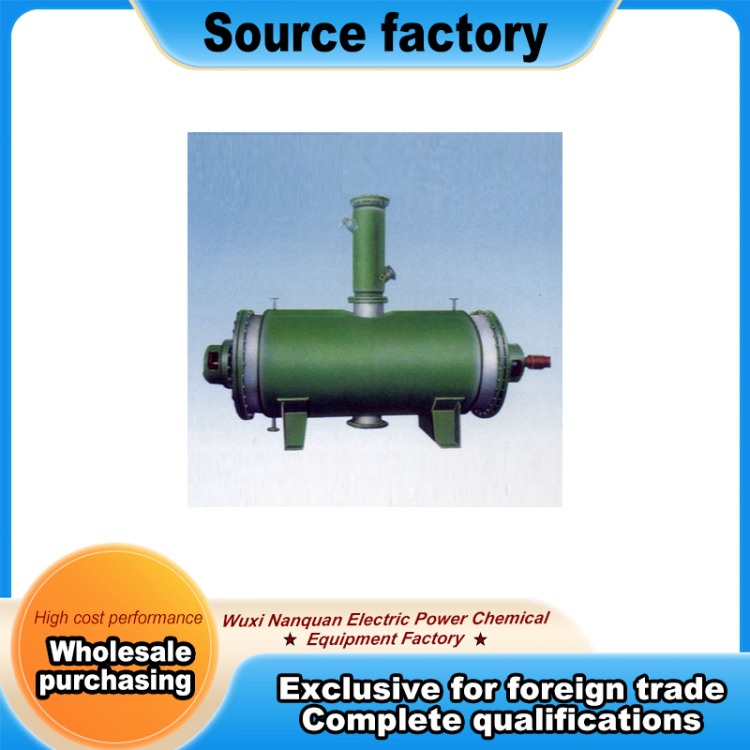
2. How Do You Size a Cartridge Filter Housing Without Over-Buying Cartridges?
Size the housing on pressure-drop budget and the cartridges on actual flow, because the two numbers move in opposite directions as a filter loads. A standard 10-inch pleated cartridge carries about 0.23–0.25 m² of media. The flow it will pass depends almost entirely on viscosity: expect roughly 0.5 m³/h per 10-inch cartridge on a 50 cP syrup and 1.0–1.5 m³/h on water-like liquid.
That gives a usable sizing rule:
- Required cartridges = design flow ÷ (flow per cartridge × 0.5 fouling allowance)
- Clean differential pressure 0.02–0.05 MPa; change-out at 0.10–0.15 MPa or 1.5× clean
- Housing design pressure 0.6–1.6 MPa depending on duty; retention from 0.2 µm to 100 µm
- For sterile duty add bubble-point integrity testing; a housing you cannot test is a housing you cannot validate
Run it on a real case: 5 m³/h of 20 µm polish on a water-like intermediate needs 5 ÷ (1.0 × 0.5) = 10 cartridges. Two 20-inch cartridges do the same job with half the seals and half the change-out labour, which is the argument for longer cartridges whenever ceiling height allows.
Three selection traps cost more than the housing itself:
- Sizing to the current flow. Buy the housing at the future flow and the cartridges at today's duty; a housing re-buy is a week of downtime, a cartridge change is ten minutes.
- Ignoring the pre-filter. A 20 µm cartridge behind no coarse protection loads in days. Put a 100 µm basket upstream and the same cartridge lasts weeks.
- Mixing retention and flow claims. A 0.2 µm cartridge that passes the flow on paper often will not pass it at 1 cP upward, because the membrane, not the pleat, sets the resistance.
The chain only works if the upstream vessels behave. Extract or mother liquor arriving from a Jacketed Stainless Steel Reactor or a Glass Lined Mixing Tank carries whatever the last step left in it, and a High Pressure Dissolution Vessel that dissolved fully at 130 °C will throw solids back out the moment the batch cools — right onto the filter. Check clarity before the housing, not after.
✅ Bottom line: Calculate cartridges from flow with a 50% fouling allowance, then move to longer cartridges rather than a taller housing.
FAQ
Q: Can one vacuum tumble dryer handle both aqueous and ethanol-wet batches? A: Yes, with the condenser and receiver sized for the solvent and the electrics rated for the zone. Ethanol-wet material needs the condenser to recover solvent and to protect the pump; without it you lose the solvent and load the vacuum system with vapour it was not specified for.
Q: What capacity range do you build for granulation and drying? A: Bowl and vessel sizes are quoted from the batch, not from a fixed list — a 100–300 kg batch typically lands in a 300–600 L High Shear Mixer Granulator bowl and a 500–1,000 L dryer. NANQUAN builds the SZG dryer series, paddle dryers, high-shear mixers and the filtration packages around them as one project, so nozzle heights and transfer lines match.
Q: Do you supply documentation for validation and export? A: Material certificates, surface finish records, FAT reports and English-language O&M documentation are provided as standard; the scope of third-party inspection is agreed at enquiry. Wuxi Nanquan Electric Power and Chemical Equipment Factory holds Class I and Class II pressure vessel qualifications and takes OEM/ODM orders on custom configurations.
CTA: Send the Batch Sheet, Get the Chain Sized
Give the NANQUAN team the batch mass, binder volume, target LOD, solvent type and required filtrate clarity — and you get a granulator bowl size, dryer volume with jacket area, condenser duty and a cartridge count with housing rating, all in one quotation. Single units, matched lines and bulk orders are quoted factory-direct, with custom and OEM configurations built in Wuxi since 1998.