
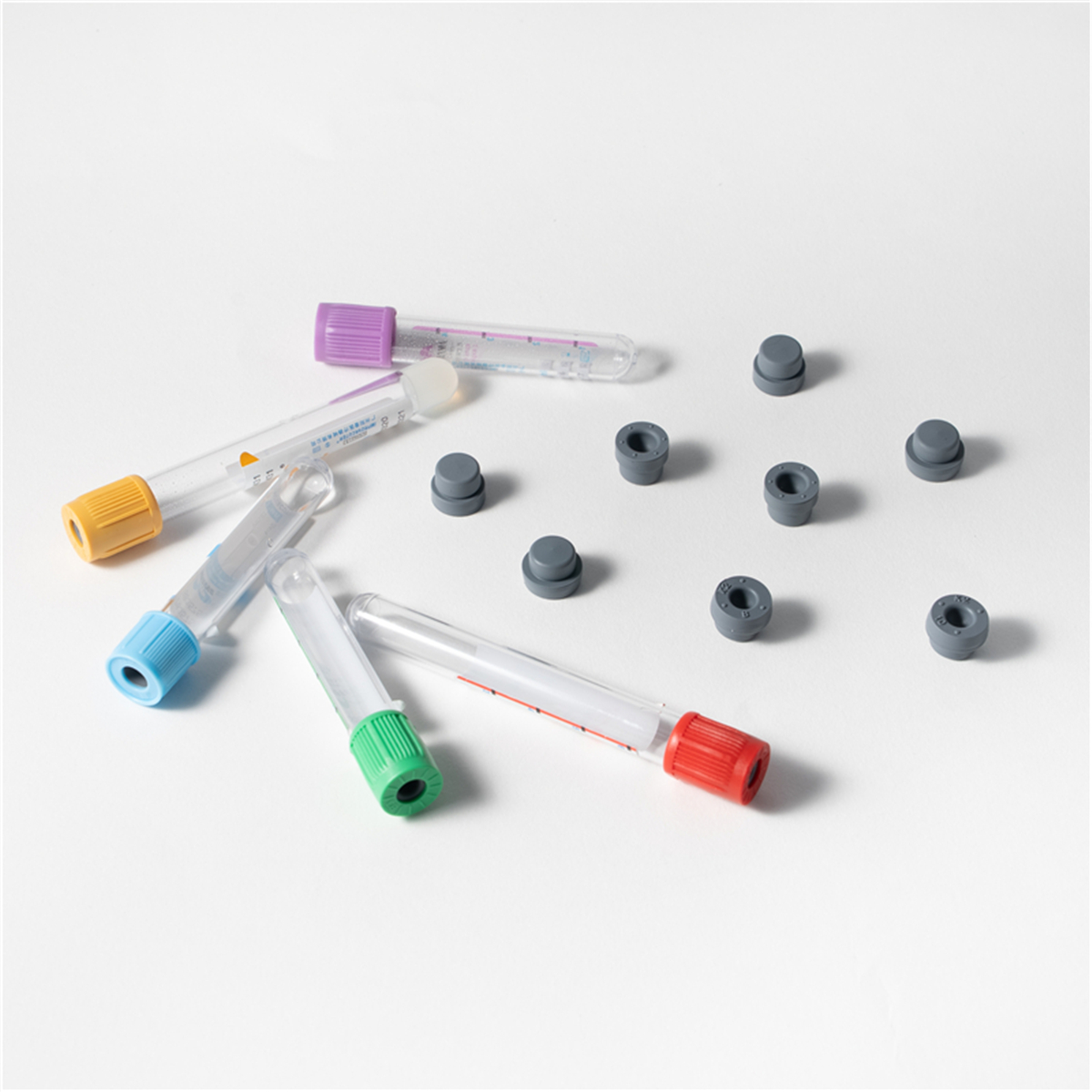
If your product targets more than one region, you're almost certainly dealing with more than one rubber stopper standard — and assuming they're equivalent is one of the fastest ways to get a registration delayed. USP, Ph. Eur., and ISO each approach elastomeric closures differently, and the differences show up in test methods, acceptance criteria, and documentation expectations.
This USP vs EP rubber stopper standard comparison is written for procurement and regulatory teams who need a practical answer: which standard applies where, where do they actually differ, and what does that mean for your sourcing decision?
1. The Three Systems at a Glance: Who Uses What, and Why
The three standards bodies aren't competing versions of the same document — they serve different purposes, and in most global programs you'll touch all three. Understanding which one drives which requirement is the first step to avoiding duplicated testing and last-minute regulatory questions.
| USP (United States) | Ph. Eur. (Europe) | ISO (International) | |
| Primary chapter | USP <381> Elastomeric Closures for Injection | Ph. Eur. 3.2.9 Rubber Closures | ISO 8871 (Parts 1–5) |
| Scope | Functional + biological requirements for injectable closures | Material composition, physico-chemical, functionality | Test methods for elastomeric parts (parenterals & medical devices) |
| Legal status | Compendial — enforceable in US | Mandatory for EU marketing authorization | Voluntary/consensus — used by agreement |
| Regional driver | FDA | EMA / national EU agencies | Global, often referenced in Asia, Latin America |
| Approach | Functional performance focus | Composition + extractables emphasis | Test methodology focus |
| Typical use | US NDA/ANDA submissions | EU MAA / CEP applications | Supplier qualification, non-compendial markets |
Here's the practical reality for most companies: if you're filing in both the US and EU, you need to satisfy both USP and Ph. Eur. — they are not interchangeable. ISO 8871 usually shows up as the test-method reference your China supplier uses to generate data, rather than as a filing requirement itself. SHIMEN generates ISO 8871 data as the baseline for all grades, then maps results to USP and Ph. Eur. acceptance criteria.
The most common source of confusion is that USP and Ph. Eur. both cover the same physical object but organize the requirements completely differently. USP <381> is oriented around functional tests — penetration force, fragmentation, self-sealing — because historically the FDA's concern was whether the stopper worked reliably in clinical use. A Ph Eur 3.2.9 vs USP elastomeric closure difference review makes this clear: Ph. Eur. leans much harder into material composition, extractables, and physico-chemical characterization, reflecting the European regulator's emphasis on what the stopper is made of and what can come out of it.
SHIMEN maintains compliance documentation for all three systems because our customers file in more than 80 countries — and in our experience, the teams who plan for multi-standard compliance upfront spend far less time answering deficiency letters later.
✅ Bottom line: USP drives functional performance for US filings, Ph. Eur. drives composition and extractables for EU filings, and ISO 8871 provides the shared test methods. Global products usually need USP + Ph. Eur., not either/or.
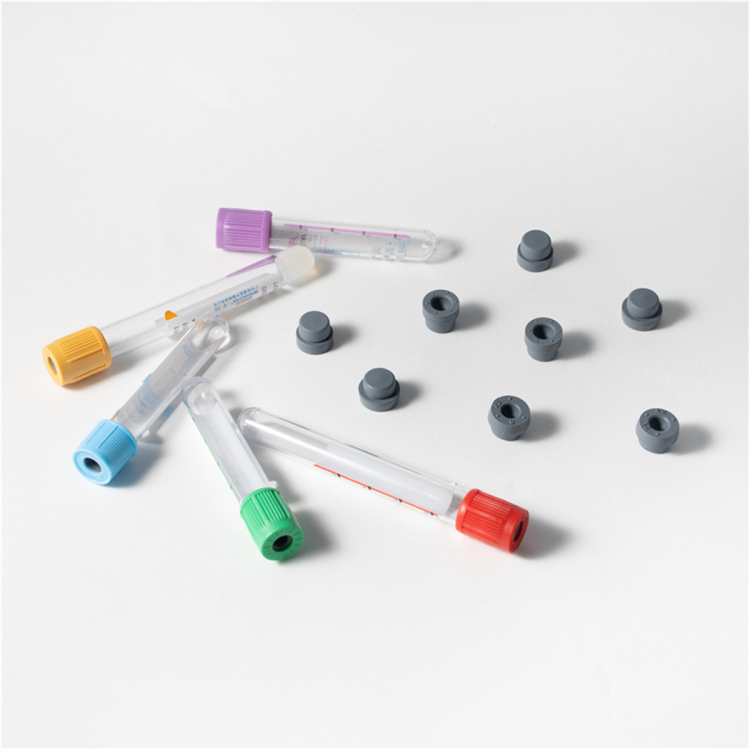
2. Where USP and Ph. Eur. Actually Differ (and What It Means for You)
Beyond the philosophical difference, there are concrete technical differences that change what you test and what numbers you report. If you're running a Ph Eur 3.2.9 vs USP elastomeric closure difference analysis for a global filing, these are the areas where the two standards don't line up.
Penetration force. USP <381> specifies a maximum force (typically ≤10 N) for a defined needle gauge inserted through the closure. Ph. Eur. also addresses penetrability, but the needle specification, the test fixture, and the way the closure is supported can differ. The practical consequence: a stopper that passes in one system may need re-testing under the other's exact conditions. Always have your supplier test under the specific method you're filing to.
Fragmentation. USP <381> sets a limit on rubber fragments generated during piercing (≤5 fragments above 50 μm is the commonly cited benchmark). Ph. Eur. covers fragmentation as well, but again under its own conditions. Fragmentation is one of the most formulation-sensitive tests — it depends heavily on the stopper's hardness, the cure system, and how much silicone lubrication is on the surface.
Self-sealing. Both systems require the closure to reseal after multiple punctures, verified by a dye or microbial ingress test. The number of punctures and the acceptance criteria differ. If your product is a multi-dose vial, this test deserves particular attention — it's directly tied to container closure integrity throughout the product's in-use life.
Extractables and physico-chemical testing. This is the biggest structural difference — and SHIMEN fields more questions about it than any other topic. Ph. Eur. 3.2.9 includes a suite of physico-chemical tests on the material itself — heavy metals, reducing substances, residue on evaporation, pH change, UV absorbance — that USP <381> does not require in the same form. USP addresses extractables-related concerns through separate informational chapters (USP <1663>/<1664>) and a risk-based approach rather than a fixed list. If you're filing in the EU, expect to provide Ph. Eur. physico-chemical data. This is where pharmaceutical elastomeric closure regulatory standards diverge most sharply, and where teams most often underestimate the data package needed.
Biological reactivity. Both require biological safety data, but the reference methods and classification differ (USP Class VI vs. Ph. Eur. biological reactivity testing). Neither is automatically accepted by the other regulator.
What this means for sourcing:
- Ask for both data sets upfront. A supplier who can provide USP <381> and Ph. Eur. 3.2.9 data for the same stopper grade saves you a full test cycle.
- Don't assume "USP compliant" covers EU. It's a common and expensive assumption.
- Watch for ISO 8871 as a bridge. Many suppliers — including Shijiazhuang No.4 Pharmaceutical Group Co., Ltd. — generate ISO 8871 test data as the underlying method set, then map results to USP and Ph. Eur. acceptance criteria. That's an efficient approach, but confirm the acceptance criteria match the target standard.
- SHIMEN provides USP <381>, Ph. Eur. 3.2.9, and ISO 8871 test reports for every standard grade, and supports custom documentation packages for OEM programs targeting specific markets. Whether you need wholesale volumes of a compendial grade or a custom compound for a specific filing, a full USP vs EP rubber stopper standard comparison data set is available for every SHIMEN stopper grade.
✅ Bottom line: The two standards differ in needle specs, acceptance limits, and especially physico-chemical testing — plan for both data sets from the start rather than discovering the gap during review.
FAQ
Q: If my stopper meets USP <381>, will EU regulators accept it?
A: Not automatically. USP compliance addresses functional performance for US filings. EU submissions require Ph. Eur. 3.2.9 data, which includes material composition and physico-chemical tests not covered by USP <381>. Most teams filing in both regions request both data sets from their supplier at the same time — it's far cheaper than running a second test program after submission.
Q: Which standard should I prioritize if I'm only launching in one market?
A: Match the target market. US → USP <381>. EU → Ph. Eur. 3.2.9. For markets without a national compendium (much of Asia, Latin America, and Africa), ISO 8871 or USP is typically accepted, but confirm with the local regulator. If you expect to expand geographically later, it's worth qualifying to both USP and Ph. Eur. now — the incremental cost is small compared to requalifying later.
Q: How do I verify a supplier's compliance claims are real?
A: Ask for three things: first, actual test reports (not just a certificate) referencing the specific chapter — USP <381>, Ph. Eur. 3.2.9, ISO 8871. Second, confirmation the testing was done by an accredited third-party lab or a qualified in-house lab with documented method validation. Third, batch-level data rather than a single "typical" result. A credible supplier of pharmaceutical elastomeric closure regulatory standards documentation will provide all three without hesitation.
Filing in multiple regions and not sure whether your stopper documentation will pass? Shijiazhuang No.4 Pharmaceutical Group Co., Ltd. — a leading China manufacturer of pharmaceutical rubber stoppers with 78 years of experience — offers a complimentary standards compliance review. Send us your target markets and current stopper spec, and our regulatory team will tell you which standards apply, what data you're missing, and how to close the gaps before submission.
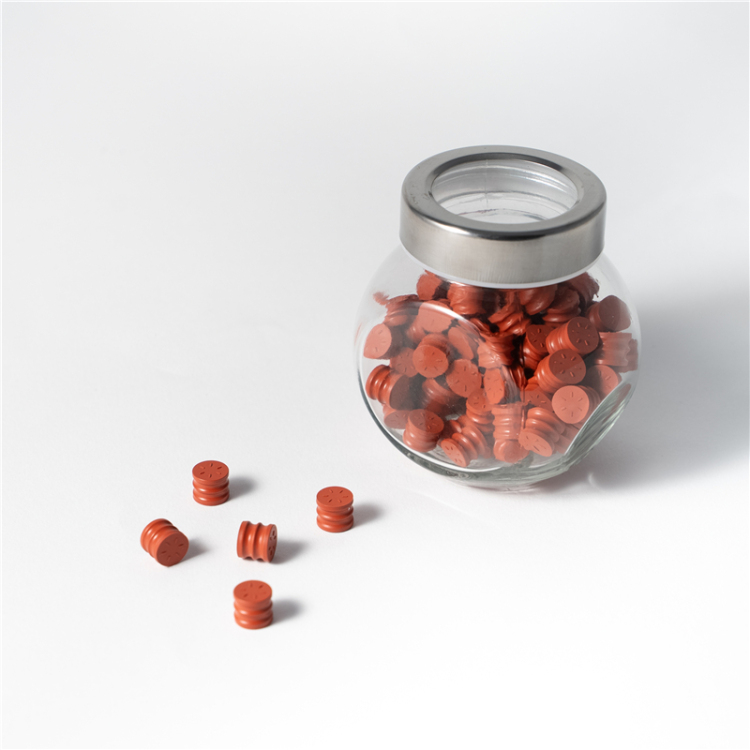
Contact us today for free samples and a technical consultation.
Published: October 2026 | By SHIMEN Pharmaceutical Packaging Team