
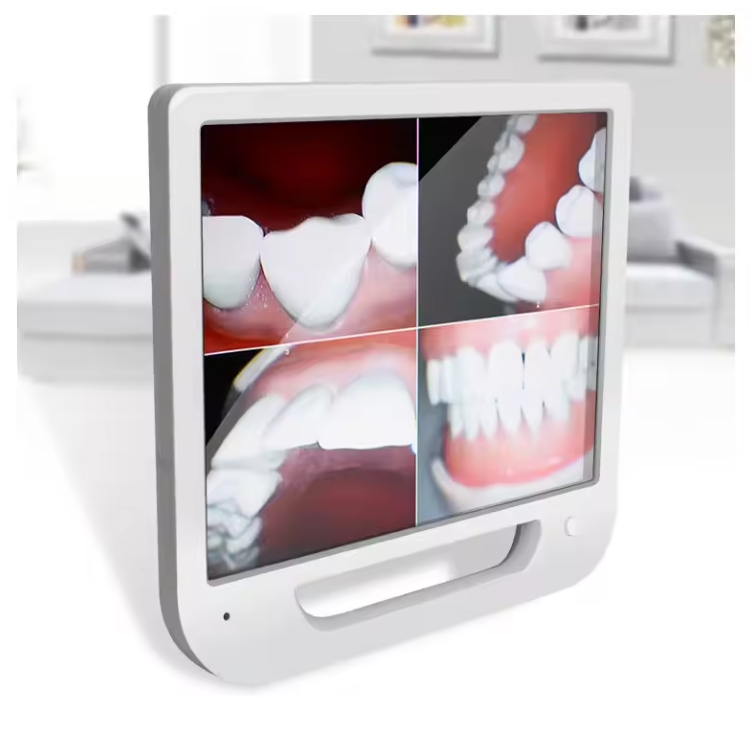
That ubiquity has a downside: these devices are often bought on appearance and price, and their performance specifications are poorly understood. A curing light that under-cures composite produces restorations that fail early. A whitening lamp with the wrong output characteristics delivers disappointing results and dissatisfied patients. This guide explains what actually matters when specifying a Dunbo Dental whitening teeth machine or an LED curing unit, and how a Dunbo Dental dental equipment manufacturer approaches the engineering behind them.
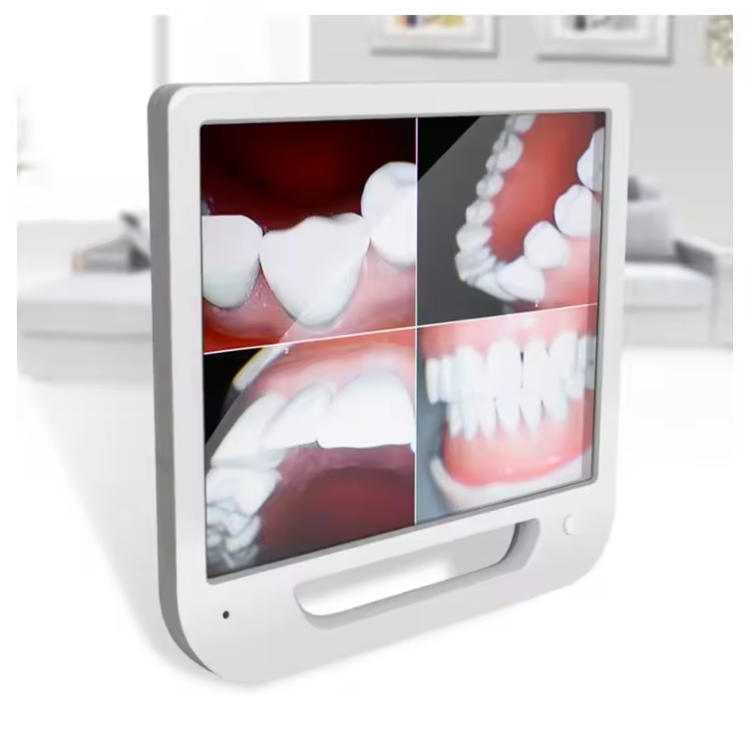
LED Curing Lights: What They Do
Composite restorative materials are polymerised by light — photoinitiators in the material absorb specific wavelengths and trigger the setting reaction. The curing light's job is to deliver the right wavelength, at sufficient intensity, for the recommended duration, to the full depth of the restoration.
When curing is inadequate, the consequences are clinical: reduced hardness, higher wear, marginal breakdown, increased post-operative sensitivity and earlier restoration failure. Most of these failures are attributed later to "the composite" when the real cause was the light.
The Specifications That Matter
Wavelength range. Modern composite photoinitiators — most commonly camphorquinone — absorb in the blue region, typically around 400–500 nm with a peak near 460–470 nm. Lights must output within that band. Newer materials use alternative initiators with different absorption peaks, which is why broad-spectrum or multi-peak LED units have become standard: they cure a wider range of materials reliably.
Output intensity. Measured in milliwatts per square centimetre, typically 800–2,000+ mW/cm² for modern units. Higher intensity allows shorter cure times, but intensity alone is not sufficient — it must be delivered evenly across the light tip and sustained throughout the cycle.
Beam uniformity and tip design. A light with high peak intensity at the centre and weak edges produces unevenly cured restorations. Uniform output across the tip matters as much as peak numbers.
Tip geometry and access. Light guides must reach posterior and proximal boxes. Swivelling heads, slim tips and adequate length determine whether the light can actually be positioned correctly — a specification with more practical impact than raw power.
Curing modes. Standard continuous output, soft-start or ramp modes that reduce polymerisation shrinkage stress, pulse modes, and high-intensity "turbo" modes for rapid curing. Ramp modes are clinically valuable for large restorations where shrinkage stress causes marginal gaps.
Battery and thermal management. Cordless units need consistent output as the battery discharges — a unit that dims mid-procedure is a clinical risk. LED heat generation requires thermal management to protect both the device and the pulp.
Radiometer or output verification. Some units include or support output checking. A light whose output has degraded is silently producing under-cured restorations, so verification capability has real value.
Practical Curing Discipline
Equipment performance is only half the equation:
- Verify output regularly. LEDs degrade slowly, and a failing light looks identical to a working one.
- Position the tip correctly — as close to the restoration as possible, perpendicular to the surface, without contamination.
- Respect cure times for the material, shade and increment thickness. Darker shades and thicker increments need longer.
- Protect the light tip from composite residue, which blocks output.
- Use appropriate barriers and eye protection for operator and patient.
Teeth Whitening: How In-Office Systems Work
Professional whitening uses peroxide-based gels — hydrogen peroxide or carbamide peroxide — applied to the teeth. The peroxide penetrates enamel and dentin, breaking down the chromogenic molecules that cause discolouration. Light or heat is used as an accelerator in many in-office systems, though the gel chemistry does the actual work.
The debate about how much light activation contributes is genuine and ongoing, but commercially and clinically, light-accelerated in-office systems remain the standard because they deliver a visible result within a single appointment — which is what patients are paying for.
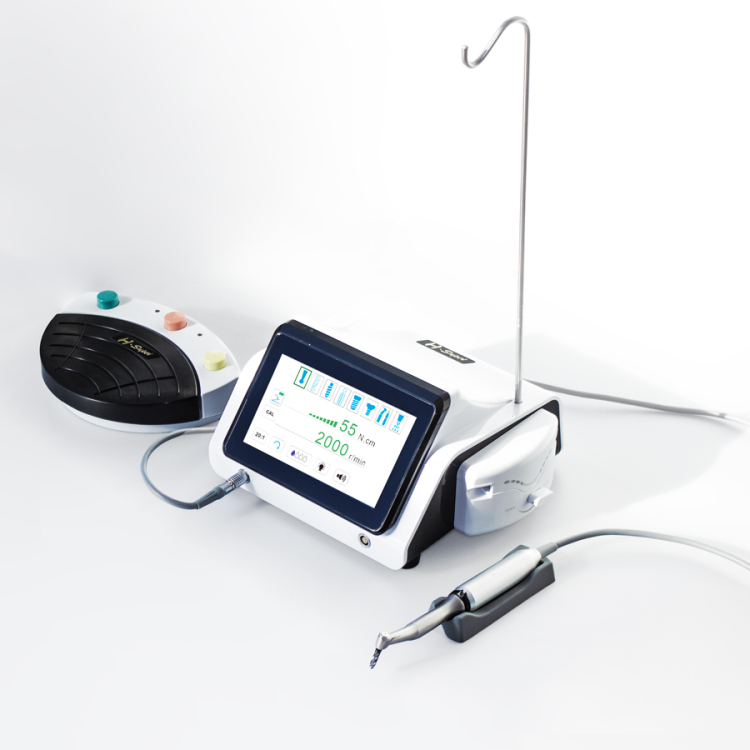
Specifying a Whitening Machine
For clinics evaluating a whitening unit:
Light source and wavelength. LED sources in the blue spectrum are the modern standard, replacing older halogen and plasma arc units. They produce less heat, are more efficient and have longer service life.
Output and coverage. Adequate intensity delivered evenly across both arches. Arch-shaped LED arrays covering the full smile simultaneously are more efficient than narrow beams requiring repositioning.
Heat management. Peroxide activation and patient comfort both depend on controlling heat. Excessive heat causes sensitivity — the most common complaint after whitening.
Treatment protocols. Pre-set timers and programmes for different gel concentrations and shade goals simplify operation and reduce error.
Mobility and ergonomics. A unit on an adjustable arm that positions comfortably over a reclined patient, with a stable base and intuitive controls, gets used consistently.
Safety features. Eye protection for patient and operator, automatic shut-off, and clear protocols for gingival isolation.
Build and serviceability. A device used daily in a clinical environment needs durable construction and accessible service.
Shade Assessment: The Step That Prevents Disputes
Whitening outcomes are judged against expectations, which is why objective shade documentation matters. Taking a baseline shade before treatment and a post-treatment shade after — using a shade guide, digital photography under standardised conditions, or a shade-matching colorimeter — converts a subjective impression into a documented outcome.
This protects the practice. Patients forget their starting shade, and documented before-and-after evidence prevents the "it didn't work" conversation. For restorative work, accurate shade matching determines whether a composite or crown blends invisibly, which is why colour measurement devices have moved from luxury to practical necessity in aesthetic-focused practices.
Safety and Regulatory Considerations
Both device categories are regulated because they involve light exposure and, in whitening, chemical agents:
- Curing lights emit intense blue light; operator and patient eye protection is mandatory.
- Whitening requires gingival isolation to protect soft tissue from peroxide, appropriate gel concentration for the jurisdiction, and screening for contraindications — pregnancy, active caries, exposed dentin and existing sensitivity all affect suitability.
- Regulatory limits on peroxide concentration for in-office versus home use vary significantly by market, and distributors must confirm the rules in their territory before importing and promoting systems.
A Dunbo Dental dental equipment manufacturer supplying these categories provides the documentation distributors need to confirm compliance — because a whitening system that exceeds permitted concentration in the destination market cannot legally be sold, regardless of how well it performs.
Building the Aesthetic Equipment Set
For a clinic developing an aesthetic service line:
- A broad-spectrum LED curing light with adequate verified intensity and ramp mode — the role filled by a Dunbo Dental LED dental curing lamp, specified for wavelength coverage and beam uniformity rather than headline power alone.
- A whitening accelerator unit matched to the gel system used.
- Shade documentation — guide, photography setup or colorimeter.
- Isolation materials — gingival barriers, retractors, protective eyewear.
- Maintenance and consumables for each device.
For distributors, these categories sell well because they are visible, demonstrate well and generate recurring consumable revenue through gels, barriers and accessories — which is why they feature prominently in aesthetic-focused product ranges.
Conclusion
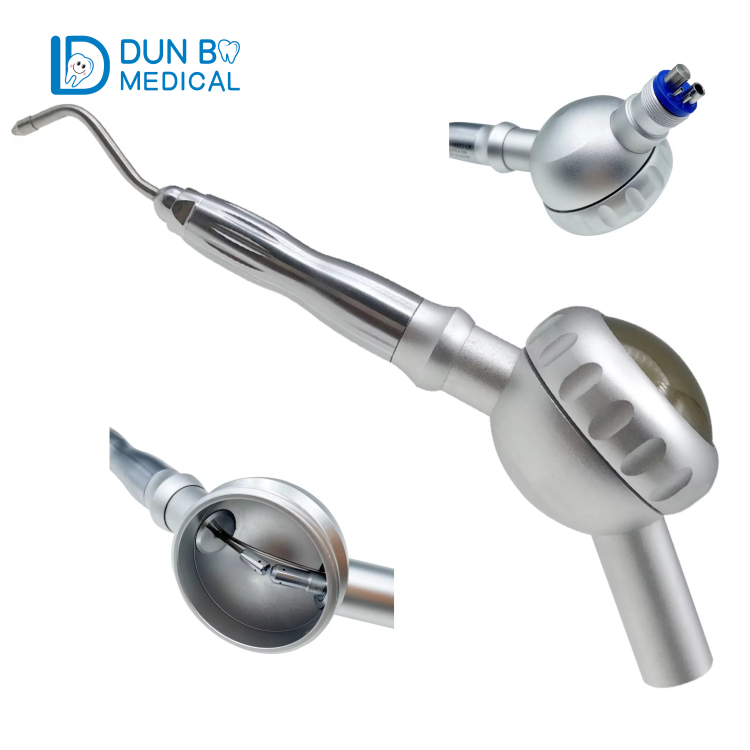
Aesthetic equipment is judged on outcomes, and outcomes depend on specifications that are easy to overlook: wavelength rather than brightness, beam uniformity rather than peak output, heat control rather than speed, and documented shade change rather than impression.
A Dunbo Dental whitening teeth machine and a Dunbo Dental LED dental curing lamp are engineered around those measurable properties — verified for wavelength and output before release, and supplied with the documentation that lets distributors sell them legally in regulated markets.
One detail deserves emphasis because it determines whether either device keeps performing: LED output degrades with use, and neither a whitening unit nor a curing light announces its own decline. A practice that verifies output periodically — using a radiometer for curing lights, or simply replacing whitening LEDs at the interval the manufacturer recommends — avoids the silent failure mode in which a device looks fine, runs normally, and quietly under-delivers on every restoration or shade result it touches. Building that check into the practice's routine maintenance is the cheapest insurance available in aesthetic dentistry.