
The same applies to soft tissue. Clean incisions, controlled haemostasis and predictable healing depend less on the blade than on how bleeding is managed during the procedure. A field that cannot be kept dry is a field where precision suffers.
This article covers the two device categories that address these needs: surgical and implant lighting, and electrosurgical units for soft-tissue management. Both sit within the chairside equipment range, and both are specified more often on price than on the properties that actually matter — which is why the following focuses on what to look for.
Why Surgical Lighting Is a Separate Category
Standard dental operating lights are designed for the oral cavity broadly. Surgical work imposes different requirements:
Depth. An osteotomy is prepared inside bone, and light must reach into a deep, narrow site rather than onto a broad surface.
Shadow control. Instruments, hands and retractors create shadows. Surgical fields require lighting that minimises them, because a shadow at the depth of an osteotomy is a blind spot.
Colour accuracy. Aesthetic work — shade matching, tissue assessment, margin evaluation — requires light that renders colour accurately. A light with poor colour rendering makes tissue look different from how it appears in daylight, which produces aesthetic errors the patient notices later.
Adjustability. Surgical fields change through a procedure. Light position and intensity must be adjustable without breaking sterility or disrupting the surgical team.
Heat. Light sources placed close to tissue must not heat it. LED sources are strongly preferred over older halogen technology for this reason.
What to Specify in a Surgical or Implant Lamp
Illuminance. Adequate intensity at the working distance, adjustable across a useful range. More is not automatically better — excessive intensity causes glare and eye strain for the team.
Colour temperature. For shade-matching and aesthetic work, a neutral daylight-equivalent range (around 5,000–6,500 K) is preferred. Warmer light distorts shade perception.
Colour rendering index (CRI). A high CRI — ideally above 90 — means colours render truly. This matters both for shade matching and for assessing tissue condition, inflammation and perfusion.
Shadow management. Multiple light sources or a large effective emitting area reduce shadowing. This is the specification that most affects surgical visibility.
Positioning. Adjustable arms, stable bases and the ability to position light without contaminating the sterile field. Mobility matters in practices where the lamp serves more than one operatory.
Controls. Adjustable intensity, and ideally controls that can be operated without breaking asepsis — foot control or a sterilizable handle.
LED source and service life. LEDs run cool, are energy efficient and have long service life, with output degrading slowly rather than failing abruptly. Output should be verified periodically, because gradual degradation is silent.
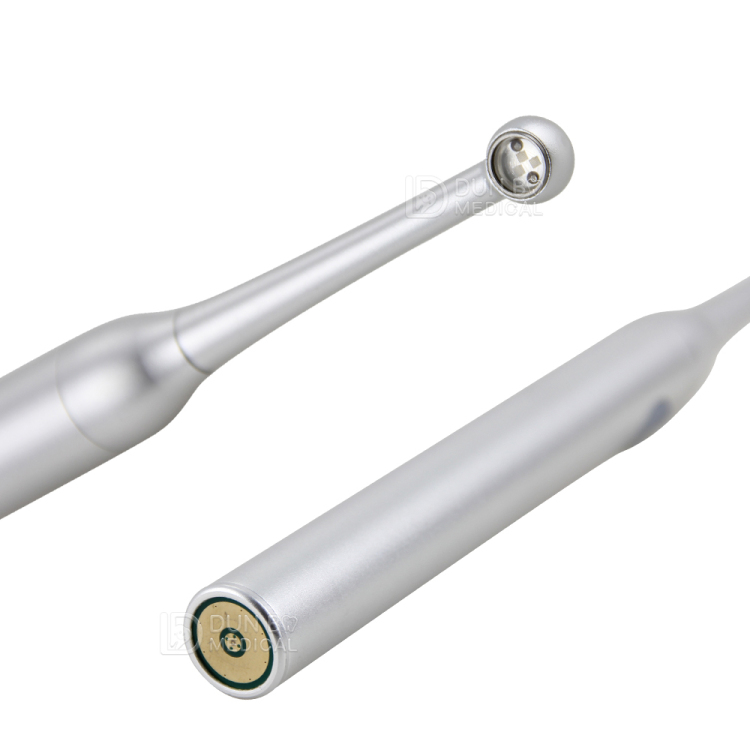
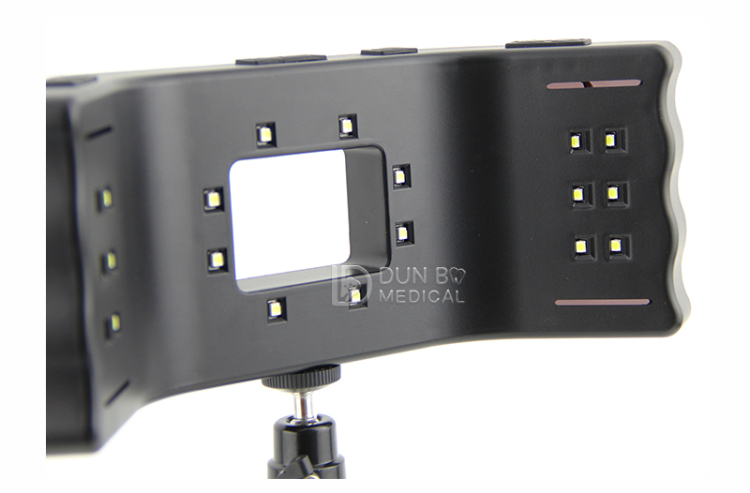
A Dunbo Dental dental implant lamp is specified around these properties — intensity, colour temperature, colour rendering and positioning — rather than around headline brightness, because the clinical variable is what the surgeon can actually see at depth.
Electrosurgery: What It Does
Electrosurgical units pass high-frequency electrical current through tissue via an active electrode. The current generates heat at the tissue contact point, producing either cutting (vaporisation of cells) or coagulation (protein denaturation and vessel sealing), depending on waveform and power.
For dentistry, the clinically relevant capabilities are:
Cutting. Incisions with simultaneous haemostasis, which keeps the field visible — the principal advantage over a scalpel in vascular tissue.
Coagulation. Sealing bleeding vessels without cutting, used to control bleeding before impressions, restorations or cementation.
Combined or blended modes. Varying degrees of cutting and coagulation in one waveform, selected by procedure.
Clinical Applications
Electrosurgery in dentistry is used for:
- Gingivectomy and gingivoplasty — reshaping tissue for aesthetics or access.
- Crown lengthening — soft-tissue recontouring to expose sound tooth structure.
- Haemostasis before impressions or cementation — a dry field is critical for accurate impressions and clean cementation.
- Implant second-stage exposure — uncovering implants through tissue.
- Frenectomy — frenum release.
- Operculectomy — removing tissue over partially erupted teeth.
- Removal of hyperplastic tissue — including tissue over-growth around restorations.
- Biopsy access where indicated.
The common thread is soft tissue where bleeding would otherwise obscure the field.
Safety and Contraindications
Electrosurgery involves electrical current applied to a patient, and the safety requirements are not optional:
Patients with cardiac pacemakers or implanted defibrillators. Electrosurgery can interfere with device function. This is a genuine contraindication requiring medical consultation; alternatives must be available.
Power settings. Use the lowest effective power. Excessive power causes tissue necrosis, delayed healing, and in bone-adjacent work, thermal damage that can compromise an implant site.
Avoid contact with bone and teeth. Current applied to bone or to the periodontal ligament can cause necrosis. Electrodes must contact soft tissue only.
Avoid contact with metal restorations and implants. Current conducted through metal causes heat and tissue damage at distant contact points.
Flammable agents. No flammable anaesthetics, solvents or oxygen-enriched environments near the active electrode.
Patient return electrode. Where a return plate is used, correct placement and full contact are required to prevent burns at the return site.
Smoke evacuation. Surgical plume should be evacuated; this is standard practice rather than a refinement.
Training. Electrosurgery is technique-sensitive. Power, electrode type, contact pressure and duration all affect outcome, and poor technique produces necrosis and delayed healing that is often misattributed to the device.
Electrosurgery Versus Alternatives
Scalpel. Clean incisions with minimal thermal damage, preferred where healing quality and histological clarity are paramount. No haemostasis.
Electrosurgery. Haemostasis with cutting; thermal lateral damage is the trade-off, and technique determines how much.
Laser. Haemostasis with different tissue interaction; higher capital cost, additional safety requirements, and wavelength-specific indications.
Many practices use more than one modality: scalpel for primary incisions where healing matters most, electrosurgery for haemostasis and contouring.
Shade Measurement: The Adjacent Consideration
Aesthetic work depends on accurate shade assessment, and colour-correct surgical lighting supports it. Where practices perform significant anterior restorative work, dedicated shade measurement — a shade guide under standardised conditions, digital photography with controlled lighting, or a colorimeter — converts subjective impression into documented outcome.
This protects the practice in the same way before-and-after documentation protects a whitening service: patients forget their starting shade, and recorded evidence settles the question.
What to Specify When Buying
For clinics:
Lighting. Intensity range, colour temperature, CRI, shadow control, positioning and LED source — verified, not assumed.
Electrosurgery. Power range and fine adjustability, available modes (cut, coagulate, blend), electrode availability and cost, safety features, and smoke management compatibility.
Training and documentation. Electrosurgery in particular requires trained operators; manufacturers' protocols and clinical guidance should be part of the purchase.
Service. Both categories are used daily; local service and spare-part availability determine downtime cost.
For distributors, these categories pair well with implant and surgical consumables programmes, because the buyer is the same clinician and the sales conversation is the same one — which is how they are positioned within Dunbo Dental dental clinic solutions.
A Dunbo Dental surgical electrosurgery unit is supplied with the power control, mode selection and electrode range those applications require, alongside documentation prepared for regulated markets.
Conclusion
Surgical and implant work fails at the margins of what the clinician can see and control. Lighting determines the first; haemostasis determines the second. Both are specification decisions disguised as equipment purchases — and both repay attention to the properties that are rarely quoted: colour rendering, shadow control, power adjustability and electrode availability.
Specified properly, a Dunbo Dental dental implant lamp and a Dunbo Dental surgical electrosurgery unit convert difficult procedures into controlled ones, which is the practical definition of surgical capability in a general practice. Both are supplied as part of Dunbo Dental dental clinic solutions, so lighting, soft-tissue management and the consumables around them are specified as one capability rather than as separate purchases made years apart.