
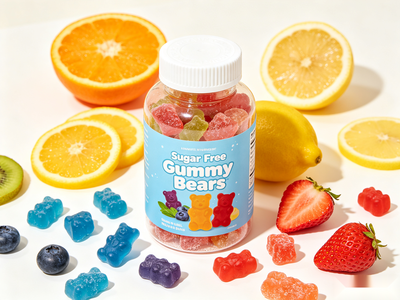
Sugar free gummy bears look very similar to regular gummies, but the formulation behind them is quite different.
Removing sugar is not simply a matter of leaving one ingredient out. Sugar affects sweetness, texture, moisture, solids, and even how a gummy holds up during storage. Once it is reduced or removed, the entire formula has to be adjusted.
That is why some sugar-free gummies taste surprisingly close to regular candy, while others feel softer, firmer, stickier, or leave a noticeable aftertaste.
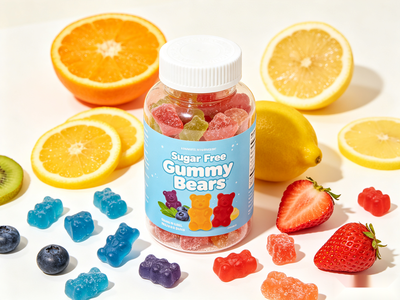
What Are Sugar Free Gummy Bears?
Sugar free gummy bears are gummies made without the conventional sugar system commonly used in standard gummy candy.
Regular gummy bears often rely on ingredients such as sucrose and glucose syrup. Sugar-free versions replace some or all of these with other sweetening and bulking ingredients.
Depending on the formula, these may include sugar alcohols, high-intensity sweeteners, fibers, or newer low-sugar ingredients.
The exact combination matters because sweetness is only one part of the job. A gummy also needs the right body, chew, moisture level, and stability.
What Is Used Instead of Sugar?
There is no single standard sugar-free gummy formula.
Common ingredients may include:
| Ingredient | Role in Sugar-Free Gummies |
|---|---|
| Maltitol | Provides sweetness and bulk |
| Sorbitol | Adds sweetness and helps with texture |
| Erythritol | Low-calorie sweetener with a cleaner taste |
| Stevia | High-intensity sweetener used in small amounts |
| Allulose | Used in some reduced-sugar formulations |
| Soluble fiber | Can provide bulk and affect texture |
In practice, manufacturers often use more than one ingredient.
A high-intensity sweetener such as stevia can provide sweetness, but it does not replace the physical bulk that sugar contributes. That is why fiber, sugar alcohols, or other solids may still be needed.
The challenge is balancing sweetness without creating an unpleasant cooling effect, bitterness, aftertaste, or unusual texture.
Why Can Sugar Free Gummy Bears Cause Digestive Problems?
This is one of the most common concerns associated with sugar-free gummy candy.
Some sugar-free gummies contain sugar alcohols such as maltitol or sorbitol. These ingredients are not always fully absorbed in the small intestine.
When consumed in larger amounts, they may cause digestive effects such as:
-
Gas
-
Bloating
-
Abdominal discomfort
-
Loose stools
How much a person can tolerate varies.
This is also why the serving size matters. A few pieces and an entire bag are not the same thing, especially when the formula relies heavily on sugar alcohols.
Not every sugar-free gummy uses the same sweetening system, so it is worth checking the ingredient list rather than assuming all products will have the same effect.
Sugar Free vs. Regular Gummy Bears
The difference goes beyond calorie count or sugar content.
| Sugar-Free Gummies | Regular Gummies |
|---|---|
| Use alternative sweeteners | Usually use sugar and glucose syrup |
| Texture can be harder to balance | More established texture system |
| May have aftertaste depending on sweetener | Familiar sweetness profile |
| Some sweeteners may affect digestion | Fewer sugar-alcohol-related concerns |
| Often require more formulation work | Generally easier to formulate |
Regular sugar has a very predictable role in gummy production.
Once it is removed, manufacturers need to replace several functions at the same time, not just sweetness.
Why Are Sugar-Free Gummies Harder to Manufacture?
Sugar contributes much more than flavor.
It affects the concentration of solids in the gummy mass, moisture movement, chewiness, stickiness, and shelf stability. It can also influence how easily the gummy is cooked, deposited, dried, coated, and packaged.
That means a sugar-free formulation can easily go wrong in several ways.
The gummies may become too soft, too sticky, too dry, or too firm. Some alternative sweeteners may crystallize. Others may create a cooling sensation or leave a strong aftertaste.
Water activity also needs to be controlled carefully because moisture affects both texture and product stability.
In other words, a successful sugar-free gummy is not simply a regular gummy recipe with the sugar removed.
The complete system has to be rebuilt around the new sweetener combination.
Can Supplement Gummies Be Made Sugar Free?
Yes. Sugar-free systems can also be used in vitamin, mineral, botanical, and other functional gummies.
But supplement gummies add another layer of difficulty.
Active ingredients may already have bitter, sour, metallic, or herbal notes. Once the regular sugar system is removed, those flavors can become more noticeable.
The formula therefore has to balance several things at once:
-
Sweetness
-
Active ingredient load
-
Flavor masking
-
Gummy texture
-
Moisture
-
Stability
This becomes particularly important in formulas containing mineral salts, botanical extracts, or larger amounts of active ingredients.
A sugar-free supplement gummy may look simple on the label, but the formulation work behind it is often more complex than a standard vitamin gummy.
What Should You Look for in Sugar Free Gummy Bears?
Start with the ingredient list.
Do not look only at the words “sugar free” on the front of the package. Check which sweeteners are actually being used.
If the formula contains sugar alcohols, serving size is especially important.
It is also useful to check:
-
Total carbohydrate content
-
Type of sweetener
-
Fiber content
-
Recommended serving size
-
Allergen information
-
Storage instructions
For supplement gummies, the active ingredient dosage should also be clear.
A good formula needs to work both nutritionally and physically. A product that is technically sugar free but has poor texture, unpleasant taste, or an impractical serving size is not necessarily a well-designed gummy.
FAQ
Are sugar free gummy bears really sugar free?
Products labeled sugar free generally contain little or no conventional sugar, but they may still contain carbohydrates, sugar alcohols, fibers, or other sweetening ingredients. Always check the nutrition panel and ingredient list.
What sweeteners are used in sugar free gummy bears?
Common options include maltitol, sorbitol, erythritol, stevia, allulose, and soluble fibers. The exact sweetener system varies by manufacturer.
Why do sugar free gummy bears sometimes cause diarrhea?
Some sugar alcohols are only partly absorbed by the body. Large amounts may draw water into the intestine or be fermented by gut bacteria, which can lead to gas, bloating, or loose stools.
Can vitamin gummies be made sugar free?
Yes. Vitamins, minerals, and botanical ingredients can be formulated into sugar-free gummies, but the sweetener system must be balanced with active ingredient dosage, taste, texture, and stability.