
The uncomfortable truth about instrument sterilisation is that most failures are procedural rather than equipment failures. An autoclave running a correct cycle cannot sterilise an instrument that was not cleaned first, and a handpiece autoclaved without lubrication is being damaged by the very process meant to make it safe. This article sets out what actually works — the sequence, the parameters, and the specific requirements of rotary instruments — following the Dunbo Dental handpiece sterilisation protocol approach used across the product range.
The Sequence: Clean, Lubricate, Sterilise
Order matters, and getting it wrong is the most common error in practice:
Step one — clean. Remove debris before anything else. Organic material left on an instrument shields microorganisms from the sterilisation cycle, and no amount of autoclave time compensates for it. Cleaning is mechanical — brushing, ultrasonic cleaning where appropriate, and flushing internal channels — followed by thorough rinsing.
Step two — lubricate. For handpieces and gear-driven instruments, lubrication before sterilisation protects bearings and gears through the cycle. It also serves a second purpose: oil displaces residual moisture and contaminants from internal surfaces.
Step three — purge. Run the instrument briefly to expel excess lubricant. Excess oil attracts debris and can migrate into the head, contaminating the operating field.
Step four — package. Instruments are packaged in sterilisation pouches or wrapped, allowing steam penetration while maintaining sterility after the cycle. Instruments should be sterilised in the open or unlocked position where the design requires it.
Step five — sterilise. Autoclave at validated parameters — commonly 134°C for the standard cycle time, or the parameters specified by the instrument manufacturer and required by local regulation.
Step six — dry and store. A wet pack is a contaminated pack. Drying must complete, and packaged instruments stored in clean, dry conditions with rotation by expiry date.
Why Handpieces Are Different
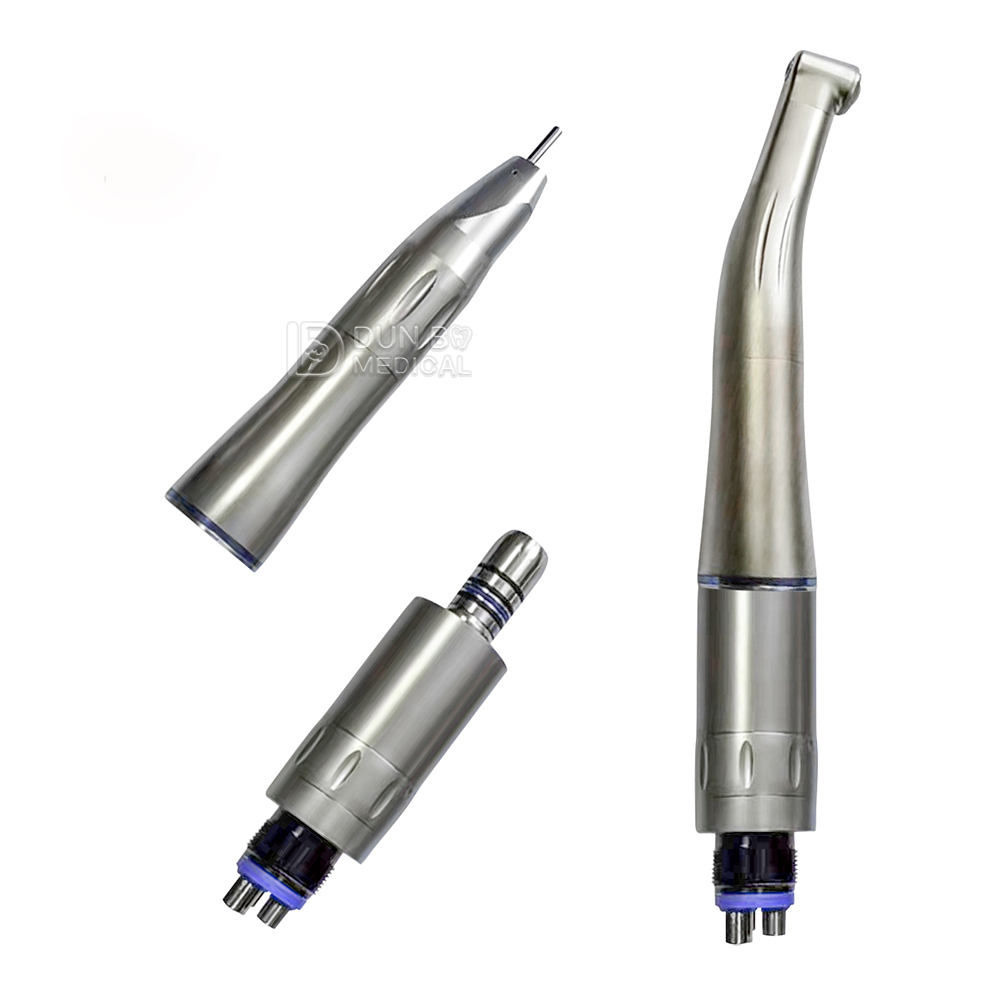
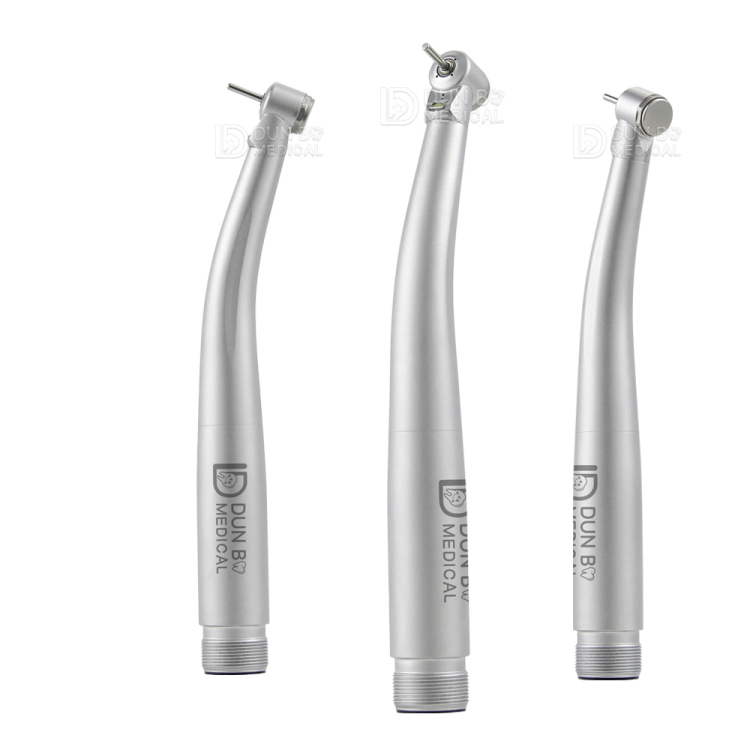
A high-speed handpiece is not a solid instrument. It contains a turbine assembly, bearings, air and water channels, and a chuck mechanism — an internal geometry that makes it harder to clean and sterilise than a mirror or a probe.
Three requirements follow:
Internal channel flushing. Air and water lines must be purged and flushed before sterilisation. Debris and biofilm inside these channels are protected from surface cleaning and can be expelled into the next patient's mouth.
Lubrication through the correct port. Turbine instruments are lubricated via a spray adapter or automated oil-system cleaner that distributes lubricant through the turbine and drive-air pathway. A drop of oil at the bur end does not reach the bearings.
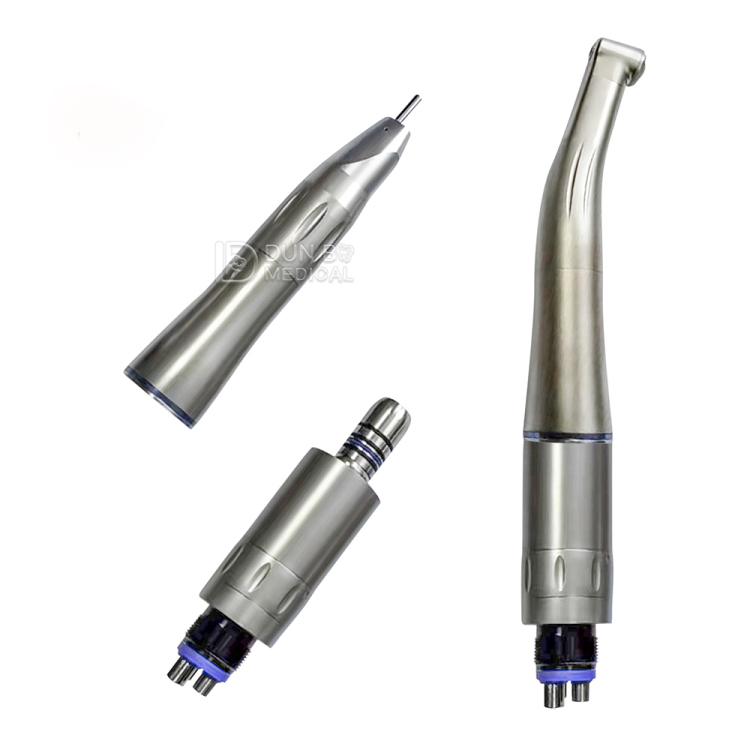
Gear-driven instruments need their own regime. Contra-angles contain gear trains requiring specific lubrication, distinct from turbine spray. Using the wrong product leaves gears unprotected through repeated cycles, producing the noise and eventual seizure that clinics attribute to age.
The Dunbo Dental handpiece sterilisation protocol exists because these instruments fail differently from everything else on the tray — and because the failure is silent until it is expensive.
Sterilisation and Instrument Life
Autoclaving is destructive by design: heat, moisture, pressure and thermal cycling attack lubrication, seals and tolerances. Instruments designed for clinical use must survive hundreds of cycles, which is why sterilisation endurance is part of product qualification rather than a field experiment left to customers.
The practices that extend service life:
- Never sterilise an unlubricated handpiece.
- Never exceed stated temperature or cycle parameters in pursuit of faster turnaround.
- Avoid thermal shock — do not run a hot instrument under cold water.
- Do not immerse instruments not specified for immersion.
- Respect service intervals; bearings replaced on schedule prevent the mid-procedure failures that disrupt clinical schedules.
A practice that follows these consistently will find its instruments reaching expected service life rather than half of it.
Burs, Files and Consumables
Rotary consumables follow the same principle with different constraints:
Burs must be cleaned of debris in flutes and diamond grit before sterilisation. A bur with packed debris in its cutting geometry cannot be effectively sterilised. Discard indicators — visible wear, dulling, discolouration, bent shanks, shedding grit — determine when a bur leaves service.
Endodontic files are single-use in most jurisdictions, driven by both cross-contamination concerns and fatigue reality: a file cannot be reliably inspected for the micro-cracks that precede separation. Where reuse is permitted, cleaning, sterilisation and inspection before every use are mandatory, with discard at any sign of unwinding or distortion.
Prophylaxis angles and polishing instruments are available in both reusable autoclavable versions and single-use configurations, chosen by practice economics and local regulation.
Monitoring and Records
Sterilisation must be verified, not assumed:
Cycle monitoring. Mechanical indicators (time, temperature, pressure) checked every cycle.
Chemical indicators. Internal and external indicators on each pack confirming exposure to sterilisation conditions.
Biological indicators. Periodic spore testing, at the frequency required by local regulation — the only method that actually confirms microbial kill.
Records. Cycle logs, indicator results and maintenance records retained. When a question arises, records are the answer; memory is not.
Batch traceability. Instruments and consumables coded to batches, so that a recall or a question can be resolved to specific units rather than to an entire inventory.
Single-Use Versus Reusable
The direction of travel in most regulated markets is toward single-use for items where reprocessing is difficult or where fatigue cannot be inspected — endodontic files, prophylaxis angles, some bur categories. The drivers are regulatory, economic and clinical: reprocessing costs labour, carries liability, and cannot restore a fatigued instrument.
The counter-argument is cost and waste, which is real. The practical resolution most practices reach: single-use where regulation or fatigue requires it, reusable with rigorous reprocessing elsewhere, and honest costing of both — because reprocessing labour is frequently omitted from the comparison that makes single-use look expensive.
Building Infection Control Into the Workflow
Infection control fails at the busy moments, not the quiet ones. The practices that hold up under pressure share three habits:
Zoning. Clean and contaminated flows physically separated, so a sterilised instrument never travels back across a contaminated path.
Instrument stock sufficient to the schedule. Understocking is the root cause of shortcut-taking — when the next patient is seated and no instrument is ready, protocol is what gets sacrificed. This is where instrument quantity becomes an infection-control decision rather than a purchasing one.
Training and audit. Staff trained on the specific requirements of each instrument type, with periodic audit rather than one-time induction.
Positioned this way, infection control becomes part of the practice's operating design — which is how it is treated within Dunbo Dental dental clinic solutions, where instrument quantity, maintenance products and sterilisation consumables are specified together rather than bought separately.
The Manufacturer's Responsibility
Infection control is not solely a practice-side obligation. Manufacturers contribute in three ways:
Design for reprocessing. Instruments designed so internal channels can be flushed and surfaces cleaned, with reprocessing instructions that are specific rather than generic.
Endurance validation. Verifying that instruments survive repeated sterilisation cycles rather than only performing when new — the Dunbo Dental quality control process treats sterilisation endurance as part of qualification.
Clear instructions. Stating lubrication, sterilisation and service requirements plainly, so that a practice following the instructions gets the service life the instrument was designed for.
Conclusion
Sterilisation is a sequence, not a cycle. Clean first, lubricate before the autoclave, purge excess, package properly, run validated parameters, verify with indicators, and record the result. Instruments designed for reprocessing and validated for sterilisation endurance make that sequence reliable; shortcuts make it cosmetic.
That validation is not incidental. It is examined alongside speed, torque and concentricity as part of the Dunbo Dental quality control process, because an instrument that cannot survive repeated reprocessing is not a clinical instrument regardless of how well it performs when new.
The uncomfortable summary: the practices with the fewest infection-control incidents are rarely the ones with the most expensive autoclaves. They are the ones whose sequence holds on the busiest day of the week — supported by supply specified as a system rather than item by item, which is the reasoning behind Dunbo Dental dental clinic solutions.