
L-Theanine Defies the Sleep Supplement Slowdown: New Opportunities for Formulators and Supplement Brands
Published: November 24, 2026
The global sleep supplement market is entering a more selective phase. Consumers are still looking for convenient solutions that support relaxation and better nighttime routines, but they are becoming more cautious about generic sleep products, complicated ingredient lists and formulas that do not provide a clear reason to buy.
Against this background, L-theanine is emerging as one of the category’s notable growth ingredients.
Recent market data reported by NutraIngredients shows that online interest in L-theanine supplements increased by 148.8% year over year. NielsenIQ data also indicated that L-theanine sleep-aid products generated approximately US$247 million in sales, representing 9% growth, while unit sales increased by 10% to 17.3 million.
This growth occurred even as the broader sleep-aid category declined and the number of sleep products containing L-theanine fell by 6% to 199 products. The data suggests an important market shift: consumers may be buying fewer undifferentiated sleep products while concentrating their attention on recognizable ingredients with clearer positioning. nutraingredients.com
Why Is L-Theanine Attracting Attention?
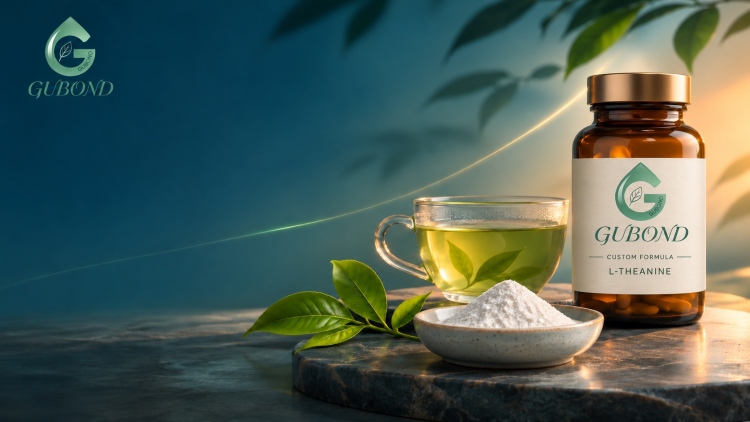
L-theanine is an amino acid naturally associated with tea. In the supplement market, it is commonly positioned in products designed for relaxation, stress-management routines, mental focus and nighttime wellness.
Its commercial appeal comes from several characteristics:
- It is familiar to consumers interested in tea-derived ingredients.
- It can be used in both daytime calm-focus and nighttime relaxation concepts.
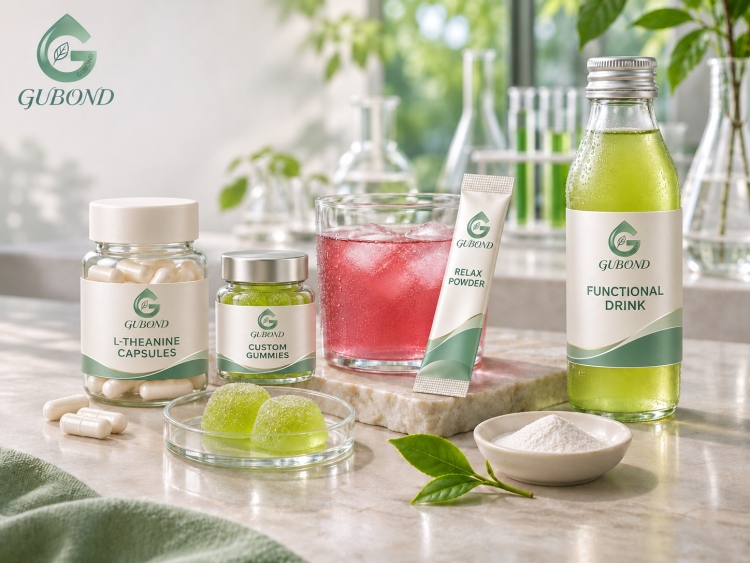
- It is suitable for capsules, tablets, gummies, powder sticks and functional beverages.
- It can support melatonin-free product positioning.
- It can be combined with minerals, botanical extracts, amino acids and vitamins.
However, successful positioning depends on the intended use occasion. A daytime product should not be marketed in exactly the same way as a bedtime formula. Brands need to define whether the product is intended for calm focus, evening relaxation, sleep-routine support or broader stress-management positioning.
Four Product Concepts Worth Exploring
1. L-Theanine and Magnesium Glycinate Bedtime Powder
Powder sticks and solid beverage products provide more formulation capacity than many gummies or capsules. They are suitable for brands developing an evening ritual product that can be mixed with water before bedtime.
Magnesium glycinate can complement a mineral-based wellness concept, while flavors such as berry, peach, citrus or light tea can help create a more enjoyable user experience.
Formulators should pay attention to elemental magnesium content, serving size, flavor masking, dispersibility and local regulatory requirements.
2. L-Theanine and GABA Capsules
Capsules remain a practical option for brands that want a simple formula, precise serving control and relatively straightforward manufacturing.
An L-theanine and GABA combination can be positioned around evening relaxation or calm-support routines. Depending on the target market, brands may also consider magnesium, vitamin B6 or selected botanical extracts.
Regulatory status, permitted claims and ingredient specifications should always be reviewed for the destination country before commercialization.
3. L-Theanine and Ashwagandha Gummies
Gummies offer strong consumer familiarity and are suitable for lifestyle-oriented stress and relaxation concepts.
A formula combining L-theanine with standardized ashwagandha extract may appeal to consumers looking for convenient daily stress-management products. However, gummies have limited active-ingredient capacity, and botanical extracts can introduce bitterness, color variation and stability challenges.
Developers should specify the plant part, extraction ratio or active-compound standardization of the ashwagandha ingredient rather than purchasing only by product name.
4. L-Theanine Functional Drinks
Ready-to-drink beverages and powdered drink mixes can connect relaxation support with a more enjoyable consumption experience.
Potential concepts include:
- Evening relaxation beverages
- Low-sugar tea drinks
- Calm-focus drinks for work and study occasions
- Caffeine-balanced tea formulations
- Travel and nighttime routine drink powders
Taste remains critical. Current industry trend reporting shows that consumers increasingly expect functional products to deliver health-oriented benefits without sacrificing flavor and sensory enjoyment. foodingredientsfirst.com
Formulation Challenges Brands Should Not Overlook
The growth of an ingredient does not automatically guarantee the success of every product containing it. Product differentiation still depends on formulation quality, dosage-form suitability and clear communication.
Key development considerations include:
Clear product positioning
A formula should have one primary consumer benefit and use occasion. Combining too many popular ingredients can make the product more expensive without creating a stronger value proposition.
Serving-size feasibility
Capsules, gummies, tablets and beverages have different capacity limitations. The intended amount of each active ingredient should be evaluated before selecting the final dosage form.
Flavor and sensory performance
Botanical extracts, minerals and amino acids may introduce bitterness, astringency or aftertaste. Sweetener systems, acids and natural flavors must be selected as part of the formula rather than added as an afterthought.
Stability and compatibility
Ingredient interaction, moisture, temperature, light and packaging can affect finished-product performance. Pilot production and stability evaluation are particularly important for gummies, powders and beverages.
Destination-market compliance
L-theanine, GABA, botanical extracts and functional claims may be regulated differently across markets. Labels and promotional language should avoid unapproved disease-treatment claims such as “treats insomnia” or “reduces anxiety.”
What This Trend Means for Supplement Brands
The market opportunity is not simply to launch another generic sleep supplement.
The stronger opportunity is to develop a clearly positioned product based on a recognizable ingredient, an appropriate dosage form and an easy-to-understand use occasion. Products that combine credible ingredient selection with good taste, convenient packaging and transparent specifications are more likely to stand out.
The current momentum behind L-theanine also creates opportunities beyond nighttime products. It can support product concepts for daytime focus, work-related stress, travel routines and tea-based functional beverages.
GUBOND Ingredient and OEM/ODM Support
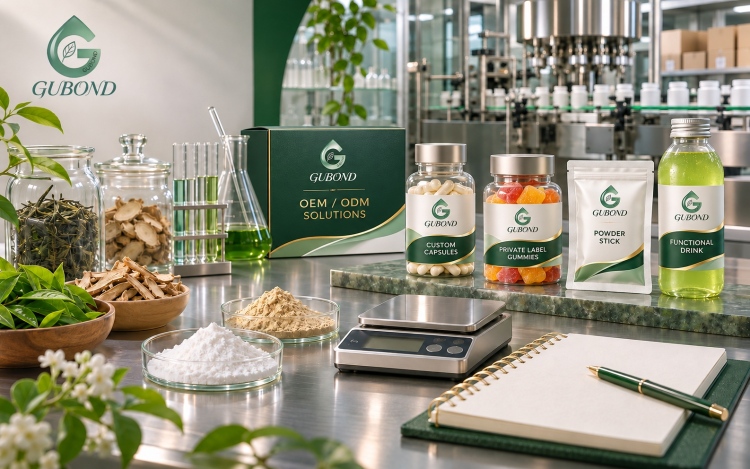
GUBOND supports supplement brands, distributors and product developers with functional ingredients and customized finished-product solutions.
Available development capabilities include:
- L-theanine and amino-acid ingredients
- Magnesium glycinate and other mineral ingredients
- GABA and functional nutrition ingredients
- Ashwagandha and botanical extracts
- Dietary fibers, prebiotics and probiotics
- Natural sweeteners, flavors and colors
- Capsules and tablets
- Gummies
- Powder sticks and solid beverages
- Functional beverage concepts
- Private-label packaging
- Formula evaluation and sample development
- COA, specification and batch-document support
From single-ingredient sourcing to complete OEM/ODM development, the objective is to help customers build products that are commercially relevant, technically feasible and suitable for their target markets.