
What Does the 2026 Evidence Actually Show?
The consistent finding is speed; the inconsistent finding is cost-effectiveness by specialty. A randomized study of 80 laparotomy patients reported staple closure at 3.24 ± 0.90 minutes versus 10.53 ± 2.57 minutes for interrupted Ethilon, with closure time per centimetre falling from 0.64 to 0.19 minutes. A separate elective-abdominal trial found staples associated with lower 30-day surgical-site infection (8.3% vs 21.7%), less dehiscence (6.7% vs 13.3%) and lower 48-hour pain scores. A head-and-neck network meta-analysis confirmed staples were the fastest method, with no detectable scar-score difference at 4–6 weeks or three months.
Those numbers point to a practical rule for value-analysis committees: on long incisions, the cost of a stapler is largely offset by recovered operating-room minutes; on short or cosmetically sensitive wounds, a suture still wins on unit price and tension control.
|
Outcome |
Staples |
Interrupted suture |
Procurement reading |
|
Laparotomy closure time |
3.24 min |
10.53 min |
7+ min saved per case at scale |
|
Closure time per cm |
0.19 min/cm |
0.64 min/cm |
Advantage grows with incision length |
|
Material cost, abdominal case |
₹650 |
₹120 |
Staple cartridge is 5× the price |
|
30-day SSI, elective series |
8.3% |
21.7% |
Direction favours staples, not universal |
|
Patient-rated scar at day 30 |
POSAS 11.55 |
POSAS 12.85 |
Small but statistically significant edge |
Note the tension in the table: the staple is far more expensive as a consumable, yet the same 80-patient study found a lower patient-rated scar score and no significant rise in wound complications. A procurement team should therefore model total procedure cost, not shelf price. At 200 laparotomies a year, saving seven minutes per case returns roughly 23 operating hours — a number that changes the conversation with finance immediately.
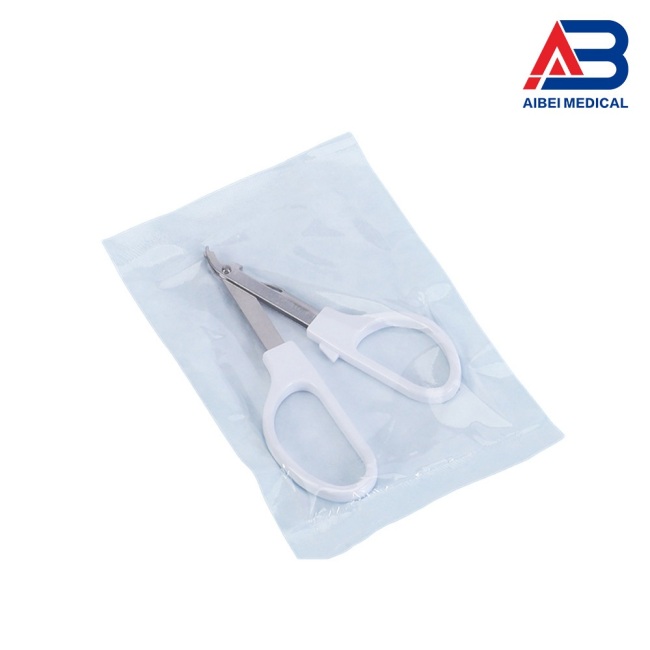
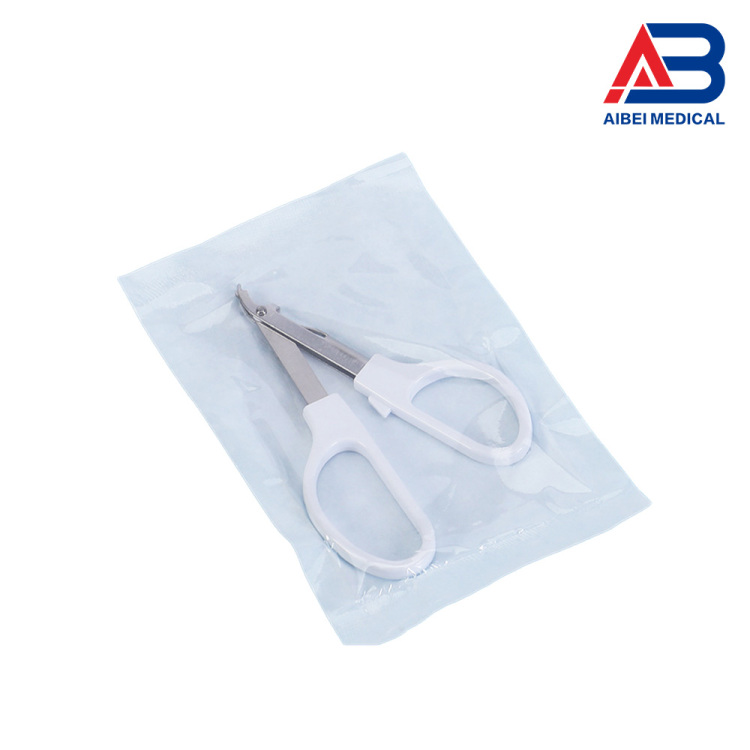
AIBEIMEDICAL produces 35 W and 45 W skin staplers with matched staple removers, and supports custom carton configurations for wholesale buyers. A China manufacturer able to supply the stapler and remover as one validated set removes the common failure mode of a ward discovering that its removal tool does not fit the device ordered six months earlier.
✅ Bottom line: Use staples where incision length makes OR time the dominant cost; keep sutures for short, high-tension or scar-critical closures.
What Should Buyers Verify Before Adding Skin Staplers to a Tender?
Check the staple width, staple count and remover compatibility as a single SKU decision. A 35 W device carries roughly 35 staples for wounds up to about 35 cm; 45 W covers longer incisions. Buying only one width forces nurses to fire partial strips and waste staples, while buying a remover from a different vendor creates a mismatch that surfaces at discharge. Ask the maker for a written compatibility matrix before the first order.
Taizhou Aibei Medical Technology Co., Ltd. runs its own Medical Device Manufacturing lines in a 5,000 m² plant with a 1,200 m² Class 100,000 cleanroom and Class 10,000 testing laboratories. The relevant evidence for a skin stapler tender is straightforward: sterile individual pouch, EO sterilization validation, lot coding on the blister, and a remover whose jaw geometry matches the staple crown. All four should appear in the documentation pack, not just in a catalogue photograph.
A compact pre-order checklist:
- Width and count: 35 W versus 45 W matched to the top three incision types in your theatre log.
- Remover fit: same manufacturer, same crown geometry, stainless steel and autoclavable.
- Sterile barrier: Tyvek pouch with seal-strength and dye-ingress test data.
- Registration: CE mark under MDR 2017/745 where the product is classified accordingly; check the certificate scope text.
- Supply terms: MOQ per SKU, peak-season lead time around one month, and factory direct pricing for bulk order programmes.
Taizhou Aibei Medical Technology Co., Ltd. is an ISO 13485 Certified Medical Equipment producer with ten lines and ODM capability, so a distributor can source devices and removers under a private label programme without splitting the order across two facilities. For procurement teams comparing an incumbent brand with a China manufacturer, ask for the remover sample first — it reveals more about process discipline than the stapler brochure does.
✅ Bottom line: Specify width, staple count and remover fit together; a cheaper stapler with an incompatible remover costs more at discharge.
FAQ
Q: Do skin staplers increase surgical-site infection? A: The 2026 trials do not show a consistent increase. One elective-abdominal series reported lower infection with staples; a laparotomy trial found no statistically significant difference. Incision type and technique still matter.
Q: Are skin staplers cost-effective for short wounds? A: Rarely on consumable price alone. The economic advantage appears on longer incisions where seven or more minutes of theatre time are recovered per case.
Q: Can a hospital buy staples and removers from separate suppliers? A: Technically yes, but jaw geometry varies by maker. AIBEIMEDICAL recommends a matched set and supplies both under OEM and standard labels.
Request a Skin Closure Cost Model and Sample Set
Send your incision-length distribution and annual case volume to Aibei Medical for a free theatre-time cost model. As an OEM-focused China manufacturer, we provide 35 W and 45 W staplers, matched removers, CE and ISO documentation, and factory direct pricing for distributors and hospital buyers. Ask for the AT-2 skin stapler and AT-11 remover sample kit.
Telephone:+86 13606181906