
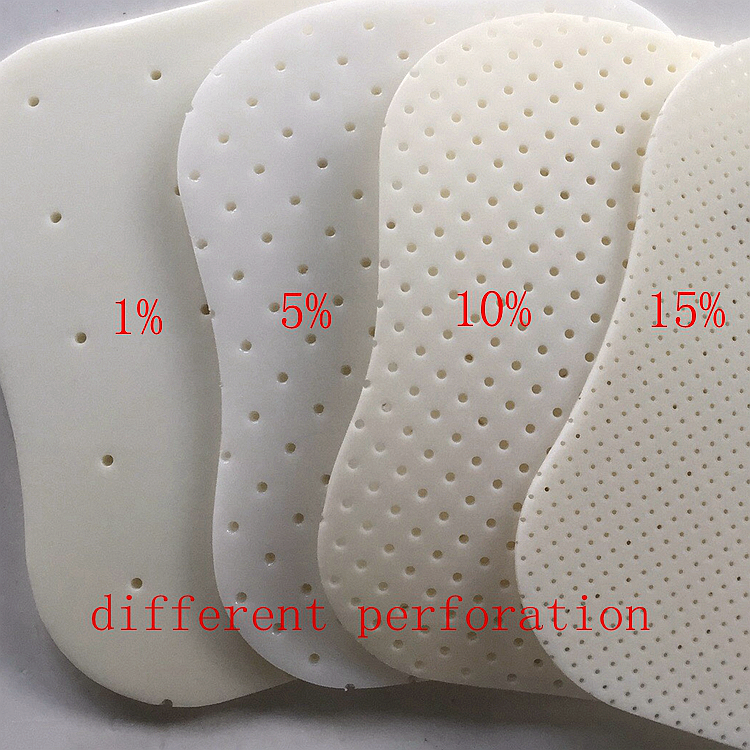
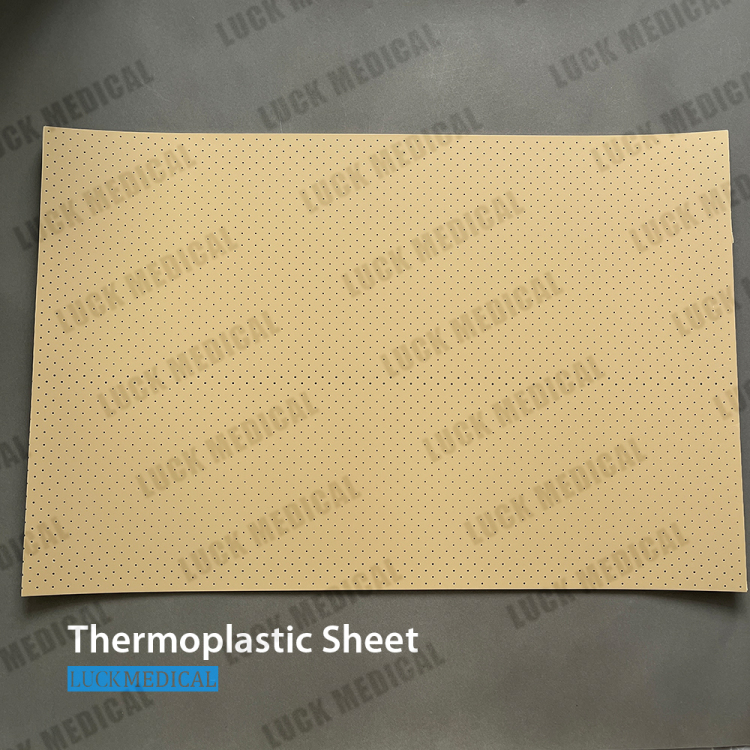
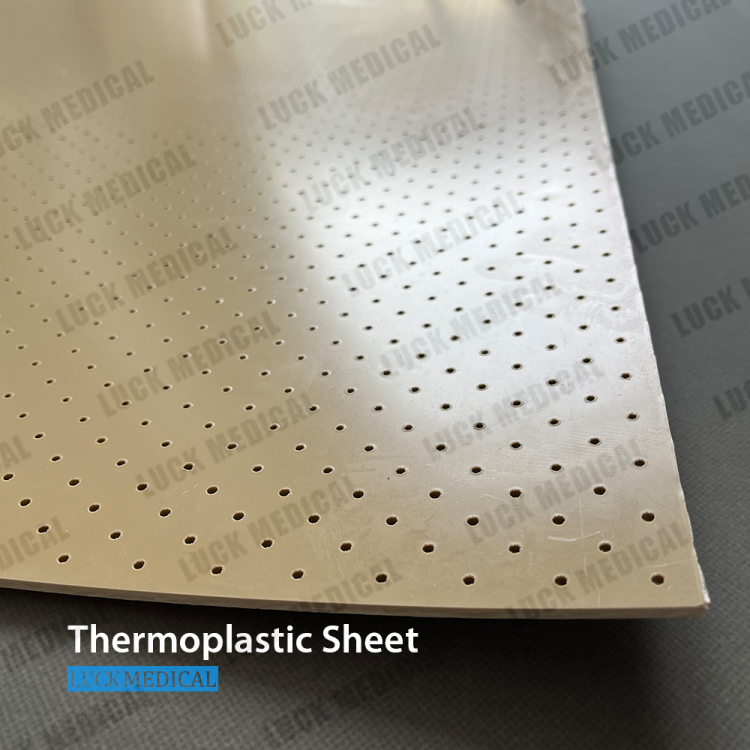
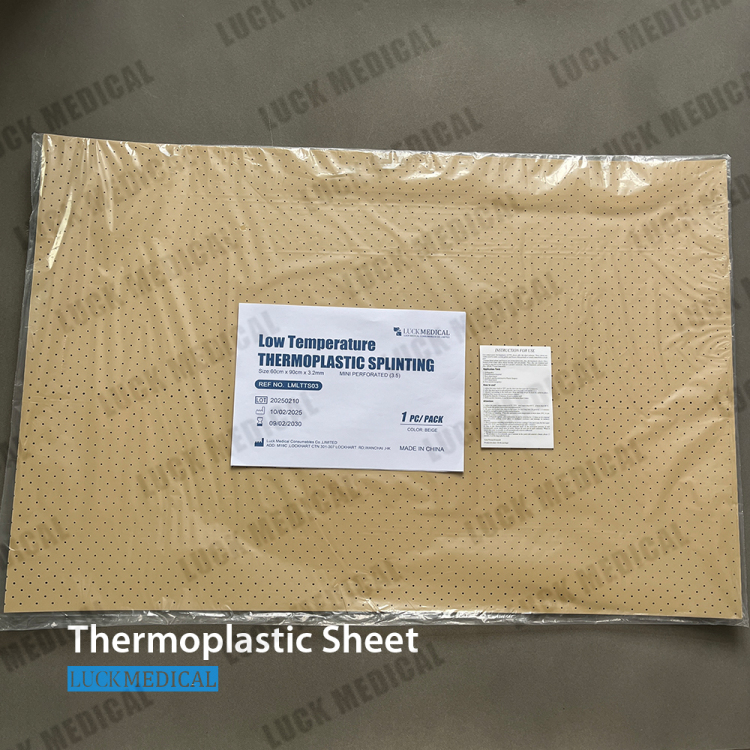
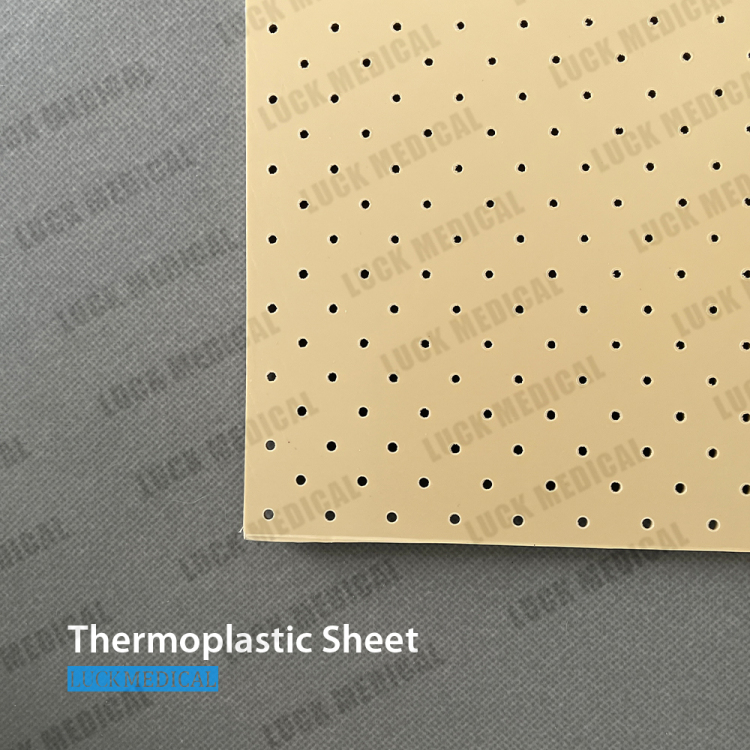
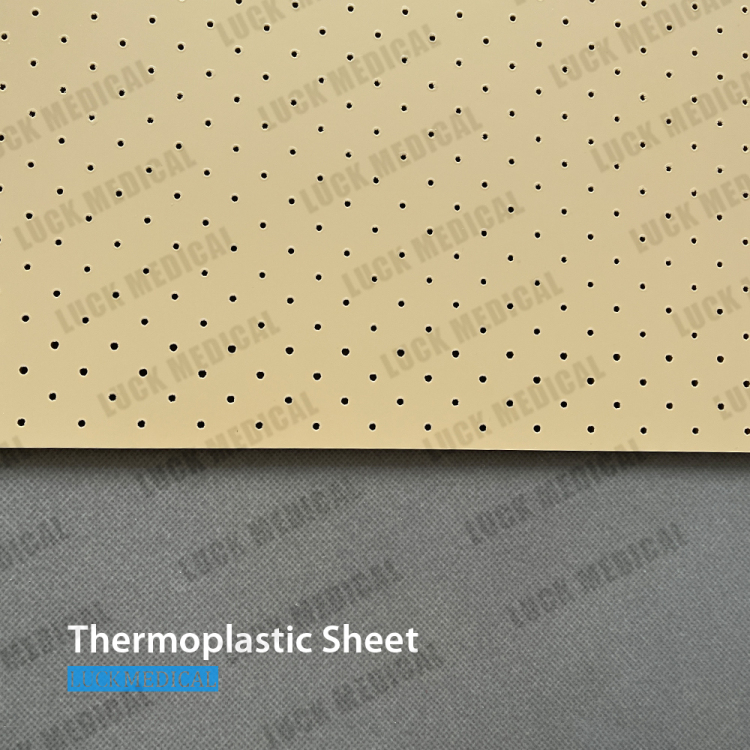
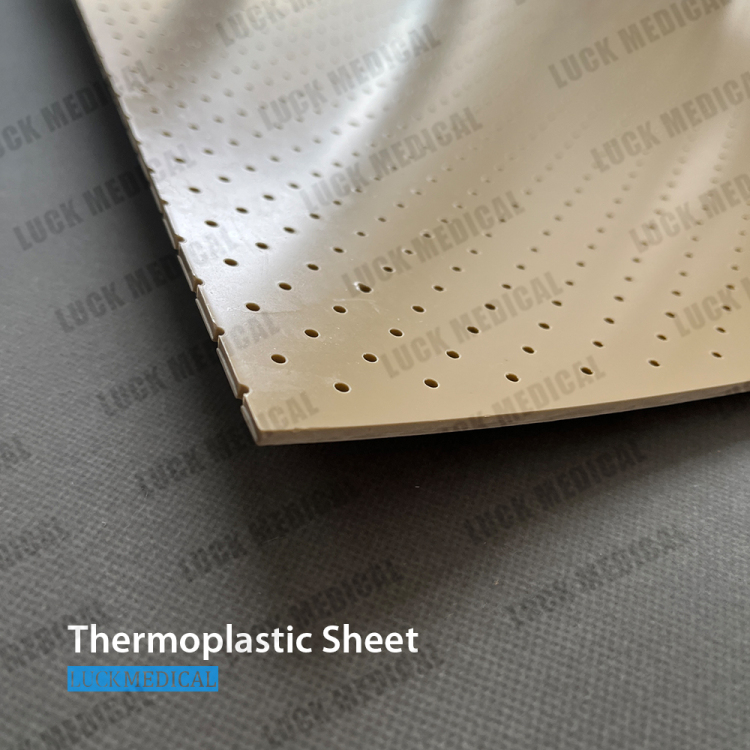
The principle of Low Temperature Thermoplastic Board is to utilize special polymer materials that soften and can be molded freely at 60-80℃. After cooling, they quickly harden and set, and possess shape memory function, allowing for repeated heating and adjustment.
This material maintains a stable molecular structure and remains rigid and fixed at room temperature (10-30℃). When heated to 65-70℃ (usually using a water bath or hot air), the molecular segments become more mobile, causing the material to soften and become transparent, facilitating conforming and shaping on the limb. After shaping, the material cools and solidifies within 3-5 minutes, regaining its rigidity and achieving stable external fixation.
The market prospect for Low Temperature Thermoplastic Board is vast. It is expected that by 2030, the global market will exceed 6.2 billion USD, with a considerable compound annual growth rate, benefiting from aging, the development of sports medicine, and material technology upgrades.
In light of current medical trends and industry dynamics, the market growth is primarily driven by the following major factors:
1.Clinical demand continues to expand
With the intensifying aging of the population, the incidence rate of orthopedic diseases and chronic injuries has risen, coupled with an increase in the number of people suffering from sports injuries. This has significantly boosted the demand for lightweight, adjustable, and comfortable external fixation products. Due to its advantages such as breathability, waterproofing, and X-ray transparency, Low Temperature Thermoplastic Board are gradually replacing traditional plaster casts, accelerating their penetration in tertiary hospitals and primary healthcare institutions.
2.Technological iteration drives product upgrades
New materials are constantly emerging, incorporating functional improvements such as nano-infrared additives, antibacterial coatings, and degradable components. These advancements not only enhance treatment outcomes but also broaden the application boundaries in specialized areas like burn plastic surgery, radiotherapy positioning, and pediatric orthopedics. Intelligent customization, exemplified by 3D printing-assisted shaping, is also propelling the development of personalized rehabilitation.
3.Policy and environmental protection orientation are favorable
The state has increased its support for medical device innovation and green material research and development. As a recyclable and biodegradable eco-friendly consumable, Low Temperature Thermoplastic Board aligns with the industrial policy direction under the "carbon neutrality" background, and is expected to receive priority consideration in centralized procurement and medical insurance access.