
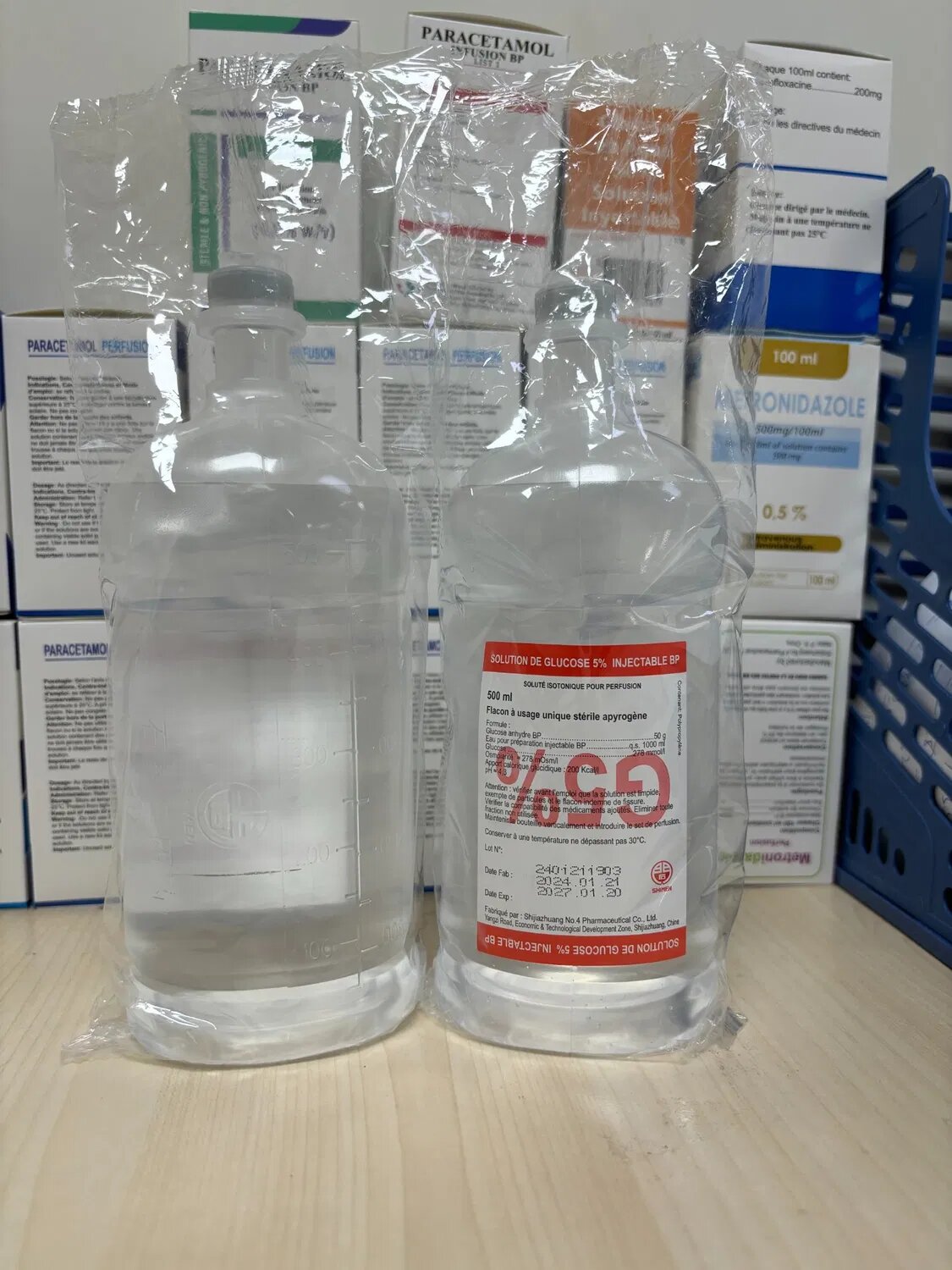
Mannitol injection sourcing specifications and crystallisation risk should be evaluated as one single procurement decision, because the concentration you specify determines how the product behaves in cold-chain transit and how much handling risk lands on your warehouse. Mannitol solutions are hypertonic and are commonly supplied at 10%, 15%, and 20% strength. Mannitol's solubility in water is strongly temperature dependent, so crystals can precipitate during storage or transit below the labelled range. That behaviour is a physical property, not a defect — but it creates documentation, inspection, and transport obligations that most tender specifications omit entirely. SSY Group Limited (HKEX: 02005.HK) supplies mannitol injection for bulk and tender channels, and the points below are the ones buyers most often raise late.
1. Why does mannitol crystallise, and how does the risk differ by market?
Crystallisation occurs because mannitol solubility falls sharply as temperature drops, and the higher the concentration, the narrower the safe temperature window — so a 20% solution reaches its crystallisation point at a much higher temperature than a 10% solution. Nothing about the batch changes; only the temperature history does. This makes transit profile, not manufacturing quality, the dominant variable — which is why mannitol injection sourcing specifications and crystallisation risk have to be assessed together, at specification stage, rather than after the first winter shipment.
The mechanism, in procurement terms
A solution prepared and filled at ambient temperature is saturated or near-saturated at that temperature. Cool the same sealed container and the dissolved load exceeds what the water can hold at the new temperature. Nucleation follows, and crystals form — typically at the container wall or around the port first. Any crystal that has not fully re-dissolved changes the physical state of the contents, which is why buyer SOPs must address re-dissolution and visible inspection rather than assuming the product is unchanged.
Tropical versus temperate market exposure
- Temperate markets: winter night-time transport, unheated trailers, and cold-room storage are the common causes. A container that left the factory approved can arrive crystallised after one unheated overnight leg.
- High-altitude routes: lower night temperatures at altitude compound the exposure even in otherwise warm corridors.
- Tropical markets: risk is lower in transit but not eliminated — air-conditioned warehouses, cold rooms held below the labelled storage range, and reefer mis-settings all create the same condition.
- Route design: specify whether road, sea, or air legs are actively temperature-controlled, and require records for the legs that are not.
- Osmotic diuretic IV fluid storage temperature requirements must therefore be written as a range with an explicit lower limit, not as "store below 25 °C", which protects against heat and says nothing about cold.
Pack form changes detectability
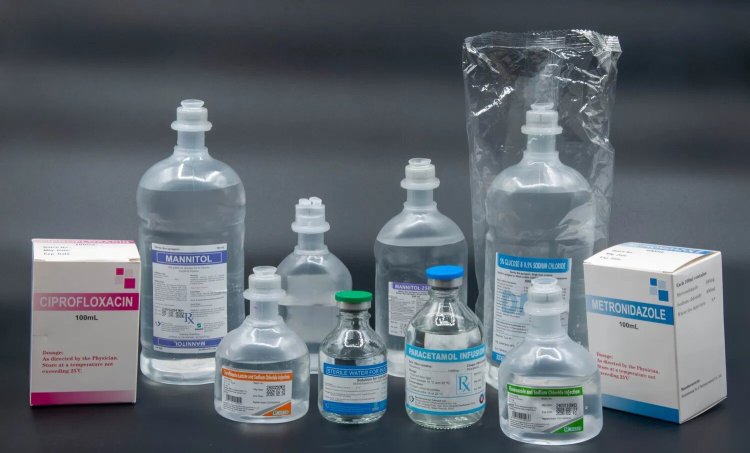
Glass bottles allow direct visual inspection of the wall and shoulder against a light source. Soft bags are harder to read; crystals clinging to the inner film surface can be missed without a systematic tilt-and-rotate inspection. For buyers in cold-exposed markets, glass offers a practical inspection advantage that is worth pricing against freight and breakage cost.
Mannitol IV solution cold temperature crystallisation prevention therefore rests on two levers you control: keeping the shipment inside the labelled range, and being able to see it when it did not. Insulated packaging, heated or climate-controlled legs, and logger-verified routes are the transport half; pack form and inspection lighting are the receiving half.
✅ Bottom line: Specify concentration against your coldest realistic transit leg, not against factory ambient conditions.
2. What must a buyer confirm with the supplier before placing a mannitol order?
Four items are non-negotiable: the validated re-dissolution method, the labelled storage temperature range including its lower bound, transit temperature recording, and a written incoming visual-inspection SOP. If any one of these is missing, the buyer absorbs the entire risk of a crystallised arrival.
The four confirmations
- Re-dissolution method and its validation — the documented procedure for returning crystals into solution, with supporting data, supplied as part of the technical file.
- Storage temperature range — the labelled range with lower limit stated, and the source of that range (stability data or pharmacopoeial handling practice).
- Transit temperature records — data logger output for shipments crossing climate zones or cold seasons.
- Incoming inspection SOP — a written procedure for what the warehouse checks, how many units, under what lighting, and what happens on a positive finding.
SSY issues items 1 to 4 as a standard pre-award pack for wholesale and tender enquiries, so the buyer can qualify the product before committing volume.
Documents to request with the quotation
| Document | What it should state | Why it matters |
| Re-dissolution validation report | Method, temperature, endpoint confirmation | Proves the procedure is tested, not improvised |
| Storage statement | Labelled range with lower limit | Defines the contractually agreed handling condition |
| Shipping temperature log | Route, logger ID, min/max recorded | Assigns responsibility for a crystallised arrival |
| Visual inspection SOP template | Sampling plan, lighting, acceptance criteria | Makes warehouse checking repeatable |
| Batch COA | Assay, clarity, particulate matter | Baseline release evidence per batch |
Tender clauses worth writing in
Specify concentration, pack form and material, fill volume, labelled storage range with lower limit, transit temperature monitoring requirement, inspection method on receipt, and the responsibility split if recorded transit temperature fell below the labelled range. Write osmotic diuretic IV fluid storage temperature requirements into the purchase specification and the transport contract, not only into the product literature. Request samples in the same pack form you intend to buy — inspection behaviour differs, as noted above.
Ask any supplier for its Chinese NMPA GMP status, ISO 9001, ISO 14001, ISO 45001, and CE evidence where relevant to the destination market. Confirm that the concentration you are buying is a routinely produced strength rather than a one-off campaign, since consistent lines give more consistent crystallisation behaviour. Ask the factory whether it fills mannitol year-round or in campaigns. Shijiazhuang No.4 Pharmaceutical Co., Ltd. produces injectables at a single-site scale of roughly 4 billion bottles/bags annually, with captive API and pharmaceutical packaging supply, and exports to more than 100 countries and regions.
✅ Bottom line: Buy the concentration your coldest realistic transit leg can support, and contract the temperature record before you contract the price.
FAQ
Q: Which concentration is safest for a cold-exposed route?
A: Lower concentrations have a wider safe temperature window. If your route includes unheated winter legs or high-altitude transit, price a 10% specification against a 20% one before deciding — the freight saving is rarely worth the inspection burden.
Q: Does crystallisation mean the batch failed release testing?
A: Not necessarily. Crystallisation is a temperature-history event governed by solubility. What matters is whether transit stayed inside the agreed range and whether mannitol IV solution cold temperature crystallisation prevention procedures — monitoring, insulated packaging, route selection — were followed.
Q: What should a buyer lock down first in mannitol injection sourcing specifications and crystallisation risk before awarding a tender?
A: Five items: concentration against route temperature profile, pack form against inspection capability, labelled storage range with a stated lower limit, transit logger requirement, and a written incoming inspection SOP. If crystals are visible on arrival, quarantine the lot, record the transit log, notify the supplier, and follow the validated re-dissolution method before releasing stock. Buyers working with SSY on OEM, custom artwork, or tender programmes can request all five as a pre-award document pack.
Get the Mannitol Sourcing Checklist and Specification Template
Send your target concentration, pack form, destination, and route profile to the SSY Group Limited export team. You will receive a copy-ready tender clause set covering storage range, transit monitoring, and incoming inspection, plus the re-dissolution validation summary and stability statement for the SHIMEN mannitol specification you are evaluating.
Published: November 2026 | By SSY Group Export Technical Team