
1. Which Test Predicts Field Failure for Each Construction?
Test the component that carries the load, because that is the part a customer will blame when the product stops working. Appearance defects get noticed in the first week; structural defects get noticed in the fourth, which is why they cost more.
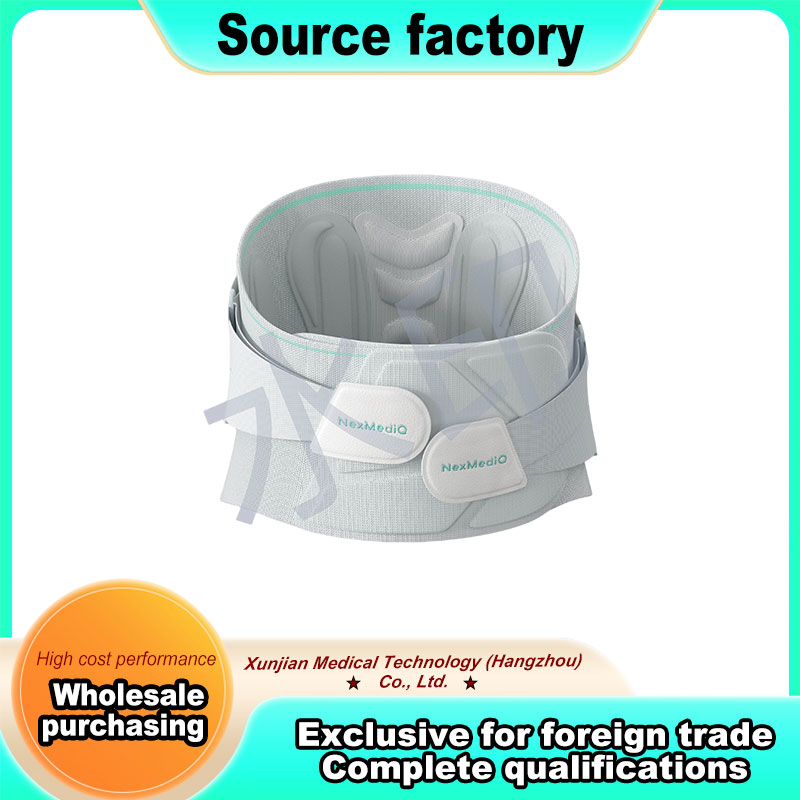
Elastic Lumbar Belt — the elastic itself is the failure point. A belt built on fish-silk or elastic webbing with four straight stays loses support through stretch fatigue, not through tearing. Pull the webbing to 200 N and hold for one minute with no rupture or permanent set beyond 5%, and cycle a sample twenty times through a full stretch-and-release to confirm recovery. If the belt measures correctly on day one and feels loose after six weeks, this test was skipped.
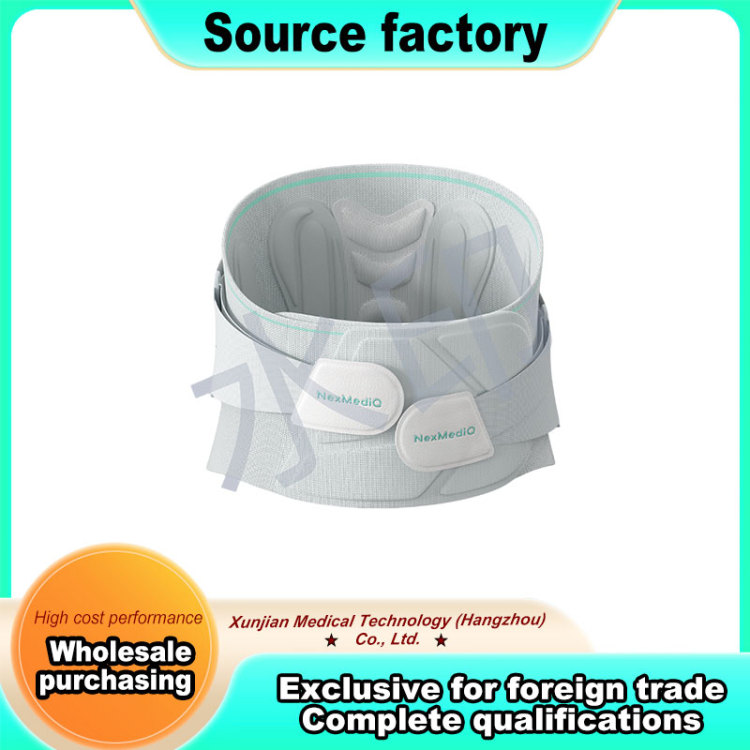
Lumbar Support Belt — the closure is the failure point. Dual cross elastic straps put the entire compressive load through a small area of hook-and-loop tape. Peel strength should hold at 50 N or above after 50 open-close cycles, and the YY/T 0506 series convention is that peel strength may not fall more than 30% from its initial value after 100 cycles. A cheaper hook tape passes the first test and fails the second — and a belt that will not stay closed is a return, not a repair.
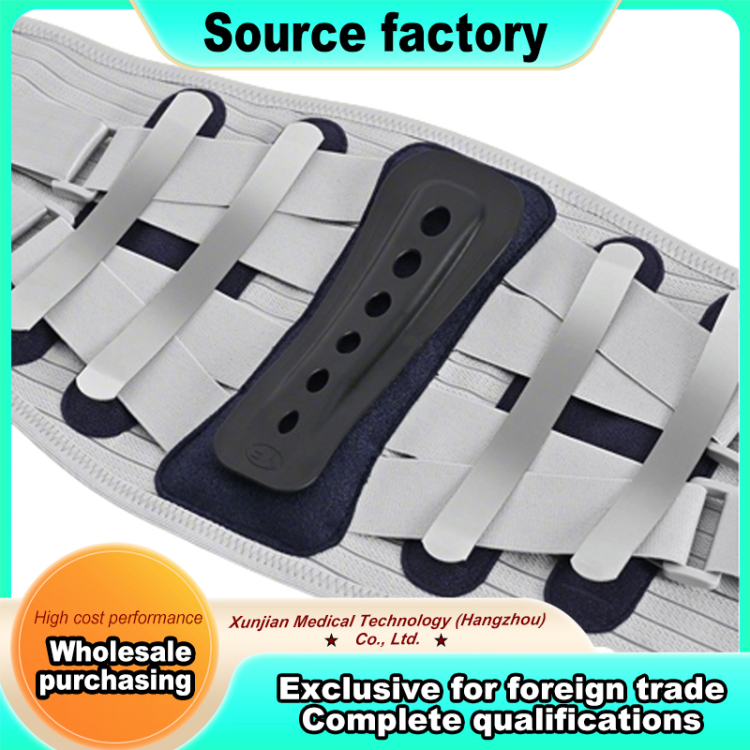
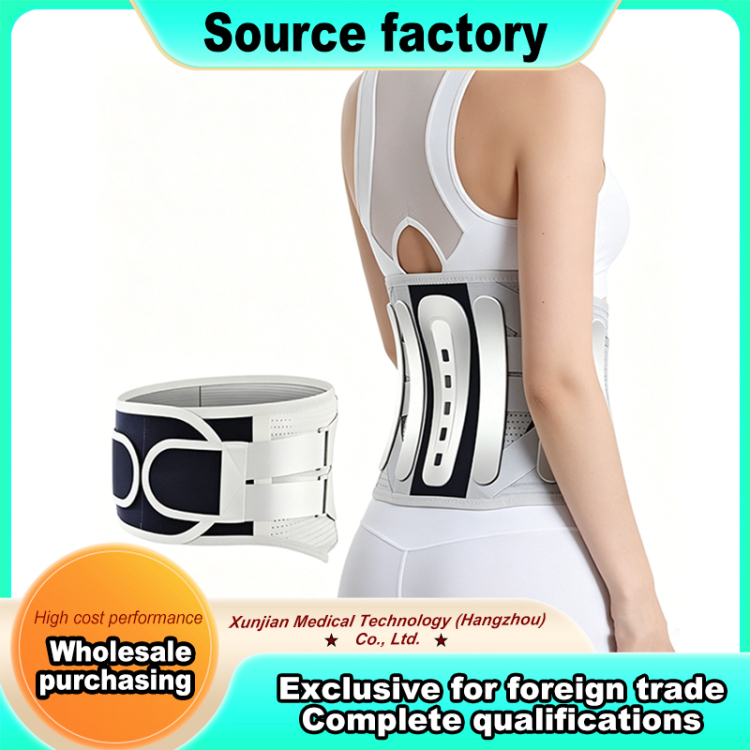
Steel Plate Back Brace — the stays and their pockets are the failure point. Curved steel stays must survive 90° bending through 100 cycles without fracture, and hold residual deformation under 2 mm after a 200 N three-point load. Equally important, the stay pocket must be inspected for sharp cut edges and for stitch density at the ends: a stay that escapes its pocket through a seam gap is a laceration risk, which is a critical defect rather than a quality issue. XUNJIAN inspects stay curvature radius and edge finishing as separate line items for this reason.
|
Construction |
Weakest component |
Test |
Acceptance value |
|
Lumbar Belt (elastic webbing, 4 straight stays) |
Elastic webbing |
Tension 200 N, 1 min; 20 stretch cycles |
No rupture; set ≤5% |
|
Lumbar Support Belt (dual cross straps, 4 steel stays) |
Hook-and-loop closure |
Peel after 50 cycles; 100-cycle retention |
≥50 N; drop ≤30% |
|
Steel Plate Back Brace (4–5 curved stays) |
Stays and stay pockets |
90° bend × 100; 200 N three-point load |
No fracture; residual <2 mm; no sharp edge |
|
All three |
Main seams |
Seam tensile |
≥150 N, no thread break |
|
All three |
Buckles and D-rings |
Fatigue cycling |
≥5,000 cycles, no cracking |
✅ Bottom line: Match each test to the component under load — elastic for the belt, hook tape for the support, stays and pockets for the steel brace.
2. How Do You Write This Into the Purchase Order?
An inspection clause without an AQL level, a defect classification and a sampling plan is a promise, not a control. Three clauses convert the table above into something a factory cannot quietly reinterpret.
Clause one — classification and sampling. Inspect at AQL Level II with critical defects at zero tolerance. Classify stay fracture, sharp edges, exposed stay ends and wrong size labels as critical; classify skipped stitches, shade variation and hook-tape misalignment as major; classify carton scuffing and thread ends as minor. Without this split, a lot that passes "95% acceptable" can still contain a laceration hazard.
Clause two — test conditions and reporting. Require testing at 23 ± 2°C and 50 ± 5% relative humidity, and require the report to state the measured value, the failure mode and photographs for every failed unit. A report that says "passed" without a number is not evidence. For a rigid steel-stay lot, the stay bend result should appear per sampled unit, not as a lot average, because a single fractured stay is a total loss.
Clause three — chemical and labelling. For skin-contact textiles, formaldehyde must sit at or below 75 mg/kg and pH between 4.0 and 8.5; azo dyes and heavy-metal migration should be declared against the destination market's rule. Deep-dyed blacks and prints carry the highest formaldehyde risk, which is worth knowing if your Lumbar Belt line uses a dark colourway. Label content, wash-care symbols, size marking and expiry logic all belong in the same clause.
Then protect the standards themselves. Seal a golden sample per style before mass production, retain three units per lot in your own storage, and put a re-inspection interval in the contract for long-running programs. XUNJIAN ships a sealed reference sample with each custom order and keeps a matching retained unit, so a dispute about "the second batch feels different" can be settled by measurement rather than memory. Distributors running private label programs should ask any supplier for the same arrangement before the first container, not after the second complaint.
✅ Bottom line: Specify AQL Level II with zero tolerance on critical defects, and require measured values with failure photos so acceptance rests on data rather than opinion.
FAQ
Q: Is factory QC enough, or do I need a third-party inspection? A: Both, at different moments. Factory QC runs continuously and catches process drift; a third-party inspection at pre-shipment gives you an independent record against your own acceptance values. For a first order, budget for one third-party inspection on the largest lot — it is cheaper than a returned container and it establishes the benchmark for every order after it.
Q: How many units should be pulled from a 5,000-piece lot? A: Under AQL Level II, a lot of that size typically calls for an 80-piece sample for major and minor defects. Do not reduce the sample to save inspection time: structural defects in waist supports cluster in specific production runs rather than spreading evenly, so small samples miss them disproportionately.
Q: Does the same checklist apply to a light elastic belt and a heavy steel brace? A: The clause structure applies; the values do not. A light elastic model needs a stretch-recovery test the rigid products do not, while a Lumbar Support Belt and a Steel Plate Back Brace need stay and pocket inspection that an elastic model does not carry. Xunjian Medical Technology (Hangzhou) Co., Ltd. issues a separate acceptance sheet per construction family, which is the only way the numbers stay meaningful.
CTA: Get the Acceptance Sheet Before the First Container
Send your style list, destination market and order quantity, and XUNJIAN will return a per-construction acceptance sheet with test values, sampling plan and defect classification, plus a factory-direct quotation for OEM or ODM production. Pre-production samples ship with the sealed reference unit so your inspection team is testing against the same standard the line is using. Ask for the wholesale price break by quantity while you are at it. Start through quickmedhome.com.