
1. Where Exactly Should Each Body Zone Be Measured?
Measure the working circumference at the joint, never a clothing size, and always with the tape snug but not compressing. The three zones fail in three different ways, so the protocol has to be written per product, not as one generic instruction card.
Knee Brace — two numbers, not one. For a sleeve-style brace, the only number that matters is the mid-patella circumference, taken straight across the kneecap with the leg extended. For a hinged or open-patella brace, you need two: thigh circumference 10–15 cm above the patella and calf circumference 15 cm below it. A hinged brace is anchored by opposing compression, so a customer whose thigh is one size up from their calf feels the brace migrate down within twenty minutes of walking. Size steps of 4 cm work; 2 cm steps create SKU sprawl without measurable fit gain.
Wrist Guard — circumference plus hand length. Take the wrist circumference just distal to the ulnar styloid process, hand relaxed, fingers straight. The step size is 2 cm, so most lines need only three sizes — there is no excuse for a poor fit. The real failure mode is not circumference at all: it is palm length and thumb clearance on thumb-spica or wrap-around models, where a correct circumference still leaves the thumb loop cutting into the thenar. Specify both numbers, and specify left and right separately if the pattern is asymmetric.
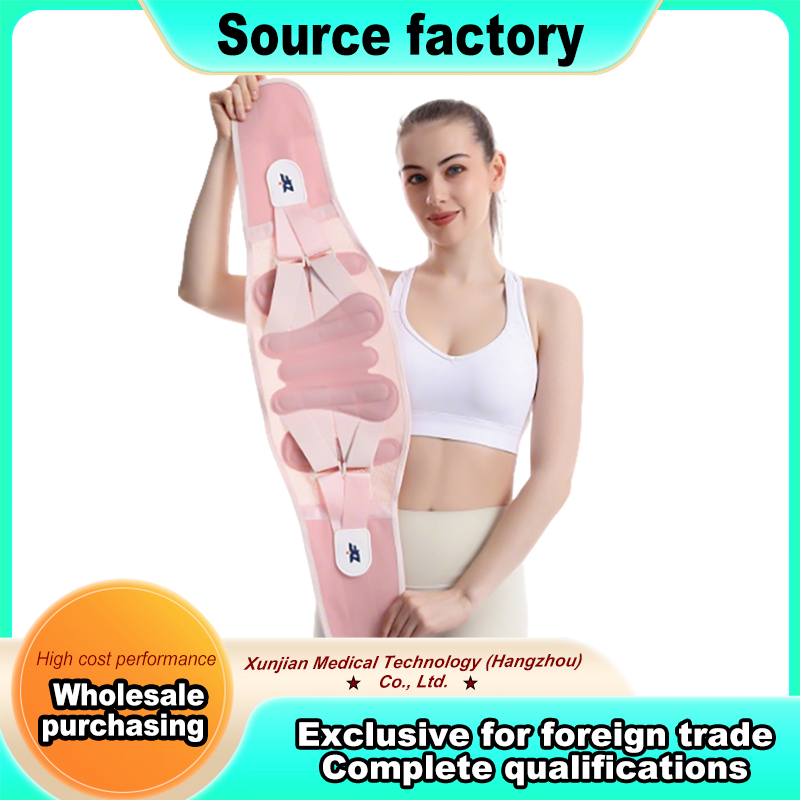
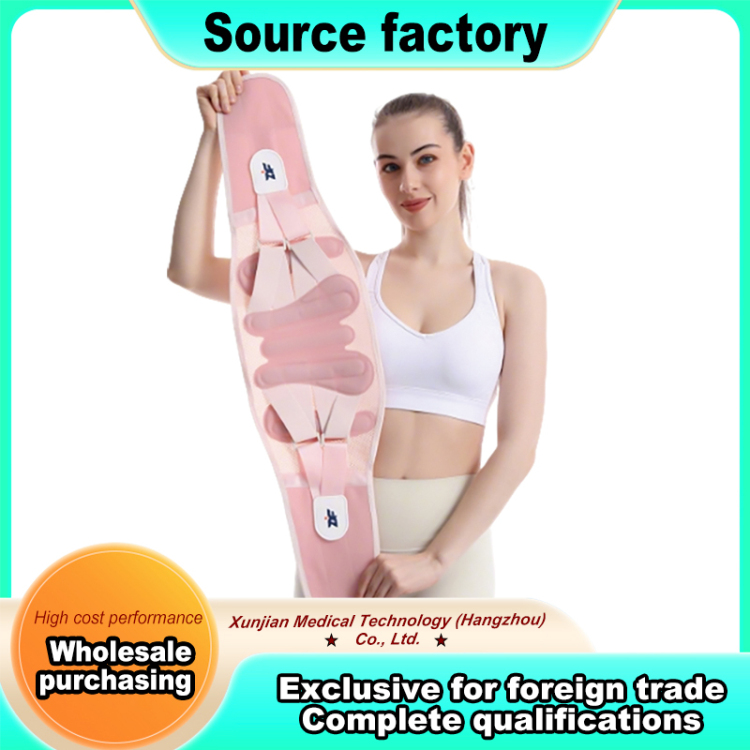
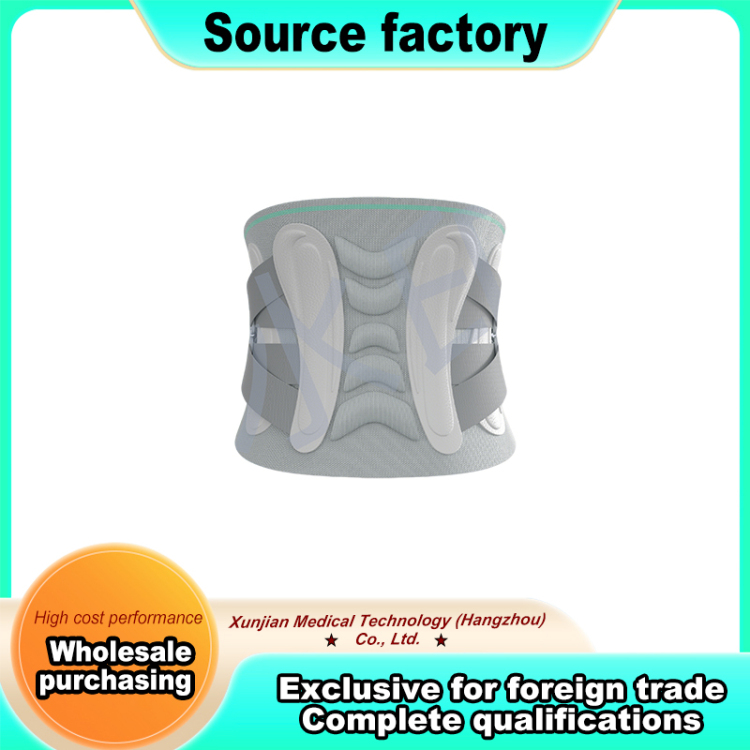
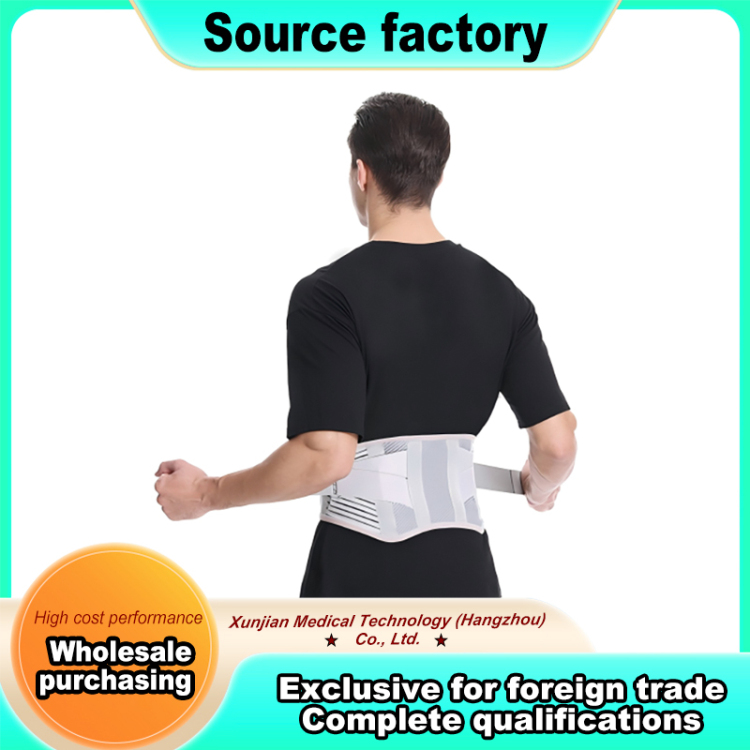
Waist Support — the landmark decides everything. For an elastic version, measure at the navel with the abdomen relaxed and the tape horizontal. For a rigid belt, measure at the same navel line but add 2–4 cm of allowance, because a steel-stay shell does not stretch the way elastic does. The most expensive error in this category is letting a customer measure at the iliac crest or at their jeans waistband: the gap between navel line and high hip can run 8–12 cm on the same person, which is two full sizes. Put a landmark diagram on the box insert, not just in the listing images, and the error largely disappears.
| Body zone | Measurement landmark | Size step | Typical adult range | Stretch allowance |
|---|---|---|---|---|
| Knee sleeve | Mid-patella circumference, leg extended | 4 cm | 32–52 cm | 20–25% circumference |
| Hinged knee brace | Thigh 10–15 cm above + calf 15 cm below patella | 4–5 cm | 38–66 cm | 8–12% only |
| Wrist Guard | Distal to ulnar styloid + palm length | 2 cm | 14–22 cm | 10–15% |
| Waist — elastic | Navel line, abdomen relaxed | 5 cm | 65–120 cm | 25–30% |
| Waist — rigid | Navel line + 2–4 cm allowance | 5–8 cm | 70–125 cm | 5–8% only |
✅ Bottom line: Publish the landmark, the tape tension and the allowance for each product, because the landmark — not the size label — is what customers actually get wrong.
2. How Do You Turn Those Numbers Into a Size Chart and a Spec Sheet?
A size chart is a manufacturing document, not a marketing graphic — if it does not state tolerances, the factory will choose them for you. Two buyers can order the same “size L” and receive garments that differ by 3 cm flat, which is enough to change the fit category entirely.
Six fields belong on every spec sheet before a sample is cut:
- Flat measurement with tolerance. Finished flat width and length per size at ±1.5 cm. Tighter is achievable on cut-and-sew supports but adds QC cost.
- Stretch target. Elastic stretch ratio at a defined load, for example 180% at 5 kg. This is what stops a cheaper yarn entering the second production run.
- Shrinkage limit. ≤3% length shrinkage after three washes at 40°C. Unwashed samples fit perfectly; the returns arrive after week four.
- Hook-and-loop grade. Cycle count, typically 5,000 open-close cycles, and whether the hook is injection-moulded or stitched.
- Stay and insert specification. Number of stays, curvature radius, and whether they are removable. “Steel plate” means nothing until count and curvature are written down.
- Size curve by market. US and EU curves are wider at the top end; Japanese curves use narrower steps and a shorter torso. One global chart fits no market well.
Then run the SKU arithmetic before you commit. Three sizes × two colours for a Knee Brace, three sizes for a Wrist Guard and four for a Waist Support is 20 SKUs across the range; at the 300-piece minimums most factories apply per SKU that is 6,000 units. A realistic opening order cuts each curve to its two highest-volume sizes and adds colours only after sell-through proves itself. XUNJIAN quotes from single pieces per model on stock constructions and holds the same shell fabrics across models, so mixing categories does not multiply your minimums.
The economics justify the discipline. One EU return on a support costing €9 FOB typically burns €8–12 in handling, reverse freight and refurbishment — more than the product's margin. At one size error per twenty units, that is a 5% margin leak that stays invisible on the P&L until the second season. A landmark-based chart with stated tolerance is the cheapest fix available in any supplier relationship.
✅ Bottom line: Specify flat measurement, tolerance, stretch ratio and shrinkage in writing, because an unspecified dimension is a dimension the factory will optimise for cost.
FAQ
Q: Should I publish unisex sizing or separate men's and women's charts? A: Separate charts wherever the product has a gendered shape. A Knee Brace sleeve can often stay unisex because the joint geometry is similar, but a Waist Support cannot — torso length and hip-to-navel proportion differ enough that a unisex chart pushes a large share of women into a belt that rides up. Keep the size codes identical across both charts so warehouse picking stays simple.
Q: What tolerance should I accept on a first sample set? A: Accept ±1.5 cm flat on cut-and-sew supports and ±1 cm on knitted sleeves, and reject anything that only fits at the extreme end of its own stated range. Test each sample on at least three body types before approving it — a sample that fits one 70 kg tester tells you nothing about the size curve. Xunjian Medical Technology (Hangzhou) Co., Ltd. supplies measurement templates with sample sets so buyers can verify flat dimensions on arrival rather than after the retail launch.
Q: Can sizing be customised for my market without a new tooling cost? A: Yes, for cut-and-sew constructions. Size curves, lengths, strap lengths and label formats are pattern changes rather than tooling changes, so OEM and ODM buyers can request a market-specific curve on the first order. Knitted sleeves are less flexible because the size is set by the knitting program, so confirm the curve before the sample is knitted.
CTA: Get a Sizing Template Before You Order
Send your target market, the body zones you plan to launch and your expected first-order volume, and XUNJIAN will return a landmark-based size chart template, a flat-measurement spec sheet and a factory-direct quotation covering knee, wrist and waist constructions in one custom program. Sample sets ship with the templates, so your team can verify fit on real testers before committing. Private label artwork, size labels and retail packaging are handled in the same OEM workflow. Start the review with the XUNJIAN export team through quickmedhome.com.