
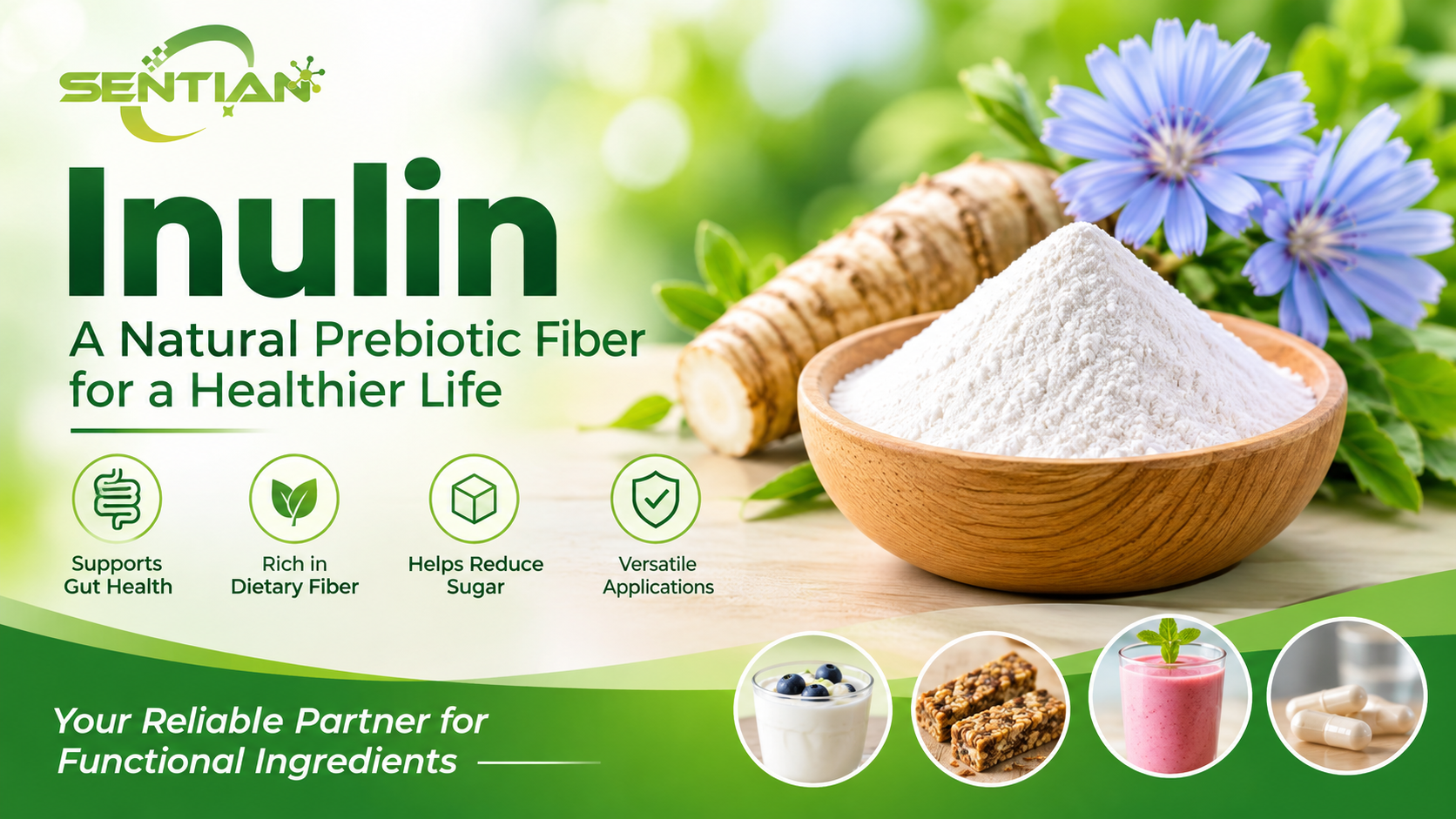
Inulin Market Trends, Applications and Opportunities for Food and Dietary Supplement Manufacturers
As consumer interest in digestive health, gut microbiome balance and healthier food choices continues to grow, inulin is gaining attention as a versatile functional ingredient in the global food, beverage and dietary supplement industries.
Inulin is a naturally occurring soluble dietary fiber found in plants such as chicory root, Jerusalem artichoke and agave. Thanks to its prebiotic properties and multifunctional characteristics, it is increasingly used in products designed to support dietary fiber intake, improve food texture and develop reduced-sugar formulations.
1. Growing Interest in Prebiotic Fibers and Gut Health
Gut health has become an important focus in the functional food and nutraceutical markets. Consumers are paying more attention to dietary fiber, prebiotics and ingredients that help support a balanced gut microbiome.
Inulin is particularly relevant to this trend because it is a non-digestible carbohydrate that can be fermented by beneficial intestinal microorganisms. It is commonly used as a prebiotic fiber in food products and dietary supplements.
According to Grand View Research, the global prebiotic ingredients market was estimated at USD 9.9 billion in 2025, with inulin representing the largest ingredient segment by revenue share. Although market estimates vary between research providers, the figures reflect the growing commercial interest in prebiotic ingredients and fiber-enriched products.
For manufacturers, this creates opportunities to incorporate inulin into everyday food products as well as specialized digestive health and fiber supplements.

2. Why Is Inulin Attractive to Food and Supplement Manufacturers?
Inulin offers more than just dietary fiber. Its functional properties make it useful in a variety of product formulations.
Prebiotic fiber source
Inulin is widely used as a prebiotic ingredient. It passes through the upper digestive tract largely undigested and can be fermented by gut microorganisms in the colon.
Dietary fiber enrichment
Food manufacturers can use inulin to increase the dietary fiber content of products such as nutrition bars, cereals, dairy products and powdered beverages.
Fat replacement and texture improvement
Depending on its chain length and formulation, inulin can contribute to creaminess, mouthfeel and texture. It is therefore used in selected reduced-fat food formulations.
Sugar reduction and formulation support
Inulin can provide mild sweetness and help improve the texture and bulk of certain reduced-sugar formulations. It is often combined with other sweeteners and functional ingredients to achieve the desired product characteristics.
These combined functions make inulin a practical option for manufacturers looking to develop products with improved nutritional profiles and appealing sensory characteristics.
3. Key Applications of Inulin in the Food and Nutraceutical Industries
Demand for inulin is supported by its flexibility across multiple product categories.
Functional Foods and Beverages
-
Dietary fiber-enriched beverages
-
Yogurt and dairy products
-
Nutrition bars and cereal products
-
Meal replacement powders
-
Reduced-sugar food products
-
Plant-based food formulations
Dietary Supplements
-
Prebiotic fiber powders
-
Digestive health supplements
-
Gut health formulas
-
Fiber blend products
-
Capsules and sachets
-
Synbiotic formulations combining prebiotics and probiotics
Sports Nutrition and Weight Management
Inulin can also be incorporated into selected sports nutrition and weight management formulations as a source of soluble dietary fiber. It may be used in protein powders, meal replacement products and functional nutrition blends.

4. What Should Buyers Consider When Sourcing Inulin?
As demand for functional fibers expands, ingredient buyers and product developers need to evaluate more than just price. Selecting the right inulin specification is important for product performance, production efficiency and consistent quality.
Key purchasing considerations include:
-
Source: Chicory root is one of the most established commercial sources of inulin.
-
Purity and composition: Confirm the inulin content and relevant product specifications.
-
Degree of polymerization (DP): Different chain-length profiles can influence solubility, sweetness and functional performance.
-
Appearance and physical properties: Powder color, particle size, moisture content and dispersibility may affect manufacturing.
-
Microbiological quality: Check applicable microbiological specifications and testing documentation.
-
Documentation: Review the Certificate of Analysis (COA), technical data sheet, specification sheet and relevant food safety documentation.
-
Application suitability: Confirm whether the selected grade is appropriate for beverages, dairy products, powders, supplements or other intended applications.
For manufacturers developing new products, it is also important to conduct formulation and stability tests before commercial production.
5. Market Outlook: Opportunities for Functional Ingredient Suppliers
The continued focus on gut health, dietary fiber intake and clean-label formulations is creating opportunities for inulin suppliers and manufacturers.
Recent market research highlights the importance of prebiotic fibers in functional food and beverage development, while dietary supplements remain another important application area. Product developers are increasingly interested in combining inulin with probiotics, plant extracts, vitamins and other functional ingredients to create differentiated formulations.
At the same time, manufacturers are paying closer attention to ingredient traceability, quality consistency, technical support and supply reliability.
For ingredient suppliers, the opportunity is not limited to providing bulk inulin powder. Supporting customers with appropriate specifications, documentation, application guidance and complementary ingredient solutions can help build more sustainable business relationships.

6. Inulin Supply and Ingredient Solutions from Sentian Bio
At Xi'an Sentian Biotechnology Co., Ltd. (Sentian Bio), we focus on supplying functional ingredients and providing ingredient and OEM solutions for food, nutrition and dietary supplement brands.
Our ingredient portfolio covers plant extracts, functional ingredients, proteins, vitamins and other specialty raw materials.
For customers sourcing inulin, we can support product specification discussions, quality documentation and ingredient supply requirements based on the intended application.
Whether you are developing a prebiotic supplement, a fiber-enriched beverage, a functional food product or a customized nutrition formula, selecting the right ingredient specification is an important first step.
Looking for an inulin supplier or functional ingredient partner?
Contact Sentian Bio to discuss your ingredient requirements, request product specifications or explore customized formulation and OEM manufacturing solutions.