1. Which documents actually prove a factory can build a medical bed?
ISO 13485, CE, IEC 60601-1 and IEC 60601-2-52 do four different jobs, and suppliers routinely present one as if it were all four.
|
Document |
What it actually proves |
How to verify it |
The common fake-out |
|
ISO 13485 |
Quality management system for medical devices |
Certificate number against the notified body's public database; check the scope names hospital beds, and the expiry date |
A certificate for "medical furniture" that never mentions beds |
|
CE marking + EU declaration of conformity |
The specific model meets EU requirements, backed by a technical file |
The declaration must name the model and the standard versions applied |
A logo on a brochure with no declaration behind it |
|
IEC 60601-1 report |
General electrical and mechanical safety of the bed |
Full test report, with the model number and test lab on the cover |
A report for a different model in the same series |
|
IEC 60601-2-52 report |
The particular standard for medical beds: loading, side-rail entrapment, stability |
Report dated within the current standard revision |
A claim of "complies with 60601" with no clause-level data |
Two regulatory details that decide whether you can sell at all. In the US, powered adjustable beds generally fall under 21 CFR 880.5100 as Class II devices and normally require a 510(k); manual beds are treated far more lightly. In the EU, the bed needs a technical file, a declaration and an importer of record — CE alone does not make a shipment customs-clean. Confirm both with your regulatory consultant before you quote a tender.
Then verify the factory itself, because documents can be bought and capacity cannot:
- Vertical integration. In-house tube bending, welding and powder coating separate a manufacturer from an assembler. Ask which operations leave the building.
- An aging rig. A full-load cycle test bench is the single most telling piece of equipment in a bed plant; if there is no rig, no bed was cycle-tested before shipment.
- A rail gap gauge. Entrapment compliance is a measurement, not a design claim.
- Actuator sourcing and duty rating. Ask for the brand and the rated cycle count — 15,000 cycles is a normal commercial figure, and it is the number that predicts year-five failures.
- Handset ingress protection. IPX4 minimum for wipe-down wards; a non-rated handset is the most common warranty claim on an electric nursing bed.
✅ Bottom line: Ask for a model-specific test report and a factory walk-through video, and treat any supplier who sends a generic certificate as a trading company until proven otherwise.
2. Which spec-sheet lines hide the real cost?
Six lines on a quotation decide five-year cost, and five of them are usually missing.
|
What the sheet says |
What to ask instead |
Why it matters |
|
"3 function" |
List each movement with its range in mm and degrees |
Function counting differs by factory; the number alone is meaningless |
|
"Safe working load 150 kg" |
Is that frame-only, or with mattress and accessories? |
A 150 kg rating with a 15 kg mattress and rails leaves little margin for a 130 kg patient |
|
"Mattress included" |
Thickness, density and whether the rail gap was re-checked |
A 15 cm mattress in a rail setup designed for 10 cm creates an entrapment gap |
|
"Warranty 2 years" |
Split by component: frame, actuators, control box, casters |
Frame 5 years and electrics 2 is normal; actuators excluded is not |
|
"Spare parts available" |
Written commitment, years, and a stocked kit per 100 beds |
A bed with no actuator in year seven is scrap, whatever the frame warranty says |
|
"MOQ 1" |
MOQ for stock, MOQ per design for OEM changes |
Stock ships from 20 units; custom deck width, rail type or handset language usually starts at 50 |
Then run the sample test rather than reading the sample report. Buy one bed, cycle every function 200 times under load, weigh the frame, measure the rail gap with a 10 cm and then a 15 cm mattress in place, and time how long the supplier takes to answer a technical question in writing. A factory that answers in hours and ships spare actuators with the sample is a different animal from one that forwards your email to a sales agent.
Logistics benchmarks worth holding a supplier to: a 40 ft container holds roughly 60 knocked-down beds; 7–10 days for a sample; 20–25 days for 200 electric units; 30% T/T deposit with 70% against B/L copy, or LC at sight for tenders.
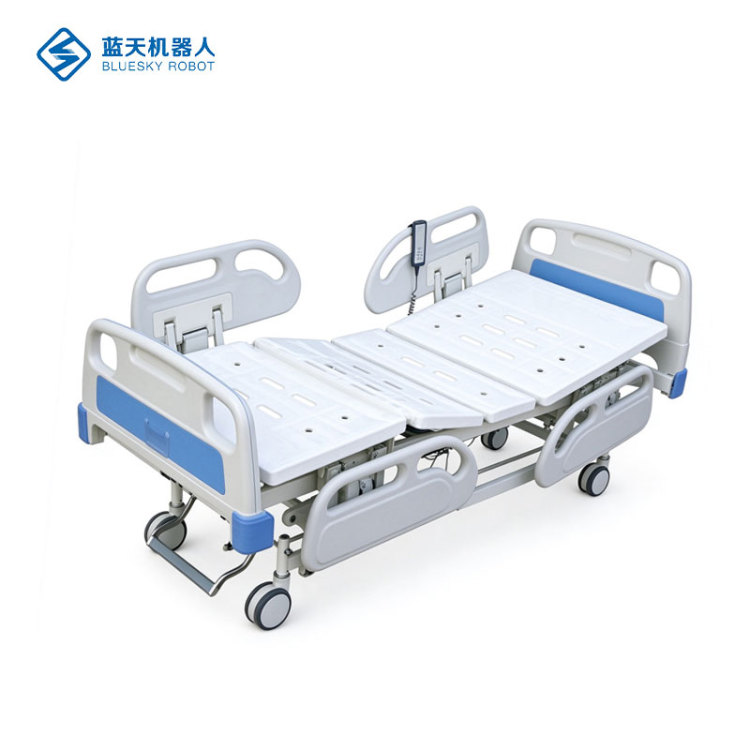
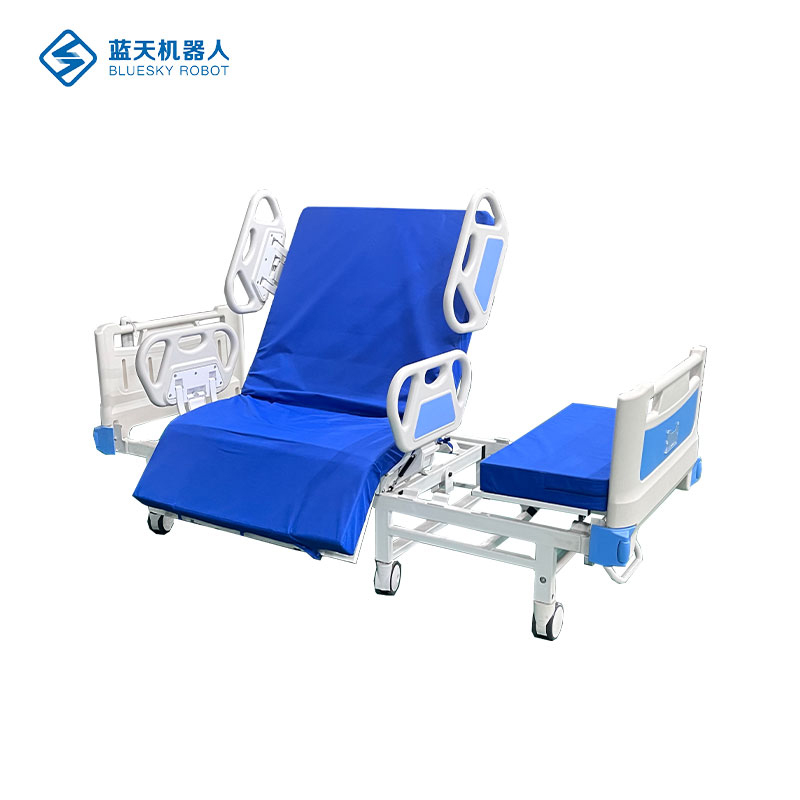
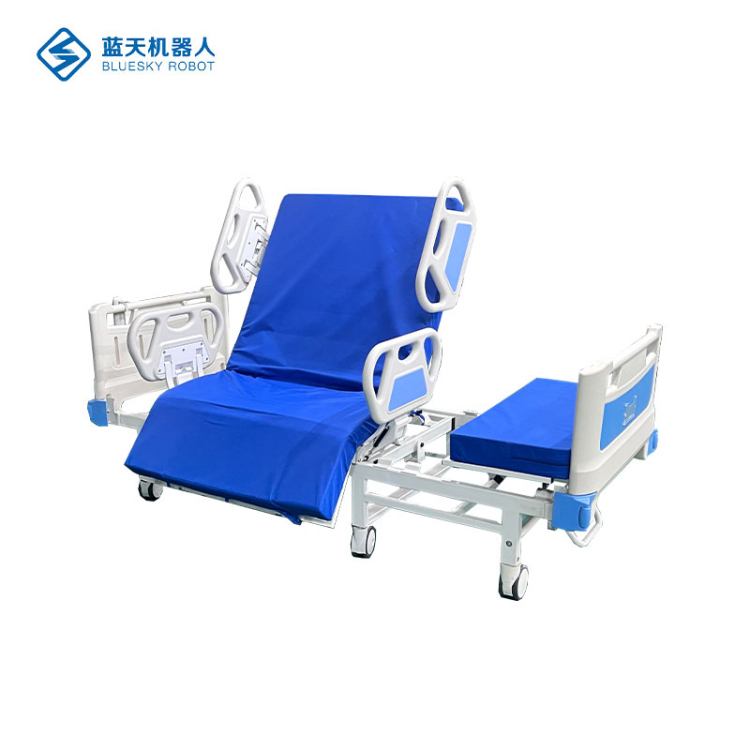
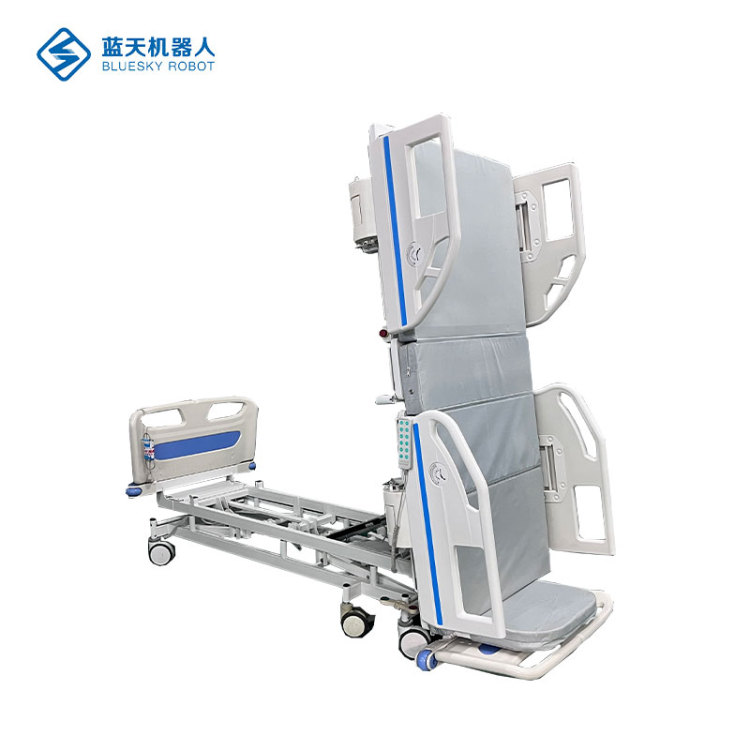
BLUESKY runs the checks above in-house: a 20,000 m² plant in Changsha producing 15,000 units a year, a 60-person R&D team, full-load aging and rail-safety testing before every shipment, a 230 kg safe working load on its 3-function platform, and CE plus ISO 13485 documentation issued per model. Hunan Bluesky Robot Technology Co., Ltd. supplies 2-, 3- and 5-function platforms and the matching mattresses and rails from one factory, which removes the gap risk that appears when a hospital bed frame and a mattress come from two different suppliers. For distributors serving both tender projects and the hospital bed at home channel, BLUESKY also quotes OEM/ODM configuration from 50 units with spare-part kits shipped alongside the container.
✅ Bottom line: Verify the report against the model number and the sample against the report; a supplier who passes both is a manufacturer, and one who resists either is a risk.
FAQ
Q: Is CE marking enough to sell an electric medical bed in the EU? A: No. You need the declaration of conformity naming the model, a technical file held by the manufacturer, the correct device classification, and an EU importer of record on the label. CE is the outcome of that process, not a substitute for it.
Q: What is a realistic MOQ and lead time from a Chinese factory? A: 20 units for stock configurations, 50 per design once you change deck width, rail type or handset. Samples ship in 7–10 days, 200 electric nursing bed units in 20–25 days, and a full container in 25–35 days from deposit.
Q: Do I need FDA clearance to import a medical bed into the US? A: Usually for powered adjustable models, which are generally Class II and require a 510(k). Manual beds are treated differently. Confirm the classification with a US regulatory consultant before committing to a tender date — this is the single most expensive assumption in a first US order.
CTA: Request the Audit Pack, Then the Sample
Ask BLUESKY for the audit pack — ISO 13485 certificate with scope, model-specific IEC 60601-1 and 60601-2-52 reports, actuator brand and duty rating, rail gap test data and a factory walk-through video — then order one sample to cycle-test yourself. Hunan Bluesky Robot Technology Co., Ltd. supports OEM/ODM electric medical bed programmes from 50 units per design, ships spare-part kits with each container, and quotes 2-, 3- and 5-function platforms with mattresses and rails as complete bed sets — for tender projects, care-home groups and the hospital bed at home channel alike.