
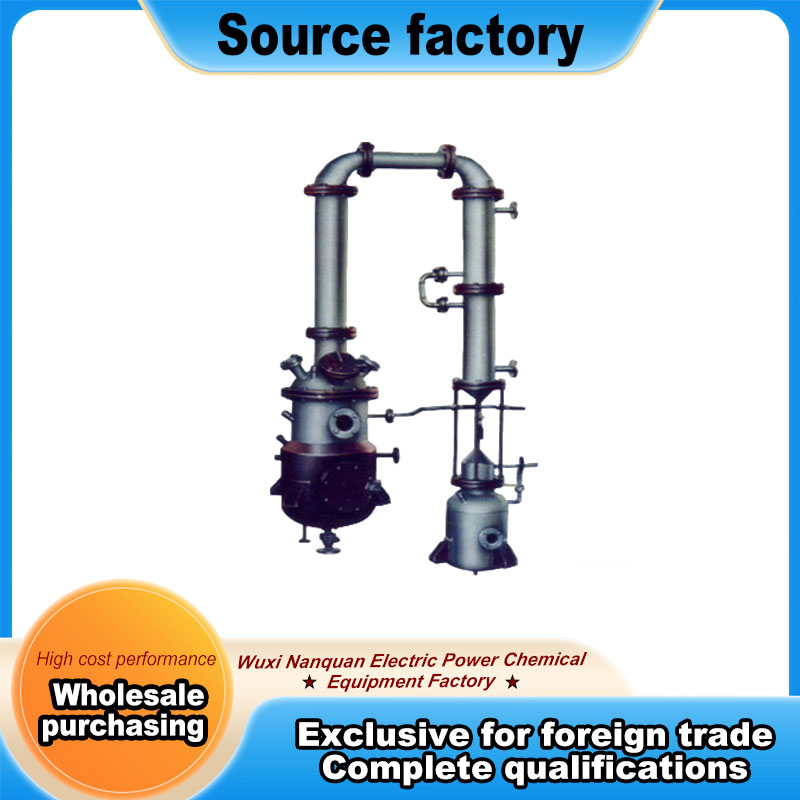
1. Why Does a 2 m³ Batch Need a 7.6 m³ Alcohol Precipitation Tank?
Because reaching 70% v/v ethanol adds 2.8 volumes of 95% ethanol for every volume of concentrate, so the tank must hold 3.8 times the concentrate volume before you allow anything for foam. Almost every undersized line is undersized here, because the tank is bought against the extractor volume instead of against the final liquid volume.
The arithmetic is fixed by the target strength, not by the herb:
| Target strength (v/v) | 95% ethanol added per 1 m³ concentrate | Working volume per 1 m³ concentrate |
|---|---|---|
| 60% | 1.71 m³ | 2.71 m³ |
| 70% | 2.80 m³ | 3.80 m³ |
| 75% | 3.42 m³ | 4.42 m³ |
| 80% | 5.33 m³ | 6.33 m³ |
Read the last column as your sizing table. Two cubic metres of 1.10–1.25 SG concentrate at 70% needs 7.6 m³ of working volume. A JC-6000 holds 6 m³, so either split it into two 1.5 m³ batches (5.7 m³ each, with margin) or buy the next size up. The mistake is not the tank — it is ordering the tank before running this one multiplication.
The jacket does not scale with the tank. In the standard JC series the ratio of jacket area to working volume falls from 6.0 m²/m³ on the 300 L unit to 2.0 m²/m³ on the 6,000 L unit. Practically: cooling 5.7 m³ from 40 °C to 5 °C through 12 m² of jacket at K = 150–200 W/m²·K takes roughly 3.5 hours, while a 300 L batch does the same job in about one hour. Three things follow:
- Run the jacket during alcohol dosing, not after. Heat of mixing alone can lift a 70% batch by 10–20 °C, and dosing slowly into a warm batch is how you boil off ethanol and lose both solvent and volatiles.
- Add ethanol in two or three stages with 20–30 minutes of agitation at 32 rpm between them, then hold 6–24 hours. Settling, not cooling, sets the real cycle time.
- Below 2.5 m² of jacket per m³ of working volume, pre-chill the concentrate to 15 °C before dosing, or specify an external chiller loop. This is the single most common fix we quote on existing lines.
✅ Bottom line: Size the alcohol precipitation tank at 3.8 times your concentrate volume for 70% ethanol, and check jacket area per m³ before you check price.
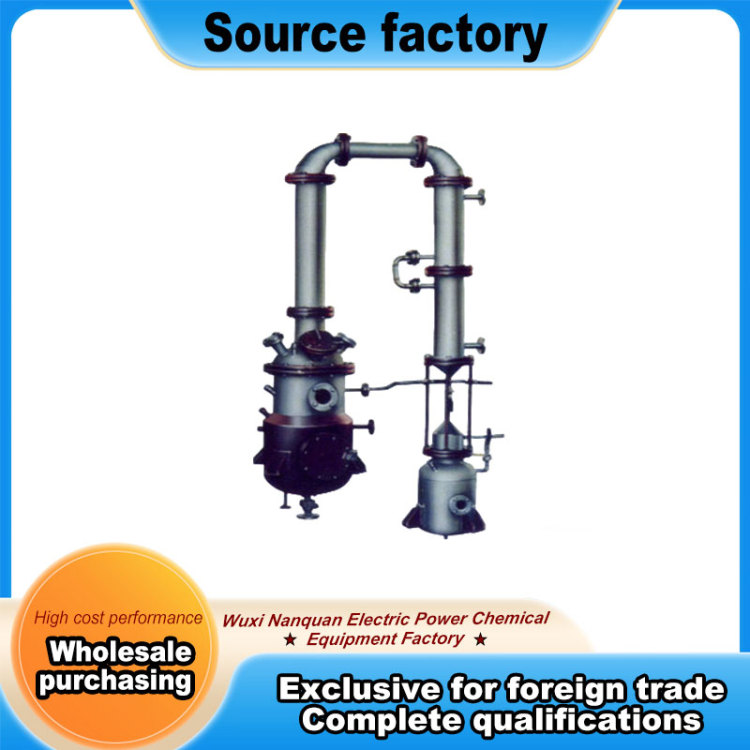
2. Can a Liquid Separator Rated at 20 m³/h Handle Alcohol-Precipitated Flocs?
No — on precipitated herbal liquor, throughput is meaningless because the machine will pass cloudy liquid at any flow rate; only the capture window matters. The LWL horizontal scroll filtering centrifuge runs 0.5–20 m³/h at a separation factor of 1,140–2,060 and is built for 0.1–9 mm crystalline solids — salt, sugar, crystal slurries. Tannin, protein, pectin and starch flocs from alcohol precipitation are a different material: 10–50 µm, low density difference, and compressible.
Stokes' law is unforgiving here. Settling velocity scales with the square of particle diameter, so doubling floc size makes separation four times faster — cheaper than doubling G-force.
| What is actually in your liquor | Capture mechanism | Unit to specify |
|---|---|---|
| Crystalline solids 0.1–9 mm | Wedge-wire screen + scroll | LWL 300–630 mm bowl |
| Gelatinous flocs 10–50 μm | High G, 15,000+ | SXC tubular separator |
| Haze below 10 μm, polish duty | Filter media | IG tubular filter |
| 3–8% v/v settleable solids | Scroll + continuous discharge | LW/LWL decanter |
Size from a jar test, not a datasheet. Fill a 1 L graduated cylinder with the real precipitated liquor, record the mudline at 15, 30, 60 and 120 minutes, and design the separation stage from that curve. If 90% clears inside 30 minutes, an LWL or decanter is fine. If it is still hazy at two hours, dose 0.5–2 kg/t of food-grade flocculant before you spend money on more G-force — in most botanical plants that single change moves the bottleneck more than a bigger machine does.
Also plan the solids, not just the clear liquid: 6 m³ at 4% v/v settleable solids produces about 240 L of wet cake per batch. If that cake leaves the building as waste, the discharge design and the CIP routine matter more than the rated capacity.
Clarity here also sets the fouling rate downstream. Whichever Liquid Separator you install, clarified mother liquor goes to an LG Type Efficient Rotating Thin Film Evaporator when it must reach high solids, or to a WZI Type External Heating Vacuum Evaporator for bulk water removal — and both foul far faster on a hazy feed, where 20 µm carry-over is enough to force a cleaning cycle into every shift.
✅ Bottom line: Match the separator to floc size from a jar test, and treat throughput claims as the least useful number on the datasheet.
FAQ
Q: What material and electrical spec does ethanol service require? A: SUS304 is the minimum for wetted parts; specify SUS316L when the extract carries organic acids or chlorides. Ethanol itself is not aggressive — the herb liquor is. Add explosion-proof motors, mechanical seals, grounding lugs and a CIP spray ball as standard, and confirm the jacket can take brine at −15 °C if you precipitate cold.
Q: Can one tank do both alcohol precipitation and water precipitation? A: Yes. A jacketed cone-bottom vessel with an adjustable draw-off handles both directions, which matters because roughly a third of botanical lines run alcohol precipitation on one product and water precipitation on another. State both duties when you request a quotation.
Q: Do you supply single units or the matched line? A: Both. NANQUAN supplies individual Extraction Equipment, jacketed vessels and separators, and matched extraction–precipitation–separation lines sized from your batch mass balance. As a China manufacturer with Class I and Class II pressure vessel qualifications, the factory builds to ASME and EN practice and takes OEM/ODM work on custom configurations.
CTA: Get the Mass Balance Before the Quotation
Send three numbers — batch size in kg of raw herb, target ethanol strength, and settleable solids percentage from a jar test — and the NANQUAN engineering team will return a vessel-by-vessel volume table and a jacket-area check within five business days, free of charge. Wuxi Nanquan Electric Power and Chemical Equipment Factory builds custom and bulk orders from Wuxi, Jiangsu, and quotes factory-direct prices for single units and complete lines.