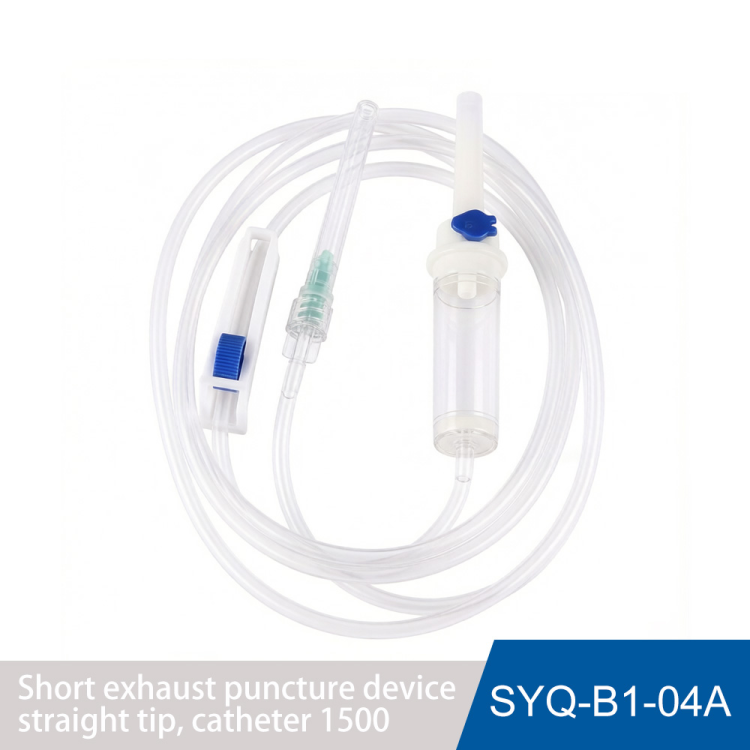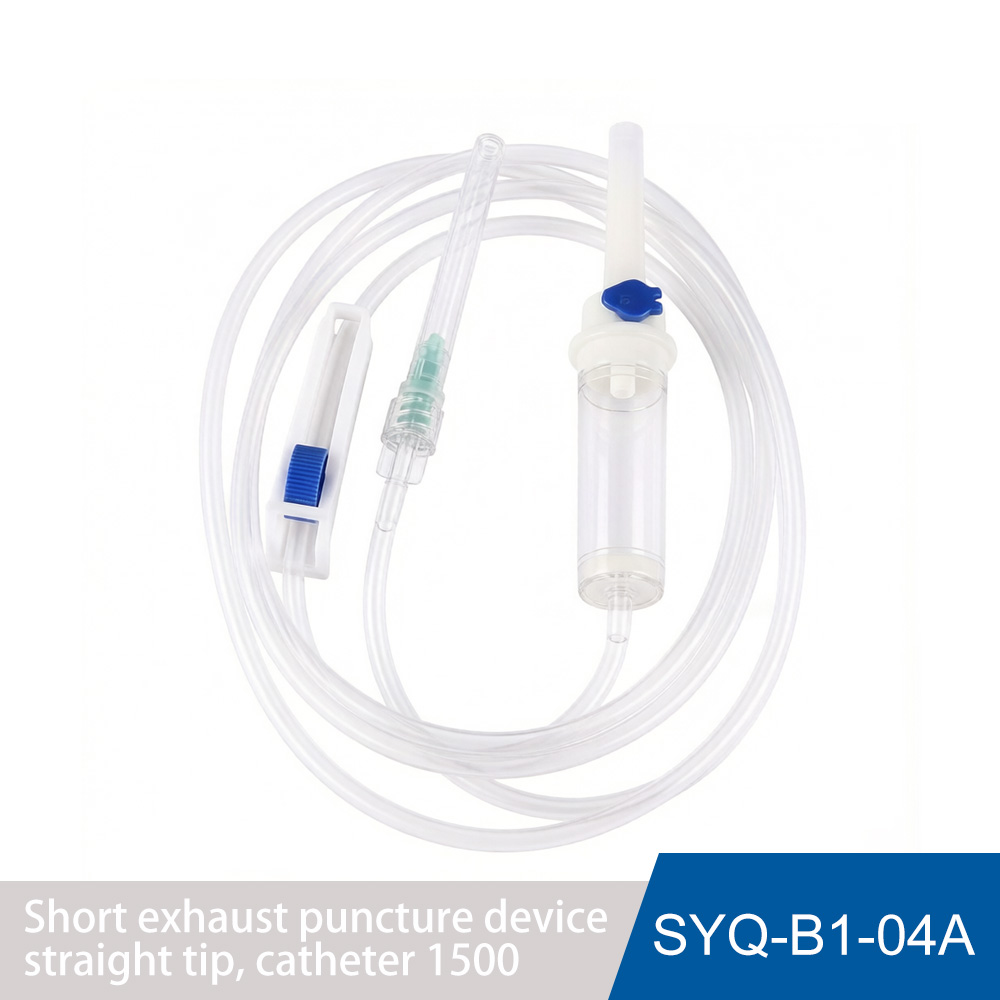
Choosing the right precision-filter infusion set comes down to one decision: match the filter pore size to the drug and the patient. A 5-micron membrane clears routine fluids, while 1.2-micron and 0.2-micron membranes are mandatory for parenteral nutrition, pediatric, and ICU use. Oversize the filter and you waste budget; undersize it and you expose vulnerable patients to particulate emboli and phlebitis.
As a Disposable Medical Device Manufacturer exporting sterile consumables to more than 40 countries, RONNASO sees the same mistake repeat across tenders: buyers specify "a filter" without naming the micron rating. This guide fixes that. Below we break down the four standard pore sizes, the clinical cases that demand each, and how to read a filter specification sheet before you commit a purchase order.
1. Which micron rating fits your drug and patient profile?
The safest starting rule is to size the filter to the smallest particle you must remove, not to the average case. Human capillaries measure 4–9 microns, so any insoluble particle above 5 microns can lodge in the microvasculature and trigger granuloma or embolism. A conventional 15-micron cellulose filter stops only the coarsest debris and passes the sub-visible particles that a precision membrane is designed to remove.
Liquid itself carries the load. Studies of standard infusates report 1,000–2,000 particles per milliliter at the 5-micron level and 1,500–3,000 per milliliter at 2–3 microns. Without terminal filtration, those particles reach the patient on every bag. A Chinese multi-hospital audit found phlebitis rates of 12.7 percent with ordinary sets versus 3.2 percent with precision filters—a seven-point gap that pays for the upgrade within a single admission. The capillary argument is decisive: neonatal capillaries run as small as 4 microns, so a 5-micron filter still lets through particles that can accumulate in lung and brain tissue over a long course of treatment.
The four clinically accepted ratings are:
| Pore size | Best-fit use | Typical setting |
| 5 µm | Routine crystalloids, TCM injections | General wards |
| 3 µm | Crystallizing & chemo drugs | Oncology |
| 1.2 µm | Pediatric, immunocompromised, PN | NICU, transplant |
| 0.2 µm | Bacterial-grade, high-sterility | ICU, oncology |
A British Pharmaceutical Nutrition Group 2025 position statement recommends a 1.2-micron filter for all parenteral nutrition and a 0.2-micron filter for aqueous, lipid-free formulas. National formularies also mandate 1.2-micron filtration for drugs such as lansoprazole. For photosensitive agents, pair the membrane with a light-shielding tube rather than a larger pore.
RONNASO's ISO 13485 Certified Infusion Set Factory in Zhejiang validates every membrane lot against a 95 percent particulate-retention floor before release, so the rating printed on the pouch matches the performance in the ward. Zhejiang Ronnaso Medical Instrument Co., Ltd. runs three production lines dedicated to these sterile sets, each with its own in-line leak and flow test, and keeps the lot record available for distributor and notified-body audits.
✅ Bottom line: Size the filter to the smallest particle you must remove—use 1.2 µm for PN and pediatrics, 0.2 µm where bacterial-grade sterility is required.
2. How do you verify a filter specification before ordering?
Read three numbers on the data sheet: rated pore size, particulate retention rate, and air-elimination claim—then confirm them against an independent standard. Vendors who quote only "precision filter" are hiding the detail that decides clinical safety.
Ask the vendor for the retention rate at the stated micron. A credible precision set retains 95 percent or more of particles at or above its rated pore. Confirm the membrane material: polyethersulfone (PES) dominates high-end sets because it adsorbs less drug than cellulose and resists fiber shedding. Check the air-vent design—an integrated hydrophobic vent cuts air-embolism risk during set priming. The retention math is not abstract: a set rated at 5 microns but actually clearing only 60 percent of 5-micron particles provides little protection, which is why the documented floor matters more than the printed number.
Volume math also matters. A 1500–2500 mm tube with a 60-drop chamber delivers roughly 20 drops per milliliter on a macro set; match the drop factor to your pump protocol so nursing staff do not recalculate every shift. For high-risk drugs, request the extractable-compound report and the biocompatibility file (ISO 10993) so your pharmacy can sign off.
Put the same discipline into the data sheet. Six fields decide whether a set survives a tender review:
| Data-sheet field | What strong evidence looks like | Red flag |
| Rated pore size | Printed on pouch and IFU | "Precision filter" with no rating |
| Particulate retention | 95% or better at rated pore, method stated | Percentage left out |
| Membrane material | PES, low drug adsorption | Unnamed polymer blend |
| Air elimination | Hydrophobic vent with a tested claim | No vent statement |
| Biocompatibility | ISO 10993 file on request | "Meets all standards" |
| Sterilization | EO cycle with stated residual limits | Residual limits unstated |
A sheet that answers all six in writing lets a pharmacy committee sign off without a second round of questions, and it gives your own tender file a defensible spine.
Working with an OEM Medical Device Supplier such as RONNASO lets you lock these parameters into a private-label specification instead of accepting a catalog default. Configured tubing length, connector type, and pouch printing are set once and reproduced across every batch, which is why many distributors treat a wholesale partnership as the cheapest path to a defensible tender.
✅ Bottom line: Demand the retention rate and membrane material in writing; a 95 percent floor at rated pore is the minimum defensible threshold.
FAQ
Q: Can one precision-filter set cover all my wards? A: Not economically. A 0.2-micron set costs more and is unnecessary for routine saline. Stock 5-micron for general use and 1.2/0.2-micron for ICUs and PN lines, then standardize by drug.
Q: Does a precision filter slow the infusion rate? A: Marginally. PES membranes add negligible pressure at standard flow; only clogged filters from precipitate-prone drugs reduce rate, which is why matching pore to drug prevents blockage.
Q: Are precision sets compatible with all infusion pumps? A: Yes, the set is pump-agnostic at the cassette interface. Confirm the spike and Y-site connectors match your pump brand; RONNASO supplies Luer-Lock and branded variants on request.
Build your filter specification with RONNASO
RONNASO helps distributors and hospital groups draft a tender-ready precision-filter specification in days, not weeks. Send us your drug list and patient mix, and our Zhejiang engineering team returns a pore-size matrix, sample sets, and the full certificate pack—ISO 13485, CE under MDR, and EO-residual reports—free of charge.
Mobile: +86 13777688618
Email: [email protected]
Website: www.ronnaso-en.com