
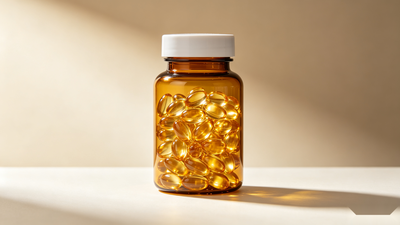
One factory may quote a standard 1,000 mg fish oil softgel. Another may use a concentrated EPA/DHA oil. A third may include bottling, testing and retail packaging in the price. On paper, all three can look like the same product. In production, they are not.

For a supplement brand, the better way to choose a manufacturer is to start with the product specification and work backwards.
First, Know What You Are Buying
Not every fish oil supplier does the same job.
Some companies mainly sell bulk fish oil or EPA/DHA concentrates. Their customers are often manufacturers that already have their own encapsulation and packaging arrangements.
A finished-product manufacturer takes the project further. Depending on the setup, that can include oil sourcing, formulation, softgel production, testing, bottling and packaging.
If your goal is to launch a bottle under your own brand, make sure the company you are talking to actually handles finished supplement manufacturing. A good raw-material supplier is not automatically the right private label partner.
Don't Compare Fish Oil by Milligrams Alone
This is one of the first things we clarify when discussing a new project.
A buyer may ask for:
Fish Oil 1000 mg
But that still leaves an important question unanswered:
How much EPA and DHA do you want?
Two 1,000 mg fish oil softgels can have very different omega-3 content. One may use a conventional-strength oil, while another uses a much more concentrated ingredient.
Before asking for pricing, define:
- EPA per serving
- DHA per serving
- total omega-3
- fish oil fill weight
- serving size
Once those numbers are clear, quotations become much easier to compare.
Ask What Form of Fish Oil Is Being Used
You will often see three terms when sourcing omega-3 oil:
TG, EE and rTG.
There is no need to turn the purchasing discussion into a chemistry lesson, but the manufacturer should still tell you what is being quoted.
The oil form can affect concentration, positioning and cost. So if one supplier quotes a standard EE oil and another quotes a concentrated rTG oil, the price difference may be perfectly reasonable.
“High potency fish oil” is too vague for a production specification.
Ask for the actual oil form and EPA/DHA profile.
Oxidation Control Deserves a Real Conversation
Fish oil is not a dry powder. It is sensitive to oxygen, heat and light, so handling matters.
When we review a fish oil project, quality is not only about whether the factory has GMP certification. The oil itself also needs appropriate specifications.
Buyers may see terms such as:
- Peroxide Value
- p-Anisidine Value
- TOTOX
- EPA/DHA potency
- heavy metals
You do not need to become a laboratory expert, but the manufacturer should be able to explain what is tested and at what stage.
A better question than:
Is your fish oil high quality?
is:
What oxidation specifications do you use, and do you test the finished product?
That usually tells you much more.
The Softgel Specification Also Affects the Quote
Once the oil is selected, there are still several decisions to make.
For example:
- How much oil goes into each softgel?
- What capsule size is practical?
- How many softgels are needed per serving?
- How many go into each bottle?
- Is standard gelatin acceptable?
- Do you need a carton or blister pack?
These details affect both cost and production minimums.
A higher EPA/DHA concentration can sometimes reduce the amount of oil needed per serving, but that does not automatically mean the smallest possible capsule is the best option. Fill behavior, shell stability and swallowing experience still need to be considered.
That is why the oil and the softgel should be developed as one product, not as two separate purchasing decisions.
MOQ Is Usually More Complicated Than It Looks
Brands often ask for the MOQ before discussing the formula.
That is understandable, but the bottle quantity is not always the real production limit.
The actual minimum may come from:
- the amount of fish oil that must be purchased
- the softgel production batch
- custom shell requirements
- bottle availability
- label printing
- carton printing
- testing
A standard formula in a stock bottle is usually much easier to start with than a fully customized formula with custom packaging.
So it is worth asking two different questions:
What is your MOQ for an existing private label formula?
and
What is your MOQ for a custom fish oil product?
Those answers may be quite different.
Private Label or Custom Formula?
For some brands, there is no reason to develop everything from zero.
A private label fish oil formula can be a practical way to enter the market faster, especially if the target dose and packaging are fairly standard.
Custom manufacturing makes more sense when you need something specific, such as:
- a particular EPA/DHA ratio
- higher omega-3 concentration
- a different serving size
- special packaging
- a formula designed for a specific market
If the product concept is still being tested, starting from an existing formula can save both time and development cost.
If the positioning depends on a very specific formula, then customization is worth the extra work.
What a Good Fish Oil Manufacturer Should Be Able to Handle
For a private label project, I would expect the manufacturer to be comfortable discussing more than just the capsule.
The conversation should cover the oil specification, dosage, softgel size, testing, bottle count, packaging and target market.
For brands importing finished supplements, documentation also matters. A good manufacturer should be able to explain what comes with the batch, what testing is standard and what additional testing can be arranged if required.
Jiabei Health manufactures fish oil and omega-3 softgels alongside capsules, gummies, powders, tablets and liquid supplements. For brands building several product lines, keeping more formats with one manufacturing partner can simplify sourcing and quality management.
What to Send Before Asking for a Quote
You do not need a finished technical file before contacting a manufacturer.
But giving a little more detail than “I need fish oil” will save a lot of back-and-forth.
A useful starting brief includes:
- target EPA and DHA
- preferred oil form, if known
- fish oil fill weight
- softgels per bottle
- target market
- first order quantity
- packaging requirement
- required certifications
- target launch date
If you have a reference product, send that too.
It is often much easier for a manufacturer to understand:
“We want something close to this product, but with 60 softgels and a higher DHA level.”
than:
“Please send your best fish oil price.”
Final Thoughts
A good fish oil manufacturer should make the project easier to understand, not more confusing.
The lowest quote is not always the best quote, especially when the EPA/DHA level, oil form, testing and packaging are different.
Start by making sure everyone is quoting the same product.
Then compare manufacturing capability, quality control, MOQ and service.
That is usually the fastest way to separate a realistic manufacturing partner from a supplier that is simply offering the cheapest number.
FAQ
What should I ask a fish oil manufacturer?
Start with EPA, DHA, total omega-3, oil form, softgel specification, testing, MOQ and packaging. If you need a finished private label product, confirm exactly what is included in the quotation.
Can a fish oil manufacturer customize EPA and DHA levels?
Yes, depending on the available oil specifications and production requirements. The manufacturer may use different EPA/DHA concentrations or adjust serving design to meet the target formula.
What is a typical MOQ for private label fish oil?
There is no single MOQ for every project. Existing formulas with standard packaging usually start lower than custom formulas, custom shells or custom packaging.
What tests are commonly used for fish oil softgels?
Depending on the product and market, testing may include EPA/DHA potency, oxidation parameters, heavy metals and other relevant quality or contaminant checks.