
Hesperidin is the flavonoid most buyers reach for when a formula calls for circulatory or vein support — but it rarely travels alone. It sits inside a larger family of citrus bioflavonoids, and the line between hesperidin and its close cousin diosmin is where a lot of sourcing confusion happens. If you are buying Citrus Aurantium Extract for a vascular or metabolic product, getting the ingredient right starts with understanding that family.
This guide covers the specifications that matter, how hesperidin differs from diosmin, and a checklist for vetting a citrus extract supplier.
Hesperidin vs Diosmin: Two Citrus Flavonoids, Different Roles
Hesperidin and diosmin are the two citrus flavonoids most commonly paired in vein-health formulas, and buyers frequently treat them as interchangeable. They are not.
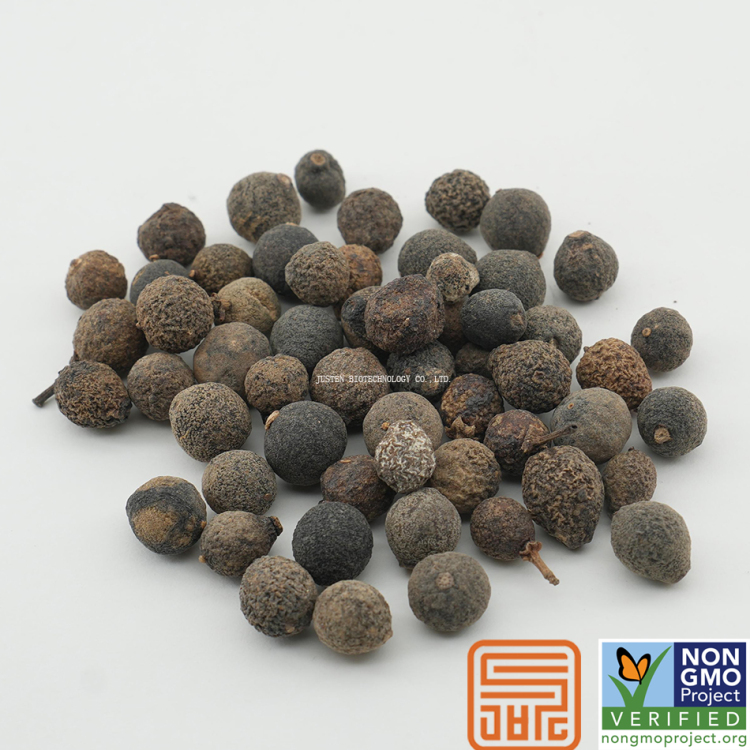
- Hesperidin is a naturally occurring flavonoid found in citrus fruit — particularly Bitter Orange Extract (Citrus aurantium L.). It is the natural compound, sourced as hesperidin 90% from the immature fruit.
- Diosmin is a semi-synthetic derivative of hesperidin — produced by converting hesperidin. It is positioned mainly for venous tone and is a common companion ingredient in the same formulas.
The practical takeaway: if your label calls out hesperidin specifically, buy hesperidin — not a diosmin blend that happens to share a family tree. And if you want a vein-health duo, source both as separate, clearly specified ingredients rather than an undefined "citrus flavonoids" mix.
Key Specifications: Hesperidin 90% and the Citrus Flavonoid Family
Taking Justen's Citrus Aurantium Extract Hesperidin 90% (CAE009) as a reference, here is what a complete spec looks like:
| Parameter | Specification | Method |
|---|---|---|
| Hesperidin content | ≥90.0% | HPLC |
| Identification | Positive | TLC |
| Appearance | Light tan to brownish-yellow powder | Visual |
| Particle size | ≥95% through 80 mesh | USP<786> |
| CAS / formula / MW | 520-26-3 · C₂₈H₃₄O₁₅ · 610.55 | — |
| Loss on drying / ash | ≤5.0% / ≤0.5% | GB 5009.3 / 5009.4 |
Solubility is a practical detail worth noting: hesperidin is slightly soluble in methanol and hot acetic acid, nearly insoluble in acetone, benzene, and chloroform, and easily soluble in dilute alkali and pyridine. If your delivery format needs water solubility, ask about hesperidin derivatives instead — Alpha Glucosyl Hesperidin (an α-glucosylated form, available at 75%) is engineered specifically for better water dispersibility.
The same Bitter Orange Fruit Extract botanical also yields a wider citrus flavonoid family beyond hesperidin:
- Diosmin 90% — the semi-synthetic flavonoid for venous tone.
- Diosmetin 90% — a related flavonoid aglycone.
- Citrus bioflavonoids 30% — a broad-spectrum flavonoid grade.
- Methyl hesperidin 94% and α-glucosyl hesperidin 75% — hesperidin derivatives for enhanced solubility.
Reading the COA beyond the assay
- Heavy metals — total ≤10 PPM, lead ≤3 PPM, arsenic ≤1 PPM, cadmium ≤1 PPM, mercury ≤0.1 PPM (GB 5009 series).
- Microbiological limits — total plate count ≤1000 cfu/g, yeast & mold ≤100 cfu/g, with E. coli, Salmonella, and S. aureus negative (GB 4789 series).
- Non-GMO and non-irradiated status, with no carriers or excipients.
- Source — extracted from the immature fruit of Citrus aurantium L. using ethanol and water.
How Hesperidin Is Used: Vein, Vascular & Metabolic Support
Hesperidin's primary home is in circulatory and metabolic supplements:
- Vein and vascular support. Hesperidin, alone or paired with diosmin, is the standard ingredient choice for formulas positioned around vein and capillary health.
- Circulatory support. As a citrus flavonoid, hesperidin is studied for supporting healthy circulation and capillary integrity.
- Metabolic support. Research has looked at citrus flavonoids for supporting healthy blood glucose and lipid levels already in the normal range.
- Antioxidant support. Hesperidin contributes antioxidant activity as a polyphenol.
Compliance note: hesperidin is a dietary supplement ingredient. Keep finished-product claims within your market's rules — "supports vein and circulatory health" and "supports healthy blood glucose levels already in the normal range" are the compliant framings, rather than disease-treatment language. (Note: the same botanical family includes synephrine, a stimulant-like compound with its own safety considerations — keep it separate from hesperidin claims and label it carefully.)
Justen's Citrus Aurantium Extract Range
Justen Biotechnology supplies the full citrus flavonoid spectrum from Citrus aurantium L., with a 1 kg MOQ and monthly capacity up to 3 tons on core grades, across three production lines (extraction, solvent extraction, purification–drying–packaging):
| Product | Key spec | Internal link |
|---|---|---|
| Citrus Aurantium Extract Hesperidin 90% | CAE009 | view product |
| Citrus Aurantium Extract Diosmin 90% | CAE034 | view product |
| Citrus Aurantium Extract Diosmetin 90% | CAE063 | view product |
| Citrus Aurantium Extract Citrus Bioflavonoids 30% | CAE065 | view product |
| Citrus Aurantium Extract α-Glucosyl Hesperidin 75% | CAE012 | view product |
| Citrus Aurantium Extract Methyl Hesperidin 94% | CAE067 | view product |
| Citrus Aurantium Extract Synephrine 6% / 30% | CAE035 / CAE036 | view product |
Need a hesperidin 90% sample and COA?
Tell us your target purity, annual volume, and market — we'll send a free sample, batch COA, and a normalized quote.
Request a Free Sample & COA →