
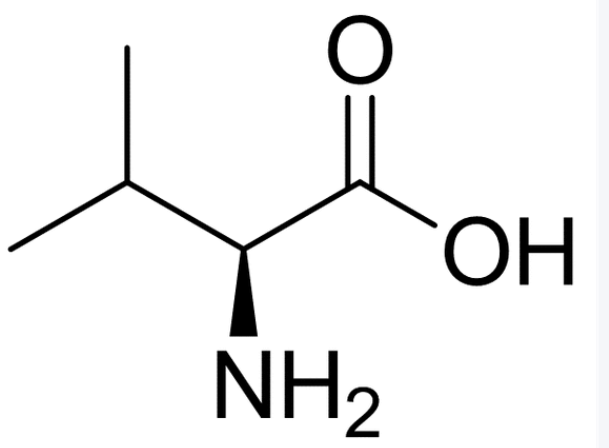
Comparative Analysis of Valine and dl-Valine
Valine and dl-valine are closely related yet fundamentally distinct organic compounds, exhibiting significant differences in origin, structure, biological activity, and applications. The following analysis explores these differences from key perspectives:
I. Origin and Chemical Nature
- Valine: A naturally occurring amino acid classified as a "non-essential amino acid" (synthesized by the human body without external intake). It serves as a fundamental building block of proteins.
- dl-Valine: A synthetic product, consisting of a racemic mixture of D-valine (dextrorotatory form) and L-valine (levorotatory form). It is a non-natural amino acid.
II. Structure and Enantiomers
- Valine: Naturally occurring valine exists as L-valine (levorotatory form), the primary form utilized in biological protein synthesis.
- dl-Valine: A mixture of both enantiomers—D-valine (dextrorotatory form) and L-valine (levorotatory form).
III. Biological Activity and Applications
- Valine: involved in physiological processes such as protein synthesis, immune regulation, and antioxidant activity. It is widely used in medicine, food, and agriculture (e.g., as a nutritional additive or pharmaceutical ingredient).
- dl-Valine: holds significant value in chemical and pharmaceutical industries, serving as an intermediate for drug synthesis or chemical production. It is also used in antioxidant and health-promoting food additives.
- Through this comparison, the core differences between valine and dl-valine in origin, structure, function, and applications become clear. Both compounds hold unique value in biochemistry and industrial fields.