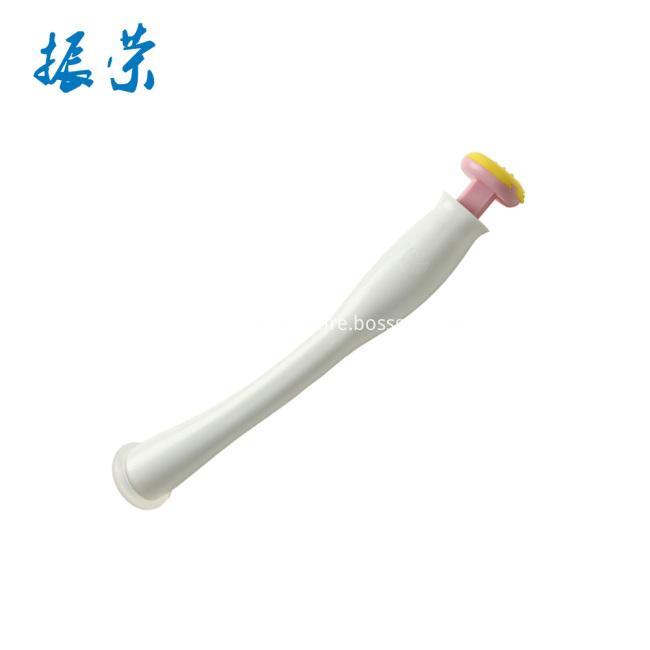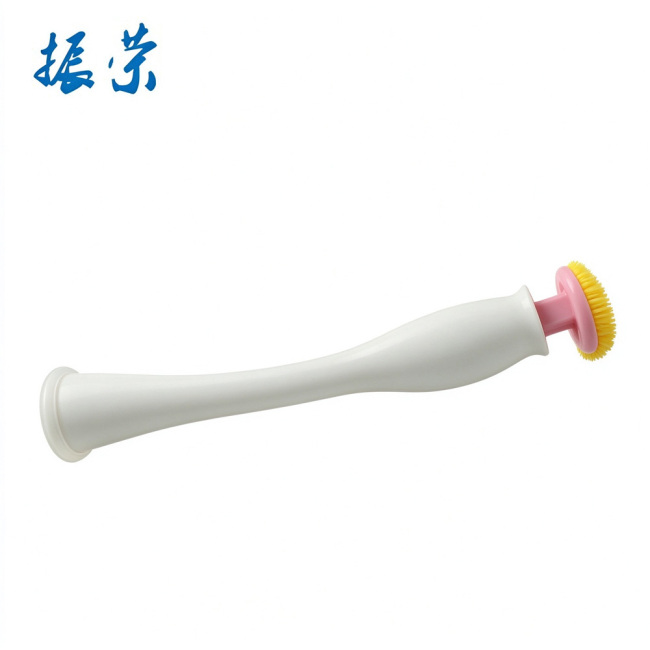
A disposable anastomosis stapler compared to traditional surgery is the procurement question most urology departments and day-surgery centers now face when they modernize their circumcision workflow. Traditional circumcision relies on a scalpel or scissors plus hand-suturing to cut the foreskin and close the wound; the staple-based instrument performs both steps in a single squeeze. Ronghui — a China-based manufacturer operating as Ronghui Medical Technology (Suzhou) Co., Ltd. — supplies this instrument to hospitals and distributors weighing the switch. For department heads, the real comparison is never "which tool is newer" but which approach protects patient outcome, operating-room time, and per-procedure cost once volume scales. This article breaks down the evidence-based dimensions hospitals should weigh before standardizing on either method.
1. Procedure Time and Operating-Room Throughput
The single biggest difference is speed. Conventional hand-suturing typically consumes 20–30 minutes of surgeon time per case, with hemostasis managed stitch by stitch. By contrast, a single-fire disposable anastomosis stapler compared to traditional surgery completes the cut-and-seal in under five minutes, because a pre-loaded titanium ring and a central circular blade fire together. That delta is not cosmetic: at a 10-procedure clinic day, the staple method frees roughly three to four hours of OR or consultation time that hand-suturing would consume.
Throughput matters most in high-volume settings — VMMC programs, pediatric campaigns, and day-surgery centers — where a clinician can move from one patient to the next with near-identical setup. Training load drops too: new surgeons reach competency after roughly one afternoon of supervised use, versus the weeks of supervised suturing needed to hit consistent closure quality. The manufacturer tunes its A/B/C instrument variants so the same basic motion serves newborn through adult tissue thickness, which keeps the learning curve flat across age groups.
✅ Bottom line: The staple instrument converts a 20–30 minute sutured case into a sub-5-minute standardized step, which is why throughput-driven departments adopt it first.
2. Bleeding Risk and Wound Security
Hemostasis is where the two methods diverge most in consistency. Hand-suturing depends entirely on the operator's knot tension and stitch spacing; a slightly loose tie or a missed vessel means intra-operative or post-operative bleeding. An anastomosis stapler vs traditional bleeding risk comparison consistently favors the instrument because a uniform titanium ring compresses the wound circumferentially in one action, sealing small vessels at fixed pressure rather than by individual skill.
The detail B2B buyers should scrutinize is staple geometry. Ronghui's ultra-fine φ0.3 mm staple, paired with a 1.4 / 1.7 mm staple distance and a 1.0 / 1.2 mm staple-to-cut-edge gap, is the kind of spec that decides whether a wound heals clean or needs revision. The washer (gasket) seated at the staple line adds a second layer of security: it compresses tissue for intra-operative hemostasis, stops the staple from embedding into tissue, and then promotes natural rejection and fall-off on schedule — typically 7–10 days after the procedure. An anastomosis stapler vs traditional bleeding risk comparison that ignores staple geometry is missing the variable that actually moves the complication rate.
✅ Bottom line: Because the instrument seals the wound at fixed, documented pressure, it removes operator variability from hemostasis — the reason wound-security metrics track better than with hand-suturing.
3. Healing, Cosmetics, Training Load, and Which Brand to Trust
Cosmetic outcome and training burden decide long-term adoption. Hand-suturing leaves closure quality at the mercy of the individual surgeon; the staple ring produces a symmetric, even seal that patients and clinicians describe as "healed as new." Recovery follows a predictable path: the ring of staples falls off on its own around day 7–10, with lymphatic fluid able to weep through the line so edema stays controlled. That predictable healing is what lets clinics publish reliable post-procedure guidance instead of case-by-case caveats.
When buyers ask which anastomosis stapler brand is best for urology, the answer is less about a single "winner" and more about supplier fundamentals: ISO13485 quality systems, consistent batch-to-batch staple geometry, documented certifications for the target market, and OEM / private-label flexibility. The supplier meets those fundamentals and adds the washer design that directly addresses the embedding and tearing risks clinicians worry about most. For a urology department building a repeatable protocol, a supplier that can document every production batch and support country registration usually beats a marginally cheaper unknown source. The which anastomosis stapler brand is best for urology decision therefore comes down to documentation and consistency, not just unit price.
✅ Bottom line: The right brand is the one that documents its geometry and certifications consistently — that is what keeps a urology department's complication rate low across every batch.
The company's single-use surgical range extends beyond this instrument: the Labiaplasty Stapler serves aesthetic and reconstructive urology, while the Disposable Semen Delivery Device supports assisted-reproduction programs — both sit alongside the circumcision range covered in this T02 overview.
FAQ
Q: Does the instrument actually reduce bleeding versus hand-suturing? A: In an anastomosis stapler vs traditional bleeding risk comparison, the staple method typically shows lower operator-dependent variability because the titanium ring seals the wound at fixed pressure in one action. Hand-suturing can match it in expert hands but drifts with fatigue and case volume. The washer-backed staple line adds a second hemostasis layer on top of the ring itself.
Q: Which anastomosis stapler brand should a urology department pick? A: Prioritize ISO13485 certification, batch-to-batch geometry reports, and registration support for your target market over the lowest unit price. Ronghui is a wholesale supplier and OEM / ODM manufacturer that documents every batch and offers custom branding, which fits departments building a repeatable circumcision protocol. For most urology buyers, the which anastomosis stapler brand is best for urology question resolves to documentation and batch consistency first, brand name second.
Q: Can we private-label or OEM this device? A: Yes. Ronghui offers OEM / ODM and private-label production, including custom branding and packaging for distributors. The manufacturer supports low-to-mid MOQ and provides the documentation needed for country registration, which shortens your time to market across hospital and clinic channels.
Compare Directly With a China Factory
Evaluating a disposable anastomosis stapler compared to traditional surgery for your department? Ronghui is a wholesale supplier and OEM manufacturer offering factory-direct pricing, custom OEM / ODM quotes, and full registration support. Contact our team for samples, a sizing kit, and a side-by-side protocol comparison — and we will map the certification path for your target countries.
Email: [email protected]
Mobile: +86 13962363008
Website:www.ronghuimed.com