
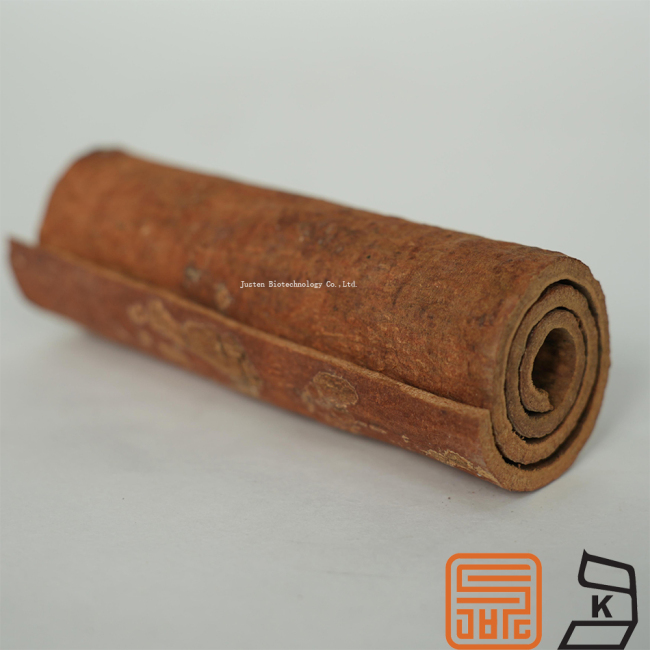
Cinnamon is one of the few botanicals that needs almost no introduction to consumers — but sourcing it as a standardized ingredient is less straightforward than it looks. Two suppliers can both quote "cinnamon extract" and deliver materials with very different polyphenol content, because cinnamon is sold in two entirely different spec systems. If you are buying Cinnamon Bark Extract for a blood-sugar-support or metabolic formula, the difference between the two matters more than the headline number.
This guide covers the two spec systems, the grades you will see on a COA, and a checklist for vetting a cinnamon extract supplier.
Standardized Polyphenols vs Ratio Extracts: Two Spec Systems
Cinnamon extract is marketed two ways, and confusing them is the most common sourcing mistake in this category:
- Standardized polyphenol extracts state a guaranteed polyphenol content — most often 10%, 20%, or 30% cinnamon polyphenols, measured by UV. This is the spec you want when your label or formula needs a defined active content.
- Ratio extracts (4:1, 10:1, 16:1) state the raw-material-to-extract ratio instead — for example, 10:1 means 10 kg of bark yields 1 kg of extract. A ratio tells you concentration, but not the actual polyphenol content.
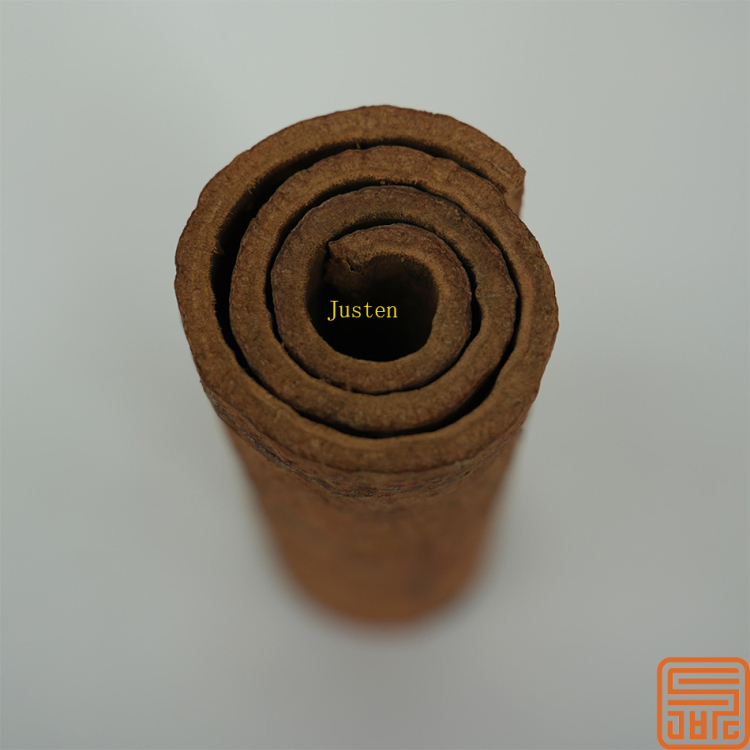
Why this matters: a "10:1 cinnamon extract" and a "10% polyphenol extract" sound comparable but are measuring different things. If your finished product makes a specific polyphenol claim, you need the standardized grade — and you should confirm the assay method, because total polyphenols are typically measured by UV, not by the HPLC used for single-compound actives.
Justen supplies both: standardized Cinnamon Bark Powder at 10%, 20%, and 30% polyphenols, plus ratio extracts at 4:1, 10:1, and 16:1 for customers who prefer concentration-based specs.
Key Specifications: Cinnamon Polyphenols 10% to 30%
Taking Justen's Cinnamon Bark Extract Polyphenols 20% (CEB041) as a reference, here is what the standardized grades look like:
| Grade | Polyphenol content | Typical use |
|---|---|---|
| Polyphenols 10% | ≥10% | Multi-ingredient blends, cost-sensitive capsules |
| Polyphenols 20% | ≥20% | Single-ingredient and mid-tier formulas |
| Polyphenols 30% | ≥30% | Premium, high-potency positioning |
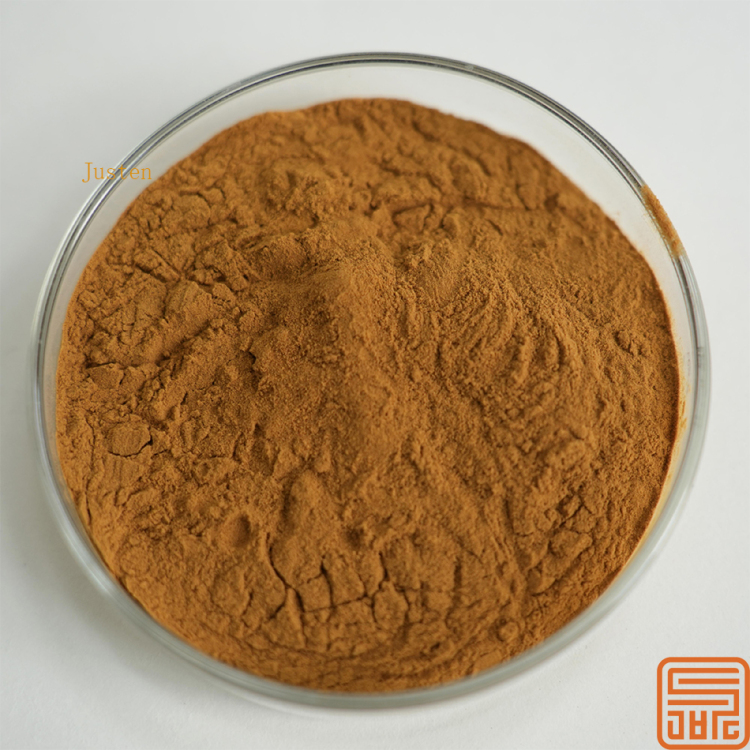
The key active behind cinnamon's profile is cinnamaldehyde (CAS 104-55-2, molecular formula C₉H₈O, molecular weight 132.16), the compound responsible for cinnamon's characteristic aroma and much of its studied activity. The extract is derived from the bark of Cinnamomum Cassia Extract (Cinnamomum cassia Presl) using ethanol and water, and appears as a red-brown powder.
Reading the COA beyond the assay
- Assay method. Cinnamon polyphenols are measured by UV (a total-polyphenol figure). If you need a single-compound cinnamaldehyde spec, ask for an HPLC assay instead.
- Physical parameters. Red-brown powder, ≥95% through 80 mesh, loss on drying ≤5.0% (GB 5009.3), sulphated ash ≤5.0% (GB 5009.4).
- Heavy metals — total ≤10 PPM, lead ≤3 PPM, arsenic ≤1 PPM, cadmium ≤1 PPM, mercury ≤0.1 PPM (GB 5009 series).
- Microbiological limits — total plate count ≤1000 cfu/g, yeast & mold ≤100 cfu/g, with E. coli, Salmonella, and S. aureus negative (GB 4789 series).
- Non-GMO and non-irradiated status, with no carriers or excipients.
How Cinnamon Bark Extract Is Used: Metabolic & Blood Sugar Support
Cinnamon has a long history of culinary and traditional use, and modern supplement brands position it primarily around metabolic health:
- Blood sugar and metabolic support. Cinnamon extract is one of the most popular ingredients in formulas aimed at supporting healthy blood sugar levels already in the normal range — which is why it anchors so many glucose-support and metabolic blends.
- Antioxidant support. Cinnamon polyphenols, including cinnamaldehyde, contribute antioxidant activity.
- Anti-inflammatory support. The same polyphenols are studied for their role in supporting a healthy inflammatory response.
Compliance note: cinnamon is a dietary supplement ingredient. Keep finished-product claims within your market's rules — "supports healthy blood sugar levels already in the normal range" and "metabolic support" are the compliant framings, rather than disease-treatment language.
How to Vet a Cinnamon Bark Extract Supplier
Run shortlisted suppliers through this checklist:
- Spec system is explicit. Confirm whether the quote is a standardized polyphenol % or a ratio extract — and get the polyphenol % either way.
- Assay method is stated. Total polyphenols by UV is standard; ask for HPLC if you need cinnamaldehyde specifically.
- Batch-level COA. Covering assay, heavy metals, microbiology, and physical parameters.
- GMP manufacturing. Ask about GMP-standard production and quality documentation.
- Traceability. Confirm botanical source (Cinnamomum cassia bark) and origin.
- Free sample. A reliable supplier will provide a sample for your own assay before bulk commitment.
- Consistency. Ask for lot-to-lot polyphenol consistency data — cinnamon bark can vary by harvest and region.
Justen's Cinnamon Bark Extract Range
Justen Biotechnology supplies both standardized polyphenol extracts and ratio extracts from Cinnamomum cassia bark, with a 1 kg MOQ and monthly capacity up to 3 tons (5 tons on ratio grades), across three production lines:
| Product | Spec | Internal link |
|---|---|---|
| Cinnamon Bark Extract Polyphenols 20% | CEB041 | view product |
| Cinnamon Bark Extract Cinnamon Polyphenols 30% | CBE035 | view product |
| Cinnamon Bark Extract Cinnamon Polyphenols 10% | CBE072 | view product |
| Cinnamon Bark Extract Cinnamon Polyphenols | CBE107 | view product |
| Concentrated Cinnamon Bark Extract 16:1 | CBE071 | view product |
| Cinnamon Bark Extract 10:1 | CBE071 | view product |
| Cinnamon Bark Extract 4:1 | CBE071 | view product |
Need a cinnamon extract sample and COA?
Tell us your target spec (standardized polyphenol % or ratio), annual volume, and market — we'll send a free sample, batch COA, and a normalized quote.
Request a Free Sample & COA →Contact WhatsApp: +86 18716439113 · Email: [email protected]