
1. How much do blood culture bottles cost per bottle in 2026?
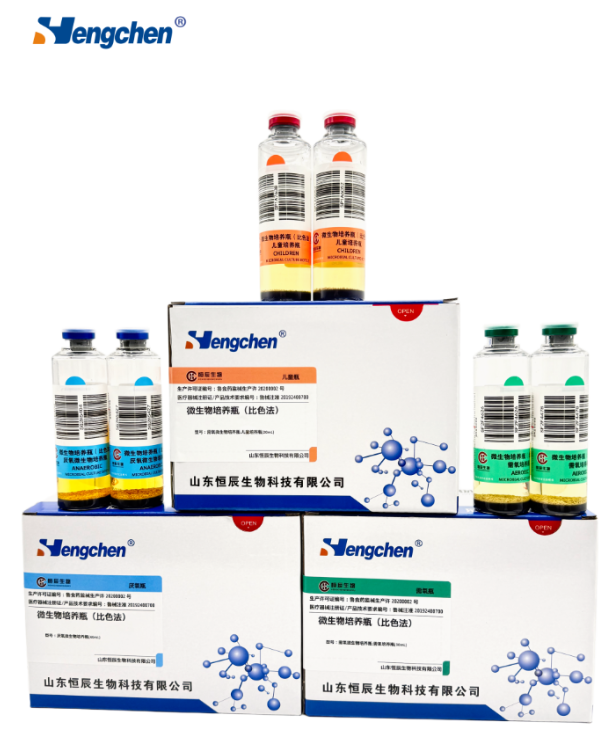
Budget USD 3–8 per bottle for standard aerobic or anaerobic formats and USD 5–13 for resin and pediatric bottles — but negotiate on cost per positive result, not on cost per bottle. Bottles account for 60–70% of the lifetime value of a blood culture system; the instrument is only 30–40%. That ratio is why seasoned buyers treat the analyzer as an entry cost and the bottle menu as the real contract. Ask two labs how much do blood culture bottles cost per bottle and the answers can differ by more than double — format, annual volume and origin drive that spread, not the analyzer.
| Bottle format | Typical FOB (USD/bottle) | Typical landed cost (USD/bottle) | Best-fit use |
|---|---|---|---|
| Standard aerobic / anaerobic, 30–40 mL | 3–8 | 4–10 | Screening patients not yet on antibiotics |
| Resin antibiotic-neutralizing aerobic / anaerobic | 5–13 | 7–15 | Patients already on empirical therapy |
| Pediatric resin, 20 mL | 5–12 | 7–14 | Patients under 15 years or under 36 kg |
| Mycobacterial / specialty media | 8–18 | 10–20 | Prolonged incubation protocols |
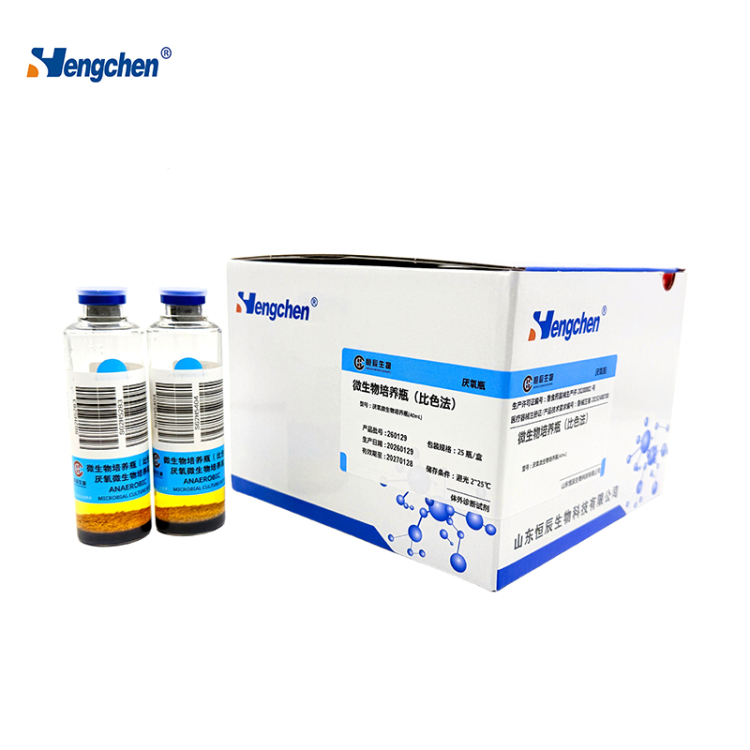
Blended per-test cost — bottle plus processing — runs USD 8–25 in Asia-Pacific tenders. Annual commitments above 50,000 bottles typically unlock 15–30% off list, and instrument list prices sit at USD 20,000–50,000 for compact 50–120-bottle units and USD 60,000–80,000+ for 240–500-bottle systems.
Three cost items rarely appear in a quotation but always land in the budget:
2. Which bottle choice actually lowers cost per positive result?
Three levers cut cost per positive result without touching sensitivity: resin neutralization, correct bottle size for the draw, and sourcing terms — factory pricing, duty position and lead time. Manufacturers such as Hengchen structure their bottle menu around exactly these three levers.
Lever 1 — Antibiotic neutralization pays for itself. Resin media use hydrophilic and hydrophobic beads to bind residual antibiotics physically and chemically. Published comparisons of BacT/ALERT FA Plus and FN Plus resin media against earlier charcoal formulations show higher recovery of Gram-positive isolates and shorter time to detection — and resin also gives cleaner optical readings, since charcoal can interfere with colorimetric or fluorescence sensors. Because 62% of patients receive antibiotics before the draw, a USD 2–5 premium per bottle is usually smaller than the cost of one repeated two-bottle set.
Lever 2 — Match bottle capacity to the draw. A 30 mL adult aerobic bottle filled with 5 mL of pediatric blood is wasted volume and delayed detection. A 20 mL pediatric bottle with added growth factors is the correct vessel. Look for quantitative design: a printed graduation on the label plus built-in vacuum lets a nurse draw the exact volume in one pass, which is the cheapest possible fix for the most common pre-analytical error in microbiology.
Lever 3 — Buy where duty and lead time are lowest. Colorimetric bottle systems from OEM/ODM manufacturers land 20–30% below global-brand list pricing, and local stock shortens what is typically a 4–8 week import lead time. Verify three documents before signing: NMPA Class II registration (or CE IVDR for EU tenders), batch release data for each production lot, and a written compatibility statement for your installed instrument. Shandong Hengchen Biotechnology Co., Ltd. manufactures blood culture bottles and the matching analyzers as one system, which is the practical advantage of buying both from a single supplier — compatibility is engineered rather than assumed.
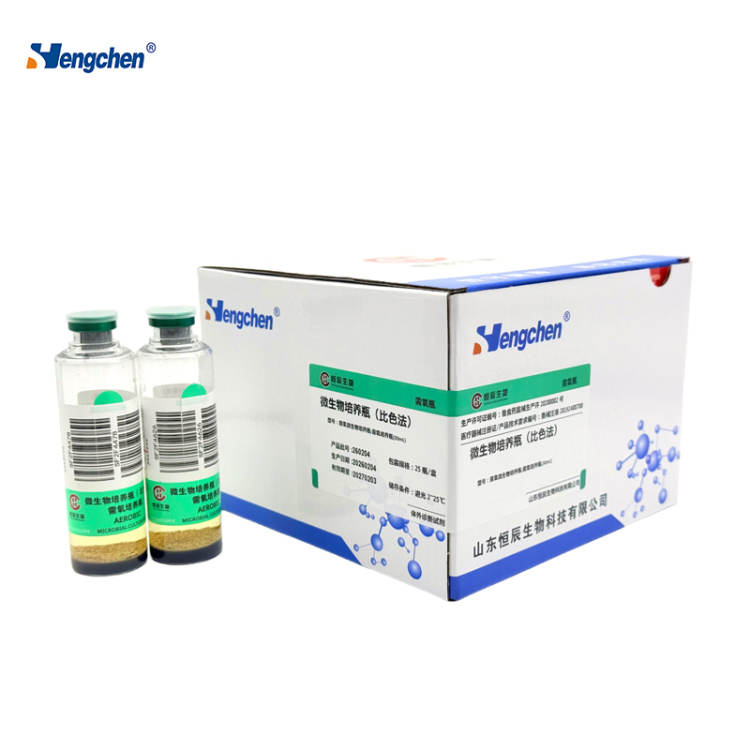
Are blood culture bottles compatible with BacT/ALERT 3D and other installed systems? Colorimetric bottles are matched to colorimetric analyzers; fluorescent bottles to fluorescent platforms. Hengchen bottles are registered for use with international mainstream analyzer consumables, and the blood culture bottle wholesale price from China manufacturer terms typically include a verification sample kit so your lab can run a side-by-side fill-and-alert test before committing to volume.
✅ Bottom line: resin media, right-sized bottles and duty-aware direct pricing cut cost per positive result; unit price alone is a poor proxy.
FAQ
Q: How much do blood culture bottles cost per bottle when a lab buys in bulk? A: Moderate-volume contracts sit at USD 3–8 per standard bottle. Above 50,000 bottles per year, discounts of 15–30% off list are normal, and packaging layouts — 20, 25, 40 or 50 bottles per carton — let a lab buy the pack size that matches its monthly consumption and avoid expiry waste on 12–18 month shelf life.
Q: Are blood culture bottles compatible with BacT/ALERT 3D and similar colorimetric analyzers? A: Yes, provided the detection principle matches. Colorimetric resin bottles are supplied for BacT/ALERT 3D and comparable colorimetric platforms; fluorescent bottles are supplied for BACTEC-class fluorescent instruments. Hengchen supplies both, along with NMPA-approved compatibility documentation for tender submissions.
Q: Blood culture bottle wholesale price from China manufacturer — what should a lab expect in 2026? A: Expect USD 3–8 FOB for standard bottles and USD 5–13 for resin or pediatric formats, with MOQ commonly set per carton. Ask for landed cost including duty, and request a batch-level release certificate — quality documentation is the part of a direct deal that protects the lab, not the discount.
CTA
Send your installed instrument model and monthly bottle volume to the Hengchen application team for a free landed-cost comparison against your current per-test spend, plus a compatibility verification sample kit for HC-BC120, CM-120 and CM-480 systems. Request a quotation.
- Import duty: 5–15% in many markets, plus 8–12% for freight and cold-chain handling on delivered reagent.
- Breakage and weight: PET bottles survive transit better than glass and cut freight weight, which matters on ocean shipments of 20–50 bottles per carton.
- Wasted sets from repeat cultures: a false negative caused by an under-filled or non-neutralizing bottle doubles the spend for that episode and delays therapy by a full incubation cycle.
✅ Bottom line: the cheapest bottle per unit is not the cheapest bottle per diagnosis — duty, breakage and repeat draws decide the real number.