
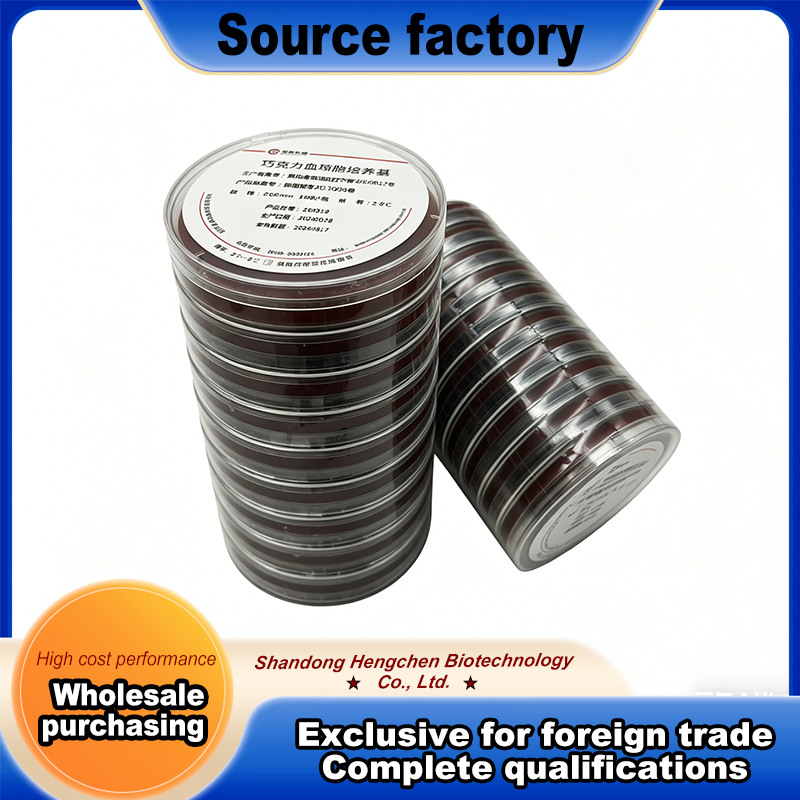
Thiosulfate Citrate Bile Salts Sucrose Agar, widely referred to as TCBS Agar for Vibrio isolation, is a mainstream selective differential medium classified under In Vitro Diagnostic Reagents and Medical Testing Supplies, extensively applied in food safety supervision and clinical infectious disease diagnosis. High-performance Quality Reagents such as this medium deliver stable selective inhibition and differential identification capacity, helping laboratories efficiently separate pathogenic Vibrio from complex mixed microbial samples. Both food testing organizations and clinical microbiology departments rely on Food safety testing TCBS Agar and Medical TCBS Agar for Diagnosis to complete daily high-throughput microbial detection work.
The formulation design of Thiosulfate Citrate Bile Salts Sucrose Agar targets the physiological characteristics of Vibrio genus. Bile salts inhibit most gram-positive bacteria and common enteric bacteria which will interfere with detection. Sodium thiosulfate reacts with metabolite hydrogen sulfide to form black precipitate for auxiliary observation. Sucrose is the key fermentable carbohydrate. Different Vibrio strains show distinct colony colors according to sucrose fermentation capacity. Sucrose fermenters generate yellow colonies, non-sucrose fermenters form teal-green colonies. Such visual differentiation greatly lowers laboratory screening difficulty. As vital Medical Testing Supplies, raw material purity, pH value adjustment and dehydration process all influence final medium performance, which explains why laboratories emphasize procurement of certified Quality Reagents to avoid systematic testing errors.
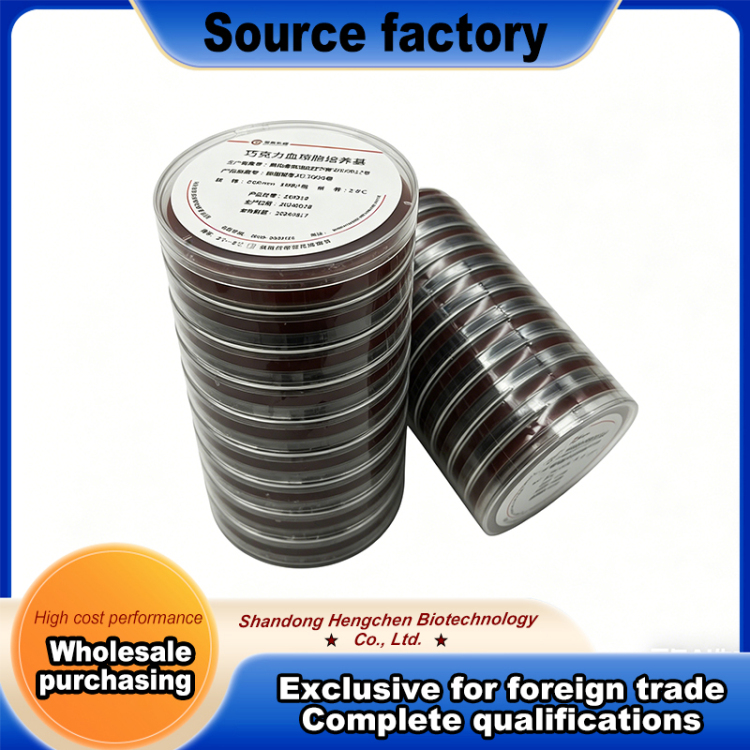
Real-world application cases cover food safety and clinical medical fields. In a coastal regional food safety project, inspection agencies adopted Food safety testing TCBS Agar to test hundreds of seafood samples including fish, oysters and squid. Several samples produced typical suspect colonies on Thiosulfate Citrate Bile Salts Sucrose Agar. Confirmatory tests proved Vibrio parahaemolyticus pollution. The testing data guided enterprises to optimize high-temperature sterilization and cold-chain storage procedures for seafood products, lowering food-borne disease risks for consumers. In clinical practice, one hospital used Medical TCBS Agar for Diagnosis to process diarrheal patient samples. The patient had consumed undercooked shellfish before onset of abdominal pain and watery diarrhea. After sample inoculation onto TCBS Agar for Vibrio isolation, characteristic colonies were obtained. Subsequent identification confirmed Vibrio infection, assisting clinicians to formulate reasonable treatment plans. This case reflects the practical value of In Vitro Diagnostic Reagents in rapid auxiliary diagnosis of infectious diseases.
Multiple common problems frequently puzzle front-line laboratory personnel when handling Thiosulfate Citrate Bile Salts Sucrose Agar. First, improperly stored prepared agar plates will lose selective performance. Plates should be kept refrigerated and avoid repeated temperature fluctuation. Dried or cracked agar surfaces cannot support normal bacterial growth and shall be discarded directly. Second, some non-Vibrio bacteria may occasionally grow on plates, so technicians must not make final judgment only relying on colony color from TCBS Agar for Vibrio isolation. Third, users need to distinguish application scenarios: Food safety testing TCBS Agar is optimized for food matrix samples, while Medical TCBS Agar for Diagnosis adapts to clinical stool and rectal swab specimens. Sample dilution and inoculation volume should be adjusted corresponding to different sample types. It is worth emphasizing that results from this medium are only preliminary screening, and confirmatory testing is mandatory for both food risk assessment and clinical diagnosis.
Quality control of Quality Reagents cannot be ignored throughout daily laboratory workflows. In Vitro Diagnostic Reagents including Thiosulfate Citrate Bile Salts Sucrose Agar require batch quality verification before formal use. As indispensable Medical Testing Supplies in public health systems, TCBS medium builds an important technical barrier for preventing Vibrio spread. The combined utilization in food safety monitoring and clinical sample diagnosis forms complete risk tracing chains, helping relevant departments trace infection sources and cut off transmission routes. With continuous rising public attention to food-borne pathogens, stable and reliable TCBS medium will maintain important status in future microbial testing